Types of pavement and hard surfacing: bound (sealed) surfaces, block paving and unbound surfaces compared

What types of pavement are there? Bound surfacing (asphalt and concrete), block paving and unbound surfacing compared, with the usual choice per site and where fibres play a role.
There are three main types of pavement for yards, industrial sites, car parks, paths and verges: bound (sealed) surfacing of asphalt or concrete, laid as one continuous layer; block paving (also called modular or segmental paving), made of bricks, concrete pavers, flags, setts or grass concrete pavers on a bed of sand; and unbound surfacing of gravel, crushed stone, shells or bound gravel. Within bound surfacing, asphalt is the flexible pavement and concrete the rigid pavement. The types differ in load capacity, maintenance, whether they can be lifted and relaid, and how much rainwater they let through.
"Pavement" is used here in the engineering sense: the whole constructed surface of a road, yard or site, not the footway beside a street as in everyday British English. Below you will find how each type of hard surfacing is built up, how they compare, and which surfacing is usual for which application. Fibres only play a role in bound surfacing: aramid fibre in asphalt and macro fibres in cast-in-place concrete. In block paving and gravel they add nothing.
Types of pavement: bound surfacing, block paving and unbound surfacing
The usual classification of hard surfacing follows the construction of the top layer. Bound surfacing is a single continuous layer held together by a binder: bitumen in asphalt, cement in concrete. Block paving consists of separate units laid side by side with joints between them. Unbound surfacing has a top layer of loose granular material such as gravel or crushed stone. In the Netherlands this three-way split (gesloten verharding, open verharding and halfverharding) runs through specifications, civil engineering course material and municipal rules on sealed surfaces.
Surfacing is also often grouped by material: asphalt, concrete, blocks and unbound material. The two classifications fit together, because asphalt and concrete together make up bound surfacing. A special case is stabilised ground, where existing or imported soil is treated with cement, lime or polymers to form a load-bearing layer. The overview below sets the types side by side.
| Type of surfacing | Examples | Typical use | Permeable? | Role of fibres |
|---|---|---|---|---|
| Bound surfacing: asphalt (flexible pavement) | Dense asphalt concrete, stone mastic asphalt (SMA, stone matrix asphalt in the US), porous asphalt | Roads, industrial and distribution sites, car parks, farmyards | No; on porous asphalt the water drains through the open surface course to the side, over dense lower layers | Aramid fibre in the mix slows rutting and cracking |
| Bound surfacing: concrete (rigid pavement) | Jointed concrete slabs, continuously reinforced concrete, fibre-reinforced concrete, precast concrete slabs | Farmyards, silage clamps, loading bays, bus lanes, roundabouts | No | Macro fibres limit the width of shrinkage and load cracks; micro fibres control plastic shrinkage cracking. In structural work only after design by the structural engineer |
| Block paving (modular paving) | Clay pavers, concrete block pavers, flags, natural stone, setts and cobbles, grass concrete pavers | Residential streets, driveways, squares, footways, verges | Partly, through the joints; grass concrete pavers and permeable block paving more so | None |
| Unbound surfacing | Gravel, crushed stone, shells, recycled aggregate, bound gravel | Footpaths and recreational cycle routes, farm tracks, lightly used parking, temporary surfacing | Largely; bound variants less | None |
What types of road pavement are there?
By surface material, road pavement falls into four main types: asphalt pavement, concrete pavement, block paving and unbound surfacing. Asphalt and concrete are bound pavements; blocks form the modular type, and gravel, crushed stone and shells the unbound type. Pavement engineering textbooks group the same roads by how they carry the load: flexible pavement (asphalt, which passes the load down through its layers) and rigid pavement (a concrete slab that spreads it over a wide area). Where an asphalt overlay is laid over a concrete base, engineers speak of a composite pavement; the reverse, a thin concrete layer over existing asphalt, is called white topping. Each type has its own place in the road network.
With asphalt, the road authority chooses the surface course per situation. In the Netherlands, porous asphalt (ZOAB) is the standard surface course on motorways because it reduces noise and drains rainwater; stone mastic asphalt (SMA) resists rutting and is common on busy roads; dense asphalt concrete is widely used on municipal and provincial roads. Concrete pavement, as slabs with dowels across the joints or as continuously reinforced concrete, is found on bus lanes, roundabouts and heavily loaded industrial sites. Block paving is mostly laid in residential streets and access roads in built-up areas, and unbound surfacing on farm tracks and recreational footpaths and cycle routes.
Bound surfacing: asphalt and concrete
Bound surfacing, sometimes called sealed surfacing, is a continuous layer without separate units: asphalt, in which bitumen binds the crushed stone and sand, or concrete, in which cement does the binding. Concrete does get sawn or expansion joints to control shrinkage and thermal movement, but it remains a coherent slab. Precast concrete slabs, such as farmyard slabs, sit in between: large concrete units that function as one closed surface but can still be lifted. Bound surfacing is strong and flat and copes with heavy and turning traffic better than block paving or unbound surfacing.
The downside: ordinary bound surfacing lets no rainwater through, so falls and drainage are needed, and for cables or pipes it has to be cut open rather than lifted.
Asphalt surfacing (flexible pavement)
Asphalt, often called tarmac in everyday British English, is a flexible pavement built up in layers: on a sub-base, for example of crushed recycled aggregate, comes a base course, sometimes a binder course, and on top a surface course that takes the traffic and the weather. Dutch specifications often refer to asphalt as KWS (from the Dutch for hydrocarbon-containing materials, meaning the bitumen that binds the mix). Asphalt is quick to lay, can be driven on soon after compaction and cooling, and gives a smooth and relatively quiet surface.
The weak point of asphalt on industrial sites and yards is rutting: slow, heavy and turning traffic pushes the asphalt aside at high temperatures, especially in loading bays, at entrances and on farmyards where tractors and loaders turn on the same spot again and again. Fatigue and temperature changes also cause cracking.
That is where fibre-reinforced asphalt comes in. AsphaltX, a blend of aramid (Twaron) and polyolefin fibres of about 19 mm, is added at 500 g per tonne at the asphalt plant, without changing the mix design or the paving equipment. On the provincial road N337 in the Netherlands, monitoring over 8 km showed 50% less rutting and 30% less cracking than the reference section.
Concrete pavement (rigid pavement)
Concrete is a rigid pavement that spreads the load over a large area. There are four common forms: jointed slabs (often with dowels connecting the slabs), continuously reinforced concrete without transverse joints, cast-in-place fibre-reinforced concrete without mesh, and precast concrete slabs. A concrete pavement handles static heavy loads and point loads, such as trailers standing on their landing legs and containers, better than asphalt and needs little maintenance. It does demand a good sub-base: concrete cracks if the ground beneath it settles, and repairs are more involved than with asphalt. How the slab thickness follows from load and ground conditions is explained in how thick a concrete floor should be.
In cast-in-place concrete a macro fibre can replace the steel mesh; which fibre suits which job is set out further down, in the section on fibres in bound surfacing.
Yard surfacing and precast concrete yard slabs
A farmyard or other yard is surfaced with cast-in-place concrete, precast concrete yard slabs (a size often mentioned in the Netherlands is 2 by 2 metres and 14 cm thick) or asphalt. With slabs, the surface texture is a deliberate choice: a brushed, non-slip finish gives livestock and machinery grip but is harder to keep clean, while a smooth finish is easier to sweep but becomes slippery sooner when wet. Because slabs lie less evenly than a cast floor, they need more fall: Dutch farm advisory guidance mentions 1 to 1.5% for slabs and for asphalt, compared with 0.75 to 1% for a cast concrete yard. Slab thickness and fibre dosage per application are covered in fibre-reinforced concrete for farm yards.
Block paving and modular paving
Block paving (also modular or segmental paving) consists of separate units: clay pavers, concrete block pavers, concrete flags, natural stone, or setts and cobbles. They are laid in a bed of sand on a sub-base of sand or granular material, and an edge restraint of kerbs or edgings holds everything in place. The load capacity comes from the combination of sub-base, laying course, laying pattern and the jointing sand brushed into the joints.
The great advantage is that block paving can be lifted: for cables and pipes, or after settlement, the units are taken up and relaid, and they can be reused. Through the joints block paving lets part of the rainwater pass, and permeable block paving with wider joints lets through more. The drawbacks: more tyre noise and a less even surface than asphalt or concrete, weeds in the joints, and under heavy turning traffic blocks can shift and the sand bed can deform. That is why block paving is mostly found in residential streets and on driveways, squares and footways. For heavy traffic there are thicker concrete block pavers in a herringbone pattern on a heavy sub-base, used for instance at container terminals; on farmyards with turning loaders, bound surfacing is the usual choice.
Fibres play no role in block paving: there is no cast layer to reinforce. A block pavement is made stronger through its sub-base, the thickness of the units and the laying pattern.
Verge reinforcement and grass concrete pavers
For verges, passing places and overflow parking where a vehicle stands or pulls over only now and then, the usual solution is grass concrete pavers, plastic grass reinforcement grids or a strip of crushed stone. The green look is kept, rainwater soaks through the open cells into the ground, and the verge is not churned up in wet weather. For daily heavy traffic the load capacity is too limited, and fibres play no role here either.
Unbound surfacing: gravel, crushed stone, shells and bound gravel
Unbound surfacing is a surface of loose granular material that carries more load than the original ground, without a bound layer as in asphalt or concrete. The common types are:
• Gravel: rounded particles, free-draining, but easily displaced by tyres and feet.
• Crushed stone: angular particles of crushed rock that interlock and give more stability than gravel. Water-bound macadam is the classic road-building version, compacted and bound with fine material and water.
• Shells: light in colour and widely used in the Netherlands for footpaths and recreational cycle routes.
• Recycled aggregate: crushed concrete and masonry rubble, also widely used as a sub-base under other types of surfacing.
• Bound gravel: gravel with a binder or self-binding fines, with a much higher load capacity than loose material and fewer loose stones and potholes.
Unbound surfacing is the classic path surfacing: footpaths, estate paths, bridleways and recreational cycle routes. A cycle path with heavy daily use usually gets asphalt or concrete instead, because unbound surfacing rides less comfortably in rain and drought; the build-up of such paths is covered in our article on cycle path surfacing. On construction sites recycled aggregate often serves as temporary surfacing; when temporary asphalt is the better choice is explained in heavy-duty construction roads.
The advantages: unbound surfacing is cheap to lay and lets most rainwater soak into the ground. The drawbacks: it needs more frequent maintenance (topping up, regrading, filling potholes), gives off dust in dry weather and is less suited to heavy and turning traffic, because the material is pushed aside. Fibres have no role in unbound surfacing: stability comes from the grading, the compaction and, in bound gravel, the binder.
Comparing types of pavement: load capacity, noise, maintenance and drainage
Which type of pavement or hard surfacing fits depends on four properties: load capacity under the expected traffic, ride quality and skid resistance, noise, and maintenance over the service life. Drainage comes on top of that. Asphalt scores well on comfort and noise and is quick to lay, concrete carries the heaviest loads with the least maintenance, block paving can be lifted and reused, and unbound surfacing is cheap and permeable but suited only to light use. With every type, the load capacity also depends on the sub-base underneath.
| Type of surfacing | Load capacity | Ride quality and noise | Maintenance and repair | Liftable and reusable |
|---|---|---|---|---|
| Asphalt (flexible pavement) | High, depending on layer build-up and sub-base | Smooth and quiet; (two-layer) porous asphalt and thin noise-reducing surface courses are the quietest | Surface course renewed periodically; patch repairs remain visible | Not as separate units; asphalt planings can be recycled into new asphalt |
| Concrete (rigid pavement) | Very high, also under static heavy loads and point loads | Good, but joints and texture give more tyre noise than porous asphalt | Little maintenance; repairs are more involved | Not as separate units (precast slabs can be); crushed concrete is reusable |
| Block paving | Medium to high, strongly dependent on sand bed and sub-base | Less even, more tyre noise | Local relaying after settlement; topping up joints | Yes, units can be relaid |
| Unbound surfacing | Low (bound gravel higher) | Uneven, dusty in dry weather | Regular topping up and regrading | Yes, material can be reprofiled |
Rainwater: which surfaces are permeable?
Ordinary bound surfacing lets no rainwater through: the water runs via falls to channels, gullies, a ditch or a swale. Exceptions are open asphalt such as porous asphalt, where the water runs through the surface course to the side, and purpose-made pervious concrete. Block paving lets part of the water through via the joints, permeable block paving and grass concrete pavers more. Unbound surfacing lets most water soak into the ground, bound gravel somewhat less. With heavy downpours becoming more frequent, local authorities pay increasing attention to sealed surfaces and surface water drainage, so check what applies locally before laying a new or larger area of hardstanding.
Heat matters too: paving expands and can be damaged, and a dark surface heats up strongly. The Netherlands Enterprise Agency (RVO) names light-coloured aggregate in asphalt or concrete and a harder bitumen as measures; how fibres counter rutting in hot summers is covered in heat-resistant asphalt.
Which hard surfacing for which site?
The choice of hard surfacing follows from five questions: what load will it carry (the heaviest vehicle, moving, turning or standing), how intensive is the use, does the surface need to be liftable, where does the rainwater go, and what may construction and maintenance cost over the service life. The table gives the usual choice per application.
| Site or application | Usual surfacing | What matters | Role of fibres |
|---|---|---|---|
| Farmyard and farm track | Cast concrete, precast concrete slabs or asphalt | Turning loaders and tractors, slurry and silage effluent, falls | Macro fibre (TwistR, Wiking) in cast concrete; aramid fibre in asphalt |
| Industrial site with loading bay | Concrete, or asphalt over large areas | Standing and turning lorries, point loads | Macro fibre or steel fibre in concrete (dosage by design); aramid fibre against rutting in asphalt |
| Distribution site and car park | Asphalt, concrete under heavy loads | Accelerating, braking and turning, rutting | Aramid fibre in asphalt; macro fibre in concrete pavement |
| Driveway at a house | Block paving, asphalt, concrete or gravel | Liftability, appearance, budget | Only in a cast concrete driveway: macro fibre instead of mesh, possibly with a micro fibre against plastic shrinkage cracking |
| Footpath and cycle path | Unbound surfacing, asphalt or concrete | Comfort, root heave, management | Macro fibre and micro fibre in a concrete cycle path |
| Verge and overflow parking | Grass concrete pavers, plastic grass grids, crushed stone | Occasional vehicles, green look, drainage | None |
| Temporary construction road | Road plates, recycled aggregate or asphalt | Heavy site logistics, removal afterwards | Aramid fibre in temporary asphalt |
| Worn asphalt hardstanding | Overlay, plane off and resurface, or white topping | Is the sub-base still sound? | Fibre-reinforced concrete as a thin concrete layer over the old asphalt (white topping) |
Thickness and cost per site
The thickness and fibre dosage for a concrete farmyard are in fibre concrete in agriculture, the choice between asphalt and concrete for surface car parks in fibre reinforcement for car parks, and the choice between road plates, recycled aggregate and asphalt in heavy-duty construction roads. Thickness and price of a concrete driveway are covered in the article on patios and driveways without mesh.
What asphalt costs and how block paving and concrete compare with it is set out in asphalt prices per m²; the price of a concrete pavement follows from the concrete price per m³. Both are based on the Dutch market.
Where fibres make a difference in bound surfacing
Asphalt. On distribution sites, car parks, industrial sites, farmyards and construction roads, rutting is the greatest risk. AsphaltX is suitable for porous asphalt, SMA and dense asphalt; the aramid does not melt in the hot mix. An example with heavy agricultural traffic is the road for heavy farm traffic in Witmarsum: built in 2018 with 600 tonnes of fibre-reinforced asphalt and, according to the municipality, still in good condition years later, with no significant signs of distress.
Concrete. In cast-in-place concrete for yards, wash bays, bus stops and industrial sites, macro fibres replace the steel mesh in non-structural work: no mesh to lay and set on spacers, and the fibres are spread through the whole concrete volume. TwistR, a polypropylene macro fibre of 48 mm (2.0 to 6.0 kg/m³), is used among other things in yard pavements, cycle paths, bus stops and wash bays. Wiking 4050 TR (polyolefin, 48 mm, 2 to 6 kg/m³) is intended for rough and agricultural concrete surfaces. Under very heavy loads a steel fibre such as MPWG HT+ 50/0.90 can be the better choice, with a dosage by design. If the pavement is structural, the structural engineer decides whether and how far fibres replace the reinforcement; when synthetic fibre concrete is the right choice is covered in a separate article. On outdoor slabs that dry out quickly in sun and wind, a micro fibre such as Promicro (0.6 to 1.0 kg/m³) helps to prevent plastic shrinkage cracking in the first hours after placing. Promicro is not structural; read more in preventing plastic shrinkage cracks.
Renovation. If an asphalt hardstanding is worn but the sub-base is still sound, a thin layer of fibre-reinforced concrete over the existing asphalt can give the site a second life without first removing all the old asphalt. That technique is called white topping.
Planning to lay or renew bound hard surfacing? Work out a first quantity with the fibre calculator, look through the documents and data sheets or request a quotation. Include the type of site, the load from the heaviest vehicle, the ground conditions, the layer thickness and whether it is asphalt or concrete. More outdoor applications are collected under applications and target groups.
Frequently asked questions
- What is hard surfacing?
- Hard surfacing is the constructed surface of a yard, industrial site, car park, path or verge that keeps it usable for vehicles and pedestrians in wet weather. There are three types: bound surfacing (asphalt and concrete), block paving (clay or concrete pavers, flags, setts, grass concrete pavers) and unbound surfacing (gravel, crushed stone, shells, bound gravel).
- What are the types of pavement?
- In pavement engineering the basic split is flexible pavement (asphalt) versus rigid pavement (concrete), with composite pavement (asphalt over a concrete base) as a combination. By surface material there are four main types: asphalt pavement (dense asphalt concrete, SMA and porous asphalt), concrete pavement (jointed slabs or continuously reinforced concrete), block paving (clay pavers, concrete block pavers, flags and natural stone) and unbound surfacing (gravel, crushed stone and shells). Asphalt and concrete are the bound pavements and carry heavy traffic; block paving can be lifted and suits residential streets; unbound surfacing is meant for light use such as footpaths and recreational cycle routes.
- What is the difference between flexible and rigid pavement?
- A flexible pavement (asphalt) is built up in layers that pass the load down to the sub-base and subgrade; it is quick to lay, smooth and quiet, but can rut under slow, heavy and turning traffic in hot weather. A rigid pavement (concrete) is a stiff slab that spreads the load over a large area; it handles static heavy loads and point loads better and needs little maintenance, but cracks if the ground below settles and is harder to repair.
- What is the difference between bound surfacing and block paving?
- Bound surfacing is a continuous layer of asphalt or concrete: strong, even and, as a rule, not permeable. Block paving consists of pavers, flags or grass concrete pavers on a sand bed; it lets some water through the joints and can be lifted for cables and pipes, but is less suited to heavy turning traffic. Unbound surfacing is the lightest and most permeable option.
- What is block paving?
- Block paving is surfacing made of separate units, such as clay pavers, concrete block pavers, flags, natural stone, setts or grass concrete pavers, laid in a sand bed on a sub-base and held in place by kerbs or edgings. The units can be lifted and relaid, but give more tyre noise than asphalt or concrete.
- What is unbound surfacing?
- Unbound surfacing is a surface of loose granular material, such as gravel, crushed stone, shells or recycled aggregate, that carries more load than the original ground. Bound gravel adds a binder for a firmer surface. It is cheap to lay and permeable, but needs more maintenance and only suits light traffic, such as footpaths, cycle routes and farm tracks.
- Can fibres be added to block paving or gravel?
- No. In block paving and unbound surfacing the load capacity comes from the sub-base, the sand bed and the grading of the material; there is no cast layer to reinforce. Fibres work in bound surfacing: aramid fibre AsphaltX in asphalt against rutting and cracking, and macro and micro fibres in cast-in-place concrete.
Share this article
Products mentioned
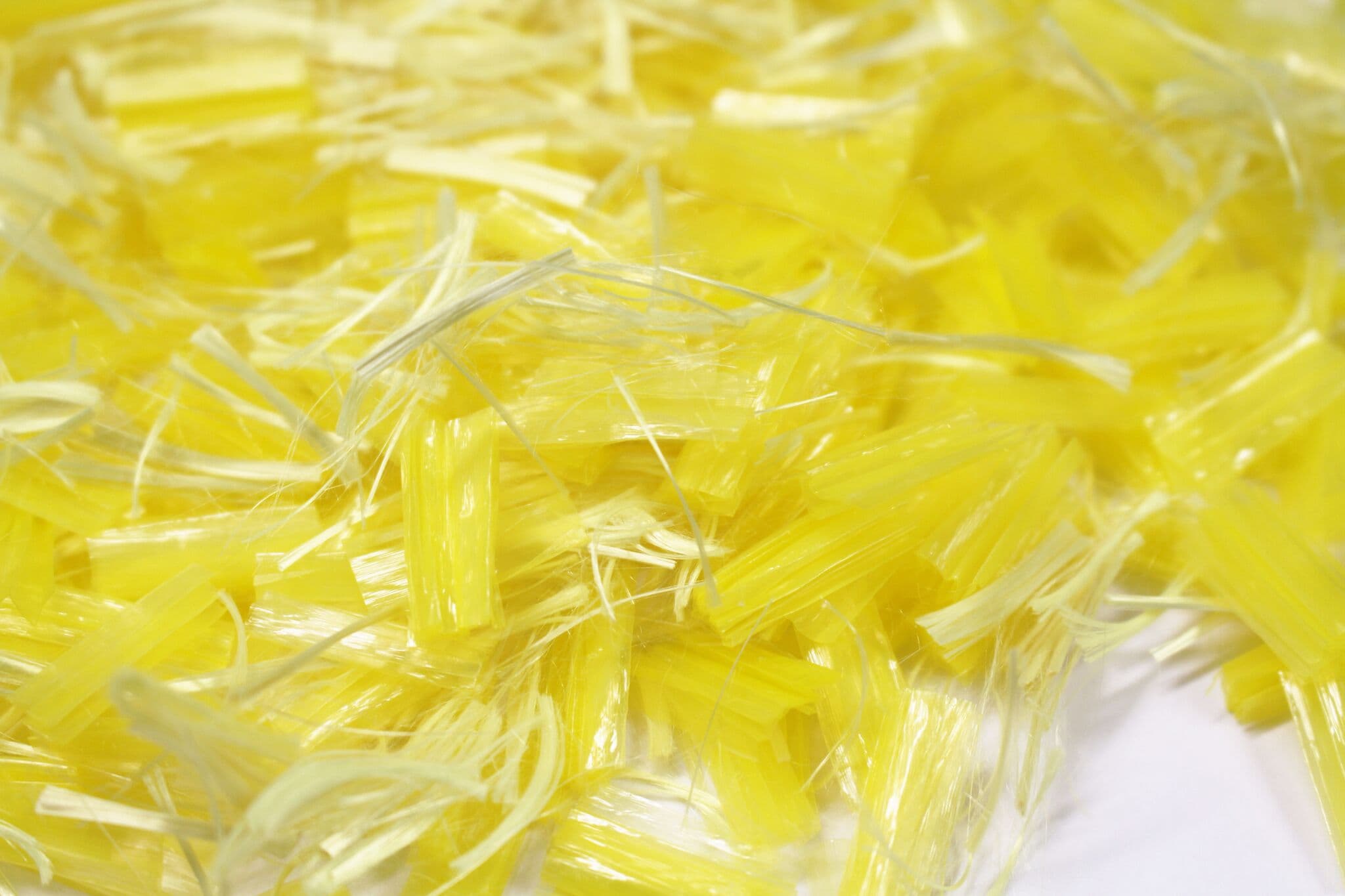
AsphaltX®
2000 filaments per aramid strand — 19 million fibres per tonne of asphalt. Lowest CO₂ footprint, European manufacturing, proven on the N337.
- TypeAramid (Twaron®) + polyolefin fibre blend
- Length± 19 mm
- Tensile strengthTwaron 3000 MPa · polyolefin 483 MPa
- Specific gravityTwaron 1.45 · polyolefin 0.91 g/cm³
 Most chosen
TwistR® GREEN HYBRID
High-performance synthetic macro fibres made from 100% polypropylene. Transforms concrete into a stronger composite material.
- TypeHybrid: twisted monofilament + fibrillating network fibre
- Material100% virgin polypropylene
- Length48 mm
- Dosage2.0 – 6.0 kg/m³
Pallet price on request
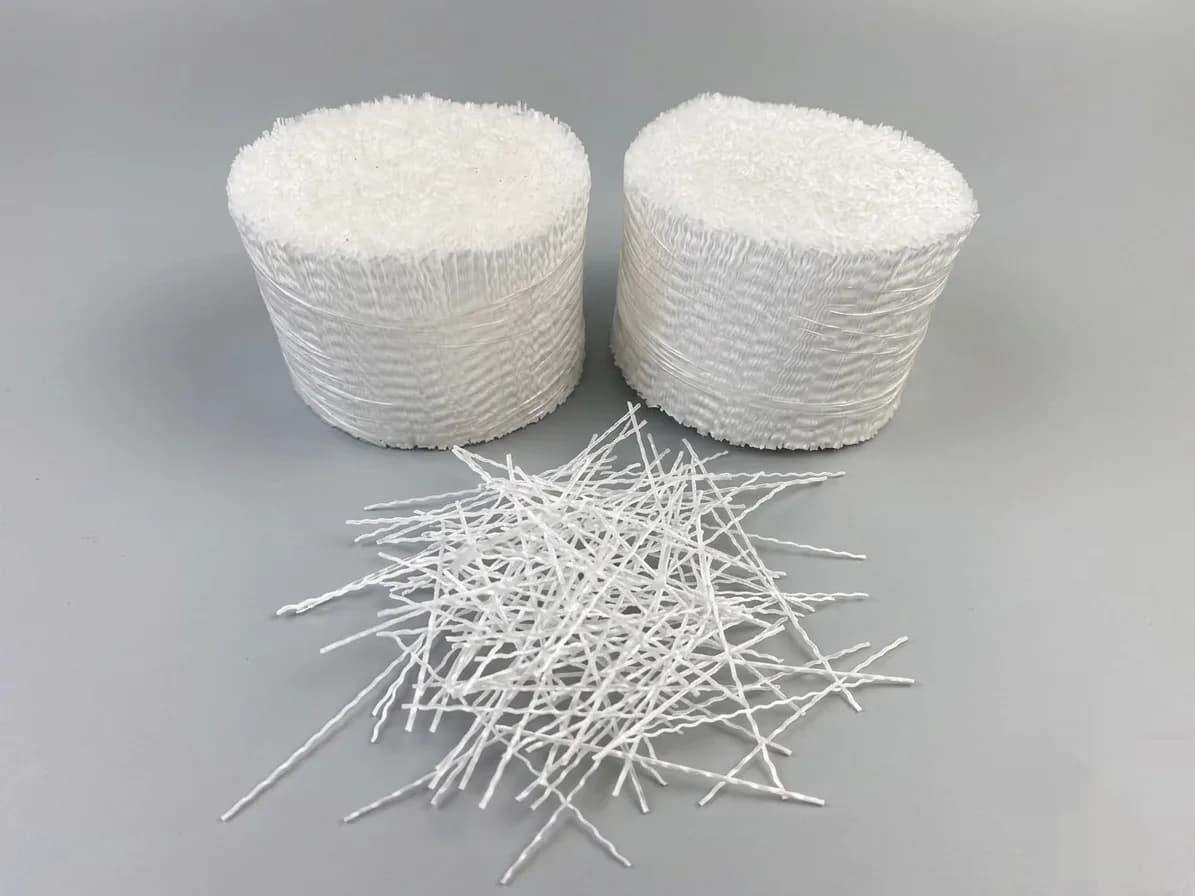
Wiking 4050 TR
High-performance polyolefin macro fibre, ideally suited to rough floors — a strong and cost-effective alternative to steel reinforcement.
- TypePolyolefin macro fibre (monofilament)
- Length48 mm
- Diameter700 µm
- Tensile strength557 MPa
Pallet price on request
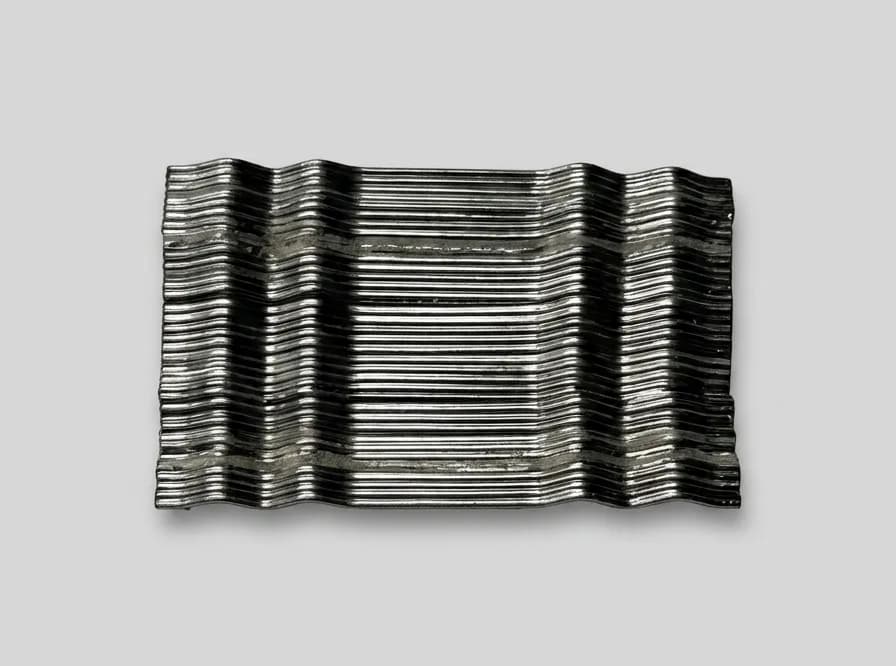
MPWG HT+ 50/0.90
High-tensile hooked steel fibres with aspect ratio 50/0.90. Maximum anchorage and ductility for heavily loaded structures.
- TypeCold-drawn hooked steel fibre (glued)
- Dimensions50 mm / Ø 0.90 mm
- Tensile strength2100 N/mm² ± 7.5%
- Performance class56
Pallet price on request