Fibre-reinforced asphalt for heavy-duty and temporary construction roads

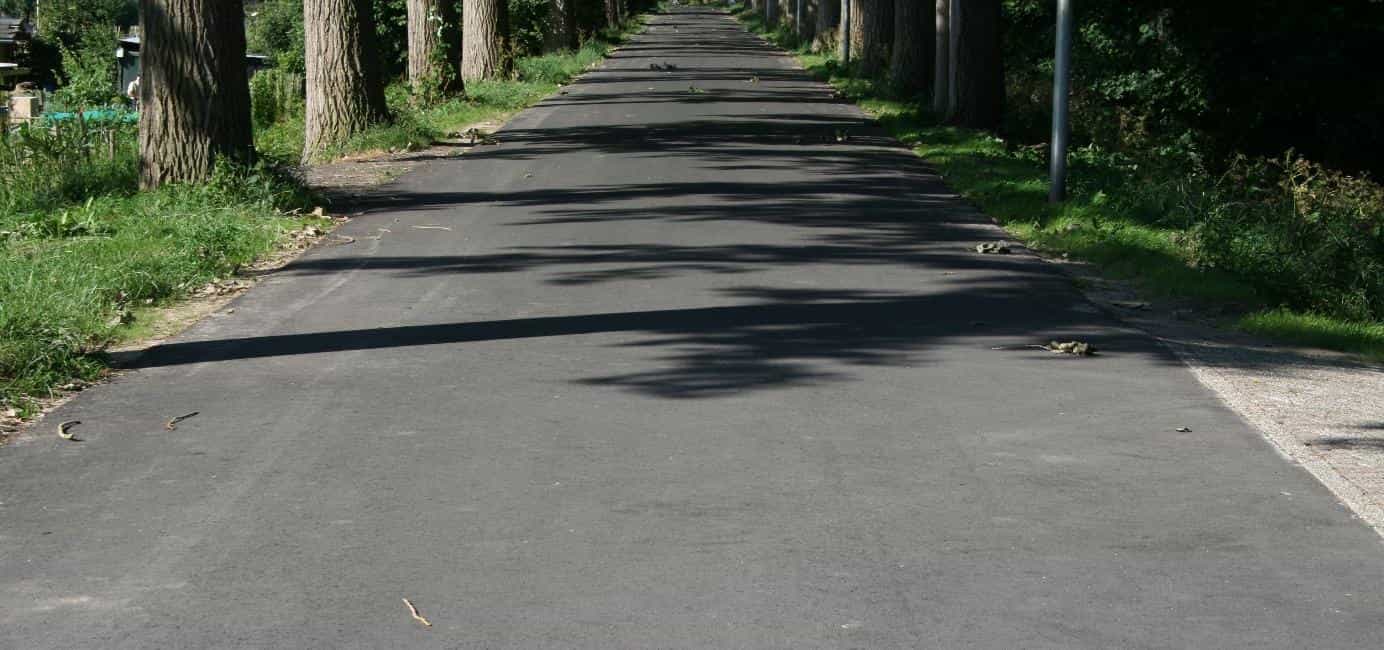
Steel road plates, crushed aggregate or asphalt? How to build a temporary construction road that carries heavy site traffic — and can be fully milled and reused once the project ends.
A temporary construction road has to carry heavy site traffic from day one, on a subgrade that is rarely prepared for it. Fibre-reinforced asphalt with aramid fibres — dosed at around 0.05%, roughly 500 grams per tonne, depending on mixture and application — slows rutting and cracking, requires no extra work step during installation, and can be fully milled and reused once the project ends.
Why a construction road is the most demanding temporary paving
Construction roads are among the most heavily loaded forms of temporary paving. Lorries carrying building materials, concrete mixers, telescopic cranes and abnormal loads run over the same narrow alignment every day, often with axle loads of 10 tonnes or more. Unlike a permanent road, the subgrade has usually not yet settled: the formation has been freshly excavated, the groundwater level fluctuates and settlement is still ongoing.
At the same time, the investment must stay limited. The road disappears again once the project is finished, or is converted into permanent infrastructure. That combination — high, repeated loading and a limited budget with a short lead time — makes the construction road a demanding application in which standard asphalt mixtures quickly show rutting and cracking. On the pillar page fibre-reinforced asphalt you can read how fibre reinforcement tackles that mechanism across the board; below we apply it to construction-road practice.
Road plates, crushed aggregate or asphalt: which construction road do you choose?
When building a construction road there are three common options. The right choice depends on the construction period, the traffic intensity and whether the road will later become permanent.
Steel road plates
Road plates are quickly laid and collected again, making them the logical choice for short construction periods (a few weeks) and small areas. The drawbacks emerge on longer projects: hire charges keep running, plates shift and sink on soft ground, and in wet weather the result is a muddy and unsafe surface. With construction periods from roughly six to twelve months, the cumulative hire and handling costs soon exceed the installation cost of a fixed pavement.
Crushed mixed aggregate (semi-paved)
A layer of crushed mixed aggregate of 250 to 400 mm is cheap to install — indicatively €10 to €20 per m² placed, 2026 price level, depending on layer thickness and haulage distance. For light site traffic that is often sufficient. Under intensive lorry traffic, however, potholes and ruts develop that demand continuous maintenance (grading, topping up, compacting), plus dust nuisance in dry spells and mud in wet ones. Crushed aggregate is therefore mainly suitable as a foundation beneath an asphalt construction road, less so as a running surface under heavy loading.
Asphalt, fibre-reinforced or not
An asphalt construction road costs indicatively €25 to €45 per m² including foundation and installation (2026 price level, depending on area, build-up and project) — for the full cost breakdown see the article what fibre-reinforced asphalt costs per m². In return you get a flat, load-bearing, all-weather running surface with no ongoing hire charges, barely any maintenance during construction, and full recyclability afterwards. From roughly six months of construction time and daily lorry traffic, asphalt is generally the cheapest option over the whole project duration.
In summary, per situation:
• Short construction period (weeks), light traffic — steel road plates.
• Medium construction period, light to medium-heavy traffic — crushed mixed aggregate, possibly upgraded later.
• Six months or longer, daily heavy traffic — (fibre-reinforced) asphalt on an aggregate foundation.
Building a construction road: foundation and layer build-up per load class
Even the best asphalt mixture will not compensate for a subgrade with insufficient bearing capacity. The foundation of the construction road is therefore step one: excavate the formation down to load-bearing ground, install a geotextile where needed to prevent mixing with soft subsoil, and compact the foundation layer in lifts. If in doubt, have the bearing capacity measured with a plate bearing test or cone penetration test — precisely on temporary roads that step is often skipped, with settlement as the result.
As an indication for the build-up, depending on subgrade and actual traffic loading:
• Light site traffic (vans, occasional lorries) — 250–300 mm crushed mixed aggregate + 50–60 mm asphalt in one layer.
• Medium-heavy (daily lorry traffic, concrete mixers) — 300–400 mm crushed mixed aggregate + 80–100 mm asphalt in two layers (base and binder course).
• Heavy (telescopic cranes, abnormal loads, high intensity) — 400–500 mm foundation, stabilised if necessary, + 100–140 mm asphalt in two to three layers, with fibre reinforcement in the most heavily loaded layer or layers.
These values are guide values; structurally critical situations (crane pads, abnormal-load routes) call for a calculation by a structural engineer or pavement consultant.
What fibre reinforcement adds under heavy site traffic
Aramid fibres such as those in AsphaltX form a three-dimensional reinforcement within the asphalt mixture. With a tensile strength of around 3,000 MPa and a melting point above 450 °C, the fibres survive the hot mixing process and absorb tensile stresses that bitumen and stone skeleton cannot handle on their own. For construction roads, that means in concrete terms:
• Less rutting and cracking — the fibres distribute the repeated, concentrated wheel loads of heavy site traffic across the mixture, keeping the surface flat and closed for the entire construction period.
• No extra work step — the fibres (dosage around 0.05%, roughly 500 g per tonne of asphalt, depending on mixture and application) are added at the asphalt plant; the mix design and on-site processing remain unchanged. For construction roads, which are almost always built under time pressure, that is a direct programme advantage.
• Standard equipment — installation is done with a regular paver and rollers, without investments that would never pay back on a temporary application. How that works out on site is covered in fibre reinforcement for contractors.
• Thinner at equal performance — because the fibre-reinforced layer can take more, the design can sometimes be one step thinner in consultation with the pavement engineer, saving material and cost.
Sustainability requirements on site also combine well: fibre-reinforced asphalt can readily be installed with electric equipment, as described in installing emission-free asphalt with fibres.
In practice: from an anonymous construction road to the Venedijk in Kampen
In the construction of a temporary construction road for a new-build project, a base and binder course with aramid fibre reinforcement was applied to prevent damage from heavy site traffic throughout the entire construction period. The road remained intact under intensive, repeated loading, while installation proceeded without any extra work step compared with standard asphalt processing.
That the same fibre technology can structurally handle heavy traffic loading is shown by the Venedijk project in Kampen: there Schagen Infra, commissioned by the municipality of Kampen, incorporated 200 kg of AsphaltX fibres into 400 tonnes of HMA asphalt. The result is a road surface with better resistance to cracking and rutting, a longer service life and less maintenance. For a construction road that is later converted into permanent infrastructure, that is doubly interesting: the temporary investment keeps its value.
Afterwards: milling and recycling the asphalt
A common objection to an asphalt construction road is that the material would be “gone” afterwards. The opposite is true. At the end of the project the road is taken up with a regular asphalt milling machine; the reclaimed asphalt (asphalt granulate) goes back to the asphalt plant and is reused there as a secondary raw material in new mixtures — in base courses, reuse percentages of 50% or more are common. Fibre-reinforced asphalt too can simply be milled and reused; no separate waste stream is needed.
The aggregate foundation beneath is equally reusable: on the project itself (for example under permanent paving or site landscaping) or elsewhere. An asphalt construction road thereby fits circular procurement requirements, certainly in combination with life-extending measures as described in asphalt maintenance and extending service life. Is the construction road becoming permanent? Then the fibre-reinforced base course can often stay in place and a new surface course is all that is needed.
From plan to construction road
Anyone wanting to build a temporary construction road goes through four steps in practice: determine the construction period and traffic loading, have the bearing capacity of the subgrade established, choose the paving and layer build-up on that basis, and agree the fibre dosage with the asphalt plant. Because AsphaltX runs in porous asphalt (ZOAB), SMA and dense asphalt without any change to the mix design, that last step is a matter of coordination, not redesign. For a project-specific calculation of dosage, tonnage and additional cost you can request a project quotation — with the tonnage of your construction road we will work out the fibre requirement and delivery in concrete terms for you.
Frequently asked questions
- What does a temporary construction road cost per m²?
- Indicatively, 2026 price level: crushed mixed aggregate as a running surface costs around €10–20 per m², an asphalt construction road including foundation around €25–45 per m², depending on area, layer build-up and project. Road plate hire looks cheap but keeps running on long construction periods. From roughly six months and daily lorry traffic, asphalt is usually the most economical option over the whole project duration; see also the cost breakdown of fibre-reinforced asphalt.
- Should I choose road plates or an asphalt construction road?
- Road plates suit short construction periods (weeks) and small areas: quickly laid, quickly removed. With construction periods from roughly six to twelve months and daily heavy traffic, asphalt wins: no ongoing hire, a flat all-weather running surface, barely any maintenance and full recyclability afterwards. Crushed mixed aggregate sits in between, but under intensive lorry traffic it demands continuous maintenance of potholes and ruts.
- How thick should the asphalt of a construction road be?
- As a guide: 50–60 mm of asphalt on 250–300 mm of crushed mixed aggregate for light site traffic, 80–100 mm in two layers on a 300–400 mm foundation for daily lorry traffic, and 100–140 mm in two to three layers on a 400–500 mm (possibly stabilised) foundation for abnormal loads and cranes. The actual build-up depends on the bearing capacity of the subgrade; have it measured and have critical situations calculated.
- Can fibre-reinforced asphalt be recycled after construction?
- Yes. Fibre-reinforced asphalt is taken up with a regular asphalt milling machine and reused as asphalt granulate in new mixtures at the asphalt plant — in base courses, reuse percentages of 50% or more are common. No separate waste stream is needed. The aggregate foundation is also reusable, on the project itself or elsewhere. If the construction road becomes permanent, the fibre-reinforced base course can often stay in place beneath a new surface course.
- Does fibre reinforcement require extra time or equipment during installation?
- No. Aramid fibres such as AsphaltX are added to the mixture at the asphalt plant, at around 0.05% or roughly 500 grams per tonne, depending on mixture and application. The mix design does not need to be adjusted and installation is done with a standard paver and rollers. For a construction road under time pressure that means: the same programme as regular asphalt, with a considerably stronger result.
Share this article
Products mentioned
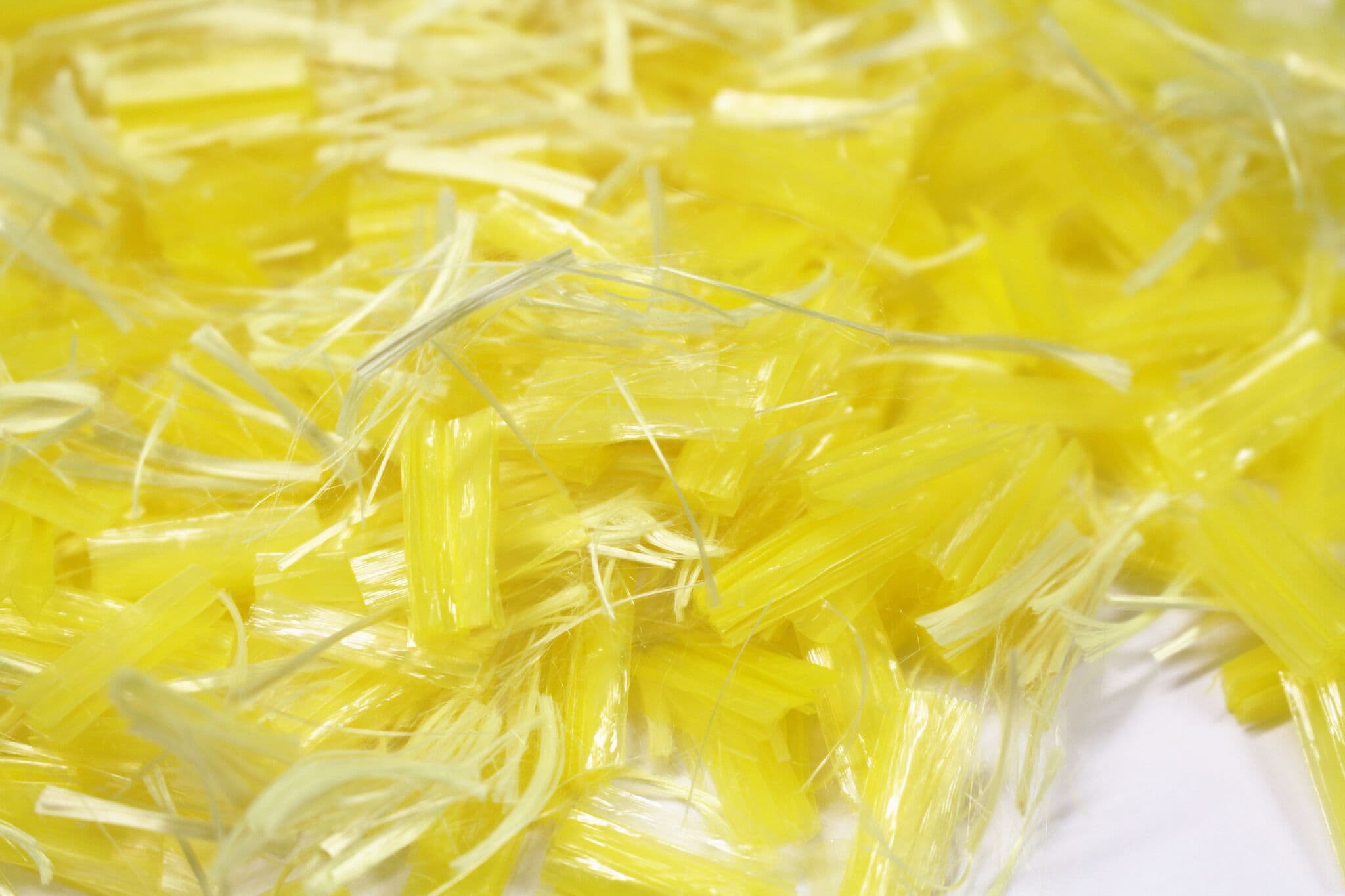
AsphaltX®
2000 filaments per aramid strand — 19 million fibres per tonne of asphalt. Lowest CO₂ footprint, European manufacturing, proven on the N337.
- TypeAramid (Twaron®) + polyolefin fibre blend
- Length± 19 mm
- Tensile strengthTwaron 3000 MPa · polyolefin 483 MPa
- Specific gravityTwaron 1.45 · polyolefin 0.91 g/cm³