Preventing shrinkage cracks in concrete: micro fibres in practice

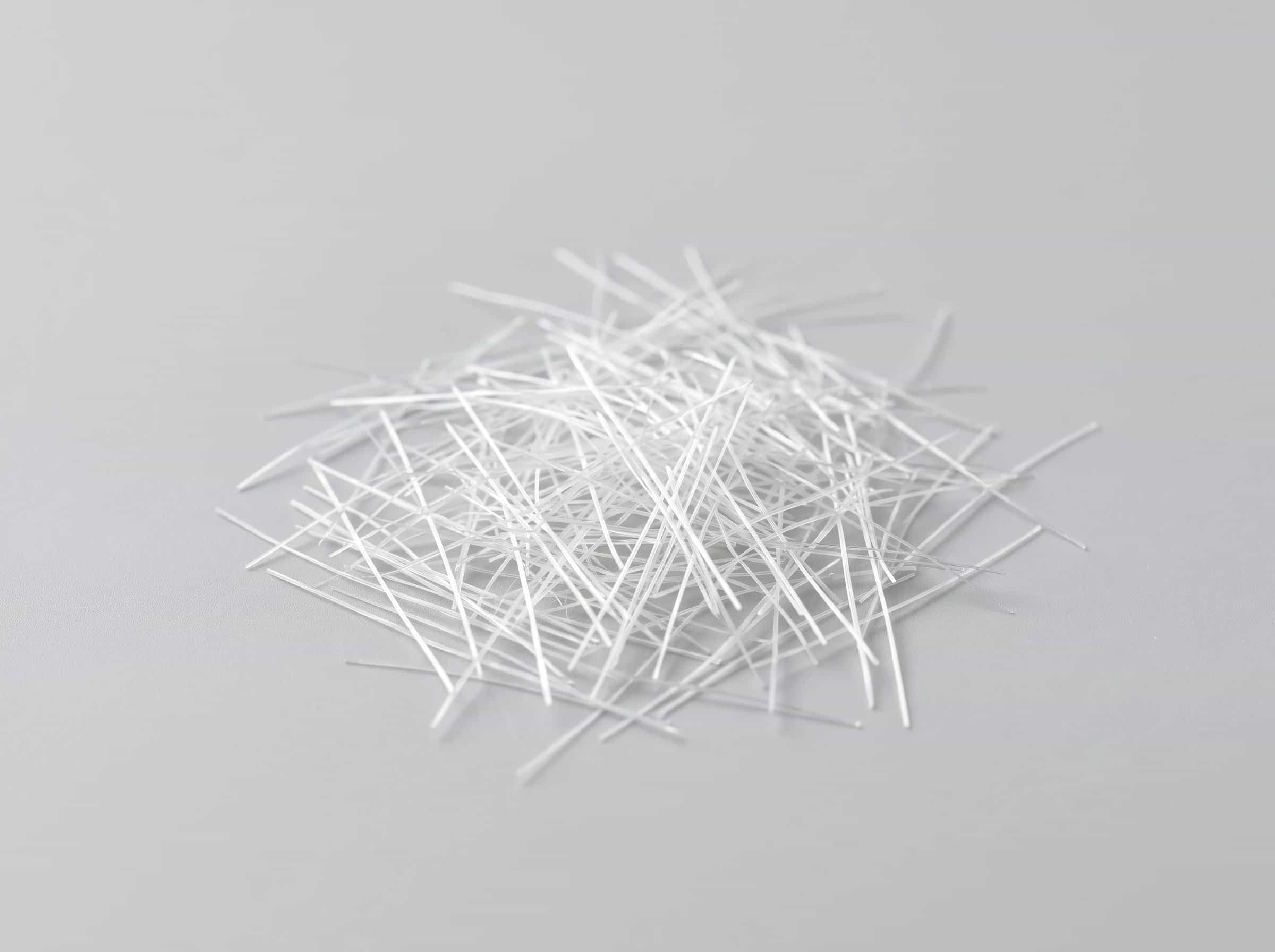
The first hours after pouring are critical. Why shrinkage cracks form in concrete, and how 0.6–1.0 kg/m³ of micro fibres prevents them.
Shrinkage cracks in concrete form because the surface dries out faster in the first 24 hours after pouring than the bleed water can replenish it. Polypropylene micro fibres prevent this: at a dosage of just 0.6–1.0 kg/m³, millions of fine filaments absorb the tensile stresses in the plastic phase, allowing the concrete to harden crack-free.
Why do shrinkage cracks form in concrete?
Freshly poured concrete has barely any tensile strength. In the first hours — the plastic phase — mixing water rises to the surface as bleed water, while that same surface loses water through evaporation. As long as the supply keeps pace with the evaporation, nothing happens. Once that balance tips, the top layer shrinks while the concrete beneath it is not yet moving. The resulting tensile stress is too much for the young concrete: plastic shrinkage cracks form.
The risk is greatest when the evaporation rate exceeds around 1.0 kg/m² per hour. In practice that happens with a combination of wind, direct sun, low humidity and a large open pour surface — think of an industrial floor or yard paving on a dry spring day. Outdoor slabs in sun and wind are just as exposed; for a concrete patio without reinforcement mesh, a micro fibre against early shrinkage is therefore often combined with a structural macro fibre. Mixes with little bleeding, such as concrete with a high fines content or a low water-cement ratio, are also more susceptible: quite simply, less water rises to the surface to compensate for the loss.
Typical plastic shrinkage cracks are 0.1 to several millimetres wide, tens of centimetres long, and often run diagonally or in an irregular pattern across the surface. They appear within a few hours of pouring or power floating — precisely in the phase when corrective action is no longer possible.
Plastic shrinkage, drying shrinkage and contraction joints: the difference
In practice, three concepts are used interchangeably that each call for a different approach.
Plastic shrinkage (0–24 hours)
Plastic shrinkage occurs in the first hours after pouring, while the concrete is still workable. This is the domain of the micro fibre: a finely distributed network of synthetic filaments that absorbs the early tensile stresses. Traditional reinforcement sits too deep and the concrete does not yet bond to it in this phase — against plastic shrinkage, a reinforcement mesh does virtually nothing.
Drying shrinkage (weeks to months)
Hardened concrete then continues to lose moisture for months, shrinking typically 0.4–0.6 mm per metre in the process. This drying shrinkage cannot be prevented, only controlled: with contraction joints, with shrinkage reinforcement (a mesh or a structural fibre dosage that keeps cracks finely distributed) and with good curing. For continuously reinforced or structurally loaded floors, this always includes a calculation by the structural engineer — fibres do not automatically replace structural reinforcement.
Contraction joints in concrete
Contraction joints are controlled weakenings that make the floor crack at predetermined locations. Rules of thumb: saw within 24 hours of pouring, to a depth of about one third of the floor thickness, and keep bay sizes limited (often around 25–36 m² for unreinforced floors). Contraction joints and micro fibres complement each other: the joint steers the drying shrinkage, the fibre prevents the plastic cracks that have already formed before sawing. How joints, reinforcement and fibres come together in a single floor build-up is covered in the complete guide to pouring fibre reinforced concrete.
When are shrinkage cracks harmful?
A fine shrinkage crack in an internal floor without moisture or liquid loading is mainly an aesthetic problem — annoyingly visible, especially in a power-floated concrete floor where the surface is meant to be the showpiece. Yet "merely aesthetic" is often too quick a judgement.
• Moisture and chlorides — cracks form a motorway for water and de-icing salts to reach the reinforcement, with corrosion and, in time, concrete damage as a result.
• Liquid-tightness — for agricultural floors, wash bays and floors subject to environmental regulations, every through-crack counts as a leak.
• Consequential damage — a plastic shrinkage crack is a weak spot where later drying shrinkage or loading concentrates; small cracks thus grow into large ones.
• Wear — along crack edges the surface spalls faster under wheel loading, especially with forklift traffic.
A rule of thumb from flooring practice: cracks up to around 0.2 mm are usually acceptable in dry internal applications; beyond that, or under moisture and chloride loading, assessment and repair are advisable.
Repair or prevent shrinkage cracks in concrete?
Repair is possible. Fine cracks are filled or injected with epoxy or PU resin; wider cracks are ground out and repaired with repair mortar. It works, but it remains visible, quickly costs tens of euros per linear metre (indicative, 2026 price level, depending on the crack pattern and accessibility) and never restores the monolith the concrete should have been. The full approach per damage type is set out in concrete repair: fixing cracks in a concrete floor.
Prevention is drastically cheaper. A micro fibre dosage costs indicatively a few euros per cubic metre of concrete — on a 20 cm thick floor that converts to less than one euro per square metre. Compare that with the repair costs, the argument over who pays for the crack and the stains an injection leaves in an exposed floor, and the sums are quickly done. That is why more and more specifications for power-floated floors prescribe fibres against shrinkage cracks as standard.
How micro fibres prevent plastic shrinkage cracks
Synthetic micro fibres made of polypropylene (PP) distribute themselves homogeneously through the entire concrete volume during mixing. A single dosage of 0.6 kg/m³ means millions of filaments per cubic metre — a three-dimensional network with a fibre spacing of a few millimetres, including in the top layer where the shrinkage stress arises.
In the plastic phase, when the concrete itself still has virtually no tensile strength, those filaments bridge the micro-cracks the moment they try to form. The tensile stress is spread across countless fibres instead of concentrating at a single weak spot. In addition, the fibres slightly slow the bleeding and keep the mix more cohesive, which reduces sand streaks and ponding at the surface. The result is a denser, more wear-resistant surface — an added benefit that floor layers see immediately when power floating.
Anyone who wants to take a sustainability step alongside shrinkage control can look at micro fibres based on basalt: Basalt Chopped is made from natural volcanic rock, is heat-resistant up to around 700 °C and fully recyclable. For the classic plastic shrinkage application, however, PP remains the standard on price and availability.
Promicro or Profib: which micro fibre should you choose?
Dutch Fiber Trading supplies two PP micro fibres, each with its own sweet spot.
• Promicro — monofilament micro fibre against plastic shrinkage: loose, smooth filaments that distribute very finely. First choice for cast-in-place concrete, power-floated floors and exposed work, because the fibre remains virtually invisible at the surface.
• Profib — fibrillated micro fibre for screeds: a mesh-fibrillated fibre that opens up in the mixer and anchors mechanically in the mix. Strong in sand-cement and semi-dry mixes, where extra cohesion during placement is desirable.
A classic shrinkage crack in the screed is, incidentally, a story of its own: sand-cement sets differently and is worked differently from cast-in-place concrete. How to lay a sand-cement screed crack-free is therefore covered in a separate article. A floating screed on insulation deserves extra care: laid on a membrane, it can only dry through its surface, which makes it especially prone to early shrinkage cracks.
Micro fibres and shrinkage reinforcement: what replaces what?
Shrinkage reinforcement — usually a light reinforcement mesh — has the task of keeping cracks from drying shrinkage finely distributed and narrow. Micro fibres and shrinkage mesh are therefore not one-for-one substitutes: the micro fibre works in the first 24 hours, the mesh (or a structural macro fibre dosage conforming to EN 14889-2) in the months thereafter. How micro and macro fibres in concrete each bridge cracks, from the fresh mix to the hardened floor, is explained step by step in a separate article.
In practice there are three routes. For non-structural floors with sufficient contraction joints, a micro fibre alone is often sufficient. For floors with larger joint spacings or point loads, you combine micro fibres with a mesh or with structural macro fibres — that combination is common, for example, with underfloor heating in fibre concrete, where a mesh-free floor considerably speeds up the laying of pipework. For structurally loaded floors, the structural engineer determines the reinforcement; the micro fibre then remains the addition for the plastic phase.
Dosage and handling in practice
The dosage of PP micro fibres is low and changes nothing about the mix design:
• 0.6 kg/m³ — standard dosage for plastic shrinkage crack control under normal conditions.
• 0.9–1.0 kg/m³ — elevated risk: wind, sun, low humidity, large open surfaces or mixes with little bleeding.
Micro fibres go straight into the mixer or truck mixer — Promicro even comes in soluble bags of 900 grams, so no tearing open or weighing out on site. After adding, mix for a few more minutes at full speed so the fibres distribute completely. No extra equipment is needed, the concrete remains normally pumpable and power-floatable, and the consistency barely changes at these dosages.
How much fibre your project needs exactly can be worked out in a minute with the fibre calculator: enter the area and floor thickness, and you immediately see the required kilos and the number of bags.
Pouring crack-free: the checklist
Micro fibres are the most reliable measure against plastic shrinkage cracks, but they work best as part of a complete pouring approach. More background on mixes, dosages and fibre types can be found in our knowledge centre on fibre reinforced concrete.
• Dose 0.6–1.0 kg/m³ of PP micro fibres, matched to the weather conditions on the day of the pour.
• Plan the pour outside the hottest hours and shield the surface in windy conditions.
• Cure the surface immediately after finishing: curing compound, sheeting or keeping it wet.
• Saw contraction joints within 24 hours to one third of the floor thickness.
• Unsure between Promicro and Profib, or about the dosage for your mix? Request a quotation with dosing advice — our specialists work through it with you free of charge.
Frequently asked questions
- What are plastic shrinkage cracks in concrete?
- Plastic shrinkage cracks are fine cracks (0.1 to several millimetres wide) that form in the first 24 hours after pouring, when the surface dries out faster than the bleed water can replenish it. The young concrete still has barely any tensile strength and cracks under the shrinkage stress. They appear mainly with wind, sun and low humidity, often in an irregular or diagonal pattern.
- How do you prevent shrinkage cracks in concrete?
- The most effective measure is 0.6–1.0 kg/m³ of polypropylene micro fibres, such as Promicro: millions of filaments absorb the tensile stresses in the plastic phase. Combine this with good curing (curing compound, sheeting or keeping the surface wet), pouring outside the hottest hours and contraction joints sawn within 24 hours to one third of the floor thickness.
- Can you repair shrinkage cracks in concrete?
- Yes. Fine cracks are injected with epoxy or PU resin, wider cracks are ground out and filled with repair mortar. Allow indicatively for tens of euros per linear metre and bear in mind that the repair remains visible. Prevention with micro fibres costs a fraction of that; see also our article on fixing cracks in a concrete floor.
- Are shrinkage cracks in concrete harmful?
- That depends on the application. In dry internal floors, cracks up to around 0.2 mm are usually only an aesthetic problem. Under moisture, chloride or liquid loading, however, they form a route to the reinforcement (corrosion risk) or a leak in liquid-tight floors. Moreover, later shrinkage and loading concentrate on existing cracks, so small cracks can grow.
- How much micro fibre do you need per cubic metre of concrete?
- For plastic shrinkage crack control, 0.6 kg/m³ is the standard dosage; at elevated risk — wind, sun, low humidity or large open surfaces — we recommend 0.9–1.0 kg/m³. The fibres go straight into the mixer or truck mixer, with Promicro in soluble bags of 900 grams. With the fibre calculator you can work out the required quantity for your floor straight away.
- Do micro fibres replace shrinkage reinforcement?
- Not automatically. Micro fibres work against plastic shrinkage in the first 24 hours; shrinkage reinforcement (a mesh or structural macro fibres) controls the drying shrinkage in the months thereafter. For non-structural floors with sufficient contraction joints, a micro fibre alone is often sufficient, but for structural work or larger joint spacings the choice requires a calculation by the structural engineer.
Share this article
Products mentioned
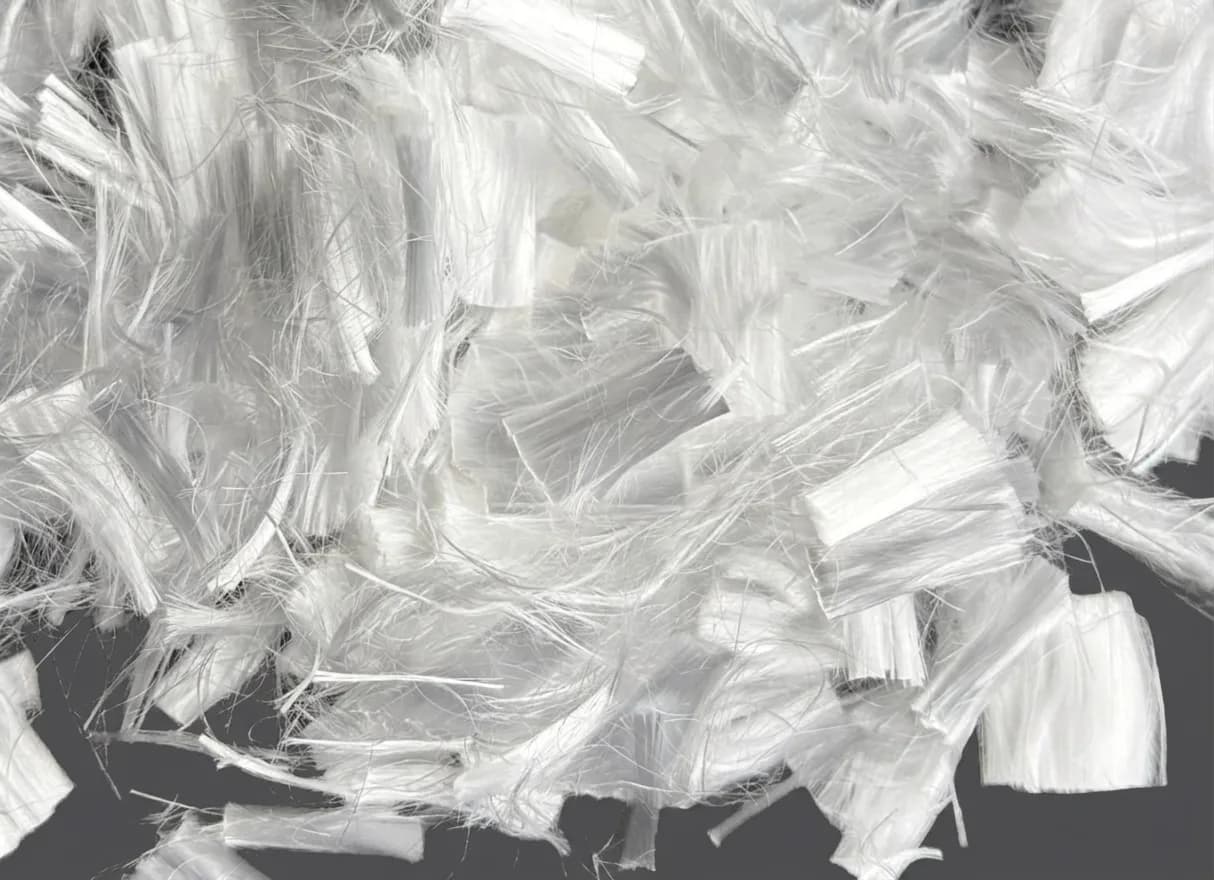
Promicro
Synthetic PP monofilament micro fibre against plastic shrinkage cracks. Homogeneous dispersion and better surface quality at a low dosage.
- TypePolypropylene monofilament (round cross-section)
- Length12 mm
- Equivalent diameter32 µm
- Linear density6.5 dpf
Pallet price on request
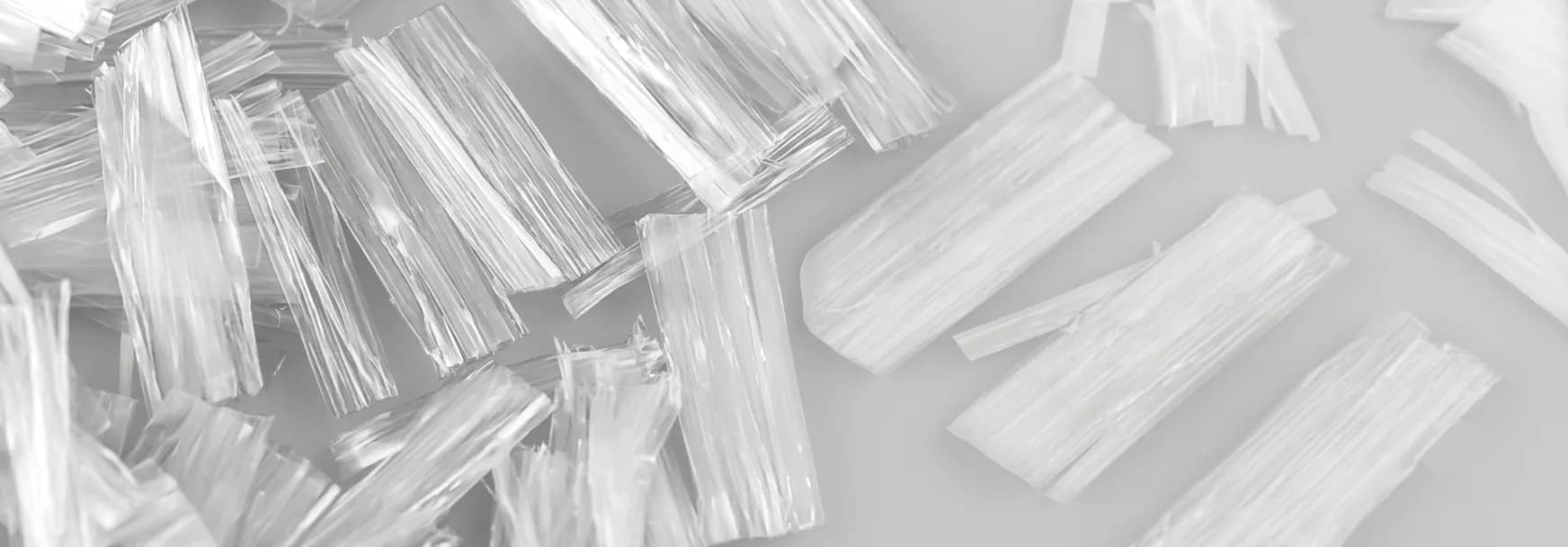
Profib
Fibrillated PP micro fibre for plastic shrinkage crack control, strong in sand-cement screeds. Disperses homogeneously through the concrete.
- TypePolypropylene (fibrillated tape)
- Length12 mm
- Number of fibres per kg100,000
- Tensile strength370 MPa
Pallet price on request