Verge reinforcement with grass concrete pavers: how to stop verge damage for good

What is verge reinforcement, which systems are available and how do you design and lay a road verge with grass concrete pavers? Covers paver thickness, sub-base, maintenance and why a paver with steel reinforcement and synthetic fibres stays intact for longer.
Verge reinforcement means strengthening the roadside verge (the shoulder, in US and Indian usage) so that vehicles that pull over or pass each other no longer churn it up. Grass concrete pavers are one of the most effective ways to reinforce a verge and stop verge damage along narrow roads for good: a concrete grid carries the wheel load, while the open cells are filled with soil and seeded, so the verge stays green.
On many rural roads the carriageway is too narrow for two vehicles to pass without using the verge. Heavy farm machinery, vans and lorries therefore run with one wheel on the grass as a matter of routine. An unreinforced verge is not built for that. Highway authorities know the result only too well: deep ruts, crumbling asphalt edges and a dangerous step between road and verge.
This article explains how to reinforce a verge with grass concrete pavers, from design to maintenance, and why a paver with steel reinforcement and synthetic fibres stays intact for longer. It is written for highway authorities, contractors and precast concrete manufacturers; how fibres fit into wider road management by municipalities is covered separately.
What causes verge damage on narrow roads?
Verge damage occurs when the bearing capacity of the verge is lower than the load from vehicles running over it. In wet periods especially, a grass verge on clay or peat soon loses its strength, and every passing wheel presses the soil down further. The damage usually develops in four stages:
• Ruts in the verge: wheels press tracks into the wet verge. This is not the same as rutting in the asphalt itself: there the carriageway deforms, here the verge beside it sinks away.
• Edge drop: a step forms between the asphalt edge and the verge, from a few centimetres to a decimetre or more (in US terms, a pavement edge drop-off).
• Edge break: the asphalt edge loses its lateral support and breaks away, with ravelling and cracking. As long as the verge keeps sinking, a repaired edge will break off again; maintenance of the asphalt edge is covered separately.
• Narrowing: the usable carriageway becomes narrower, so even more traffic is forced onto the verge.
The damage therefore feeds itself: the narrower the usable road, the more often the verge is overrun. Filling the ruts every few years only treats the symptom; verge reinforcement tackles the cause.
Road safety and the highway authority's liability
Verge damage is not only a maintenance problem but also a safety problem. A deep edge drop can throw a vehicle off course as the driver steers back onto the carriageway. For cyclists and motorcyclists, a crumbling asphalt edge is a direct risk of falling. Research by the Dutch road safety institute SWOV on level differences between surface course and verge (report R-91-75) concludes that, from a road safety point of view, it is generally advisable to have no level difference between the pavement and the verge. In the US, the Federal Highway Administration treats a vertical edge drop-off of 3 inches (about 75 mm) or more as unsafe and promotes the Safety Edge, a pavement edge shaped at an angle of about 30 degrees.
A highway authority can also be held liable for damage caused by poorly maintained verges; the legal basis differs from country to country. In the Netherlands it is the liability for defective structures, which include public roads (Article 6:174 of the Dutch Civil Code). In a case decided by the Dutch Supreme Court on 4 April 2014 (ECLI:NL:HR:2014:831), a cyclist fell when his front wheel slipped into a gap between the asphalt carriageway and the grass concrete pavers in the verge, which shows that the joint between verge reinforcement and asphalt edge deserves attention too. Whether an authority is liable in a given case depends on the circumstances; this article is not legal advice.
Verge reinforcement options compared
The right system depends on the traffic load, the subgrade and the look you want. The systems below combine load capacity with a green or semi-open surface, so the verge still looks like a verge.
| System | Material | Load capacity | Green character | Suited to |
|---|---|---|---|---|
| Grass concrete pavers | Concrete with open cells | High, provided they are thick enough (120 mm or more) and laid on a good sub-base | Moderate to good | Verges regularly overrun by farm machinery and lorries, not as a running lane |
| Verge blocks and reinforced verge units | Solid concrete with open space between the blocks, or an open concrete unit with steel reinforcement | Very high | Moderate | Heavily loaded passing places and bends |
| In-situ porous concrete strip | Open, plantable concrete laid by machine as a continuous strip | Depends on layer thickness and sub-base | Moderate: grass grows in the voids | Long, continuous strips along the carriageway |
| Plastic grass grids | Recycled plastic (HDPE/PP) | Medium | Good | Light to moderate traffic, occasional overrun |
| Granular verge stabilisation | Mixed recycled aggregate or crushed stone with soil | Medium | Low to moderate | Temporary or low-cost solution |
Grass concrete pavers, verge blocks, porous concrete and plastic grids
Grass concrete pavers are the classic choice. The concrete grid carries the wheel load, while the open cells are filled with soil or a soil-aggregate mix and seeded. They are robust and last for decades. You will also come across concrete grass pavers, grass concrete blocks and, in the US, turf blocks; ASTM uses the term concrete grid paving units.
Verge blocks are heavier and are laid directly against the asphalt edge. They act as an edge restraint at the same time and stop the asphalt edge from sinking. There are also reinforced verge units (side-strip or shoulder slabs): precast concrete units with steel reinforcement that are placed alongside the existing pavement and support the edge of the road structure.
In-situ porous concrete is open, free-draining concrete that is laid by machine on site as a continuous strip alongside the carriageway. Grass grows in the voids of the concrete. There are no joints between separate units, but a strip like this cannot be lifted and relaid like individual pavers either.
Plastic grass grids (grass reinforcement grids) are light, quick to lay and ecologically attractive. Under heavy farm machinery, however, they deform sooner, especially on a soft subgrade. So are concrete or plastic grass pavers better for a road verge? Plastic for light and occasional traffic, concrete as soon as farm machinery and lorries regularly drive over the verge.
Granular verges and soil stabilisation. A strip of mixed aggregate or crushed stone with soil is quick to lay, but remains a temporary solution. An alternative is soil stabilisation (in the US, shoulder stabilization): the verge soil is mixed in place with a binder into a load-bearing layer, possibly combined with grass concrete pavers, so there is no need to dig out a box for a new sub-base. According to SWOV research among Dutch road authorities (R-2003-11), many Dutch provinces are experimenting with forms of the (semi-)paved verge. The different kinds of unbound and semi-open surfacing are compared in types of pavement.
Which grass concrete paver for a verge: thickness, size and weight
Not every grass concrete paver is made for a verge next to the carriageway. The common size is 600 x 400 mm (4.17 pavers per m²), in thicknesses from 80 to 150 mm. According to manufacturers' data sheets, a 600 x 400 mm paver 100 to 120 mm thick weighs roughly 31 to 44 kg, depending on thickness and cell shape; ask the manufacturer for the exact figure. According to a Belgian manufacturers' brochure, the openings make up at least 25% of the paver surface.
For thickness, the Belgian technical specification PTV 121 gives a useful classification into strength classes. The strip alongside a carriageway (verge protection) falls into the heaviest class, with a thickness of 120 to 150 mm. PTV 121 is given here as a Belgian reference; more recent product sheets also refer to PTV 126, so check which specification applies in your contract.
| Strength class | Thickness | Application (indicative) | Breaking load |
|---|---|---|---|
| 5 | 80 to 100 mm | Pedestrian areas and embankments | 12.5 N/mm |
| 10 | 100 to 120 mm | Parking for light vehicles | 25.0 N/mm |
| 20 | 120 to 150 mm | Verge protection and fire access routes | 50.0 N/mm |
Product standards for grass concrete pavers: EN 1338, ASTM C1319 and Kiwa BRL K11001
Concrete paving units are covered by product standards: in Europe and the UK by BS EN 1338 for concrete paving blocks, in the US by ASTM C1319 for concrete grid paving units, and in India by IS 18894:2024 for precast concrete paving grids and grass pavers. In the Netherlands, grass concrete pavers are certified under the Kiwa assessment guideline BRL K11001 (grass concrete pavers), with BRL 5070 for the product requirements. That guideline explicitly lists road verges as an application, alongside embankments, car parks and bank protection among others, for light, normal and heavy traffic.
What matters for the verge: product standards such as EN 1338 and Kiwa BRL K11001 cover unreinforced units. A paver or verge unit with steel reinforcement falls outside their scope, and so does the question of which reinforcement and which fibres go into it. That is the subject of the next section.
Also look at the surface profile. A coarser cell structure gives more green: according to a Dutch manufacturer's data sheet, about 70% of the surface can be grassed with profile class A (vormklasse A), against about 40% with the flatter profile class B. A flatter paver gives a quieter ride, which counts where cyclists or houses are next to the verge. And however good the paver, it only works on a good sub-base.
Hybrid grass concrete pavers: steel reinforcement plus synthetic fibres
For extra strength, choose a hybrid solution: concrete verge pavers with both steel reinforcement and synthetic fibres. The combination is stronger than either on its own, because the steel takes the large loads and the fibres make the concrete itself tougher. Reinforced grass concrete pavers and verge units like these are intended for verges that heavy vehicles and farm machinery drive over regularly.
• Steel reinforcement: a steel mesh or bars in the paver take up the tensile stresses that develop when a heavy wheel stands on the edge or the middle of the paver. This prevents the paver from breaking into pieces if the subgrade settles locally.
• Synthetic fibres: synthetic fibres mixed through the concrete (usually polypropylene) limit shrinkage cracking while the concrete cures and improve impact resistance. Spalling of corners and cell walls is greatly reduced as a result.
The result of this hybrid approach is a paver that cracks less readily, stays intact for longer and performs better under farm machinery and lorries. The fibres are in the concrete of the precast unit itself, not in the sub-base or the cell infill: it is a choice the manufacturer makes in the factory, and one that you, as the client, write into the specification.
Dutch precast manufacturer Swaans Beton, for example, makes reinforced verge units for road verges with a soft subgrade, heavy and wide farm machinery or a carriageway that is too narrow, and combines steel reinforcement with synthetic fibres in them as a hybrid solution.
Steel reinforcement and fibres complement each other here rather than replacing each other: the reinforcement carries the wheel load, the fibres protect the concrete of the thin cell walls and the corners. How reinforcement and fibres compare in general is explained in fibre reinforced concrete vs traditional reinforcement; how manufacturers work fibres into their production, in fibre reinforcement in precast concrete elements.
Which synthetic fibres for a verge paver?
There are two kinds of synthetic fibre, each with its own job. Micro fibres are thin and short and counter plastic shrinkage cracks in the first hours after casting, which helps keep the thin cell walls and corners of a grass concrete paver intact. Macro fibres are thicker and longer and give the concrete toughness after cracking: a crack stays narrow and the unit does not fall apart. When each fibre fits is explained in when synthetic fibre concrete is the right choice. From the DFT range, the candidates are:
• Promicro: 12 mm PP monofilament micro fibre, dosage 0.6 to 1.0 kg/m³, fibre class 1a to EN 14889-2. Used, for example, in precast elements with thin walls, which makes it suitable for limiting plastic shrinkage in thin cell walls.
• Profib: 12 mm fibrillated PP micro fibre that opens into a fine network during mixing; also intended for precast elements.
• TwistR: 48 mm PP macro fibre, dosage 2.0 to 6.0 kg/m³, with applications including precast concrete elements. Suitable for toughness and edge strength in more solid reinforced verge units; an alternative macro fibre is Wiking 4050 TR (EN 14889-2, class II).
Note: the manufacturer matches the fibre length to the wall thickness, and in thin cell walls a micro fibre is a more obvious choice than a 48 mm macro fibre. There is no fixed dosage recommendation for grass concrete pavers; the manufacturer sets the fibre content based on its own mix and unit. More on shrinkage in young concrete in preventing shrinkage cracks with micro fibres.
Specifying reinforcement and fibre content
Ask the supplier which reinforcement and what fibre content are used, and write both into the specification. Because product standards such as EN 1338 and Kiwa BRL K11001 only cover unreinforced units, a certificate under them says nothing about reinforcement or fibres. Specify separately: the type and position of the reinforcement, the fibre type (micro or macro fibre, and the material), the fibre class to EN 14889-2 and the fibre content in kg/m³.
Synthetic fibres for concrete are supplied with CE marking under EN 14889-2; what that marking does and does not tell you is explained in EN 14889 and the CE marking of fibres. How to include fibres in a tender is covered in fibres in the tender specification.
Designing a reinforced verge: width, level, edge, sub-base and drainage
Good design starts with the question of where and how often the verge is overrun. Not every metre of verge needs reinforcing; often it is enough to treat bends, passing places and field entrances. In the UK, Nottinghamshire's highway design guide, for example, links the extent of verge strengthening to the number of agricultural movements per day.
• Width: match the width to the wheel track of the design vehicle. In practice 300 to 600 mm is often used, and more at passing places. Pavers of 600 x 400 mm can then be laid to a width of 400 or 600 mm. A passing place for tractors and other wide farm machinery (a turnout, in the US) needs a wider strip. These figures are indicative; check them against the applicable national guidance (in the Netherlands, for example, the CROW publication on safe verge design, 'Veilige inrichting van bermen') and your own policy.
• Level: lay the top of the pavers flush with, or a few millimetres below, the asphalt edge. This avoids creating a new raised edge and lets water run off. It is in line with the SWOV advice to avoid any level difference between pavement and verge.
• Joint with the carriageway: the pavers must sit tight against the asphalt edge so that they support it laterally. A joint where soil washes out becomes a new weak spot later, and a gap that a bicycle wheel can drop into is a safety risk.
• Sub-base: much of the load capacity comes from the sub-base, not just from the paver. On soft ground, a heavier sub-base or a separation geotextile under the sub-base is needed. For comparison: in Belgium a manufacturers' brochure states a sub-base of at least 200 mm under grass concrete pavers; in the UK a council standard detail places concrete grass pavers on a Type 1 sub-base.
• Drainage: the verge must keep draining water away from the carriageway. Open systems let water soak in; check that the crossfall still runs towards the ditch or swale.
• Grooves and ribs: studded or grooved pavers also have a warning function: noise and vibration alert drivers that they are leaving the carriageway. Next to houses and where many cyclists ride, a flatter paver is quieter; for the cycle path itself see cycle path surfacing. A Dutch laying guide specifies that pavers with grooves are laid at right angles to the direction of travel, so that water drains from the carriageway into the verge.
• Road safety: a reinforced verge invites higher speeds. Consider combining verge reinforcement with speed-reducing or visual measures.
How to lay grass concrete pavers in a verge: step by step
The quality of the installation determines how long verge reinforcement lasts. A paver that has sunk within a year almost always points to a fault in the sub-base or the compaction. This is how you lay grass concrete pavers in a verge, in ten steps:
1. Traffic management and buried services. Set up traffic management for the work area in line with the applicable rules and locate buried cables and pipes before you dig (in the Netherlands through a KLIC notification, in the US by calling 811). Services often lie shallow in verges.
2. Excavation. Dig out the verge to the depth needed for sub-base plus paver. Remove turf, roots and soft soil.
3. Repair the asphalt edge. Saw a damaged or ravelling edge straight and repair it first. Laying pavers against a poor edge only moves the problem. How to maintain the asphalt edge and the rest of the pavement is explained in asphalt maintenance and extending service life.
4. Geotextile (if needed). On a soft subgrade, lay a separation geotextile so that the sub-base and subgrade do not mix.
5. Lay and compact the sub-base. Place mixed aggregate or crushed stone (in the UK typically Type 1 sub-base) in layers and compact each layer well with a plate compactor or roller.
6. Bedding layer. Spread a thin bedding layer of sand or fine aggregate, screeded level. A Belgian manufacturers' brochure gives 30 to 50 mm, uncompacted.
7. Lay the pavers. Lay the pavers tight against the asphalt edge and against each other, in a bond where the system requires it. Check the level with a straightedge or laser. According to manufacturer guidance, preferably use pavers that have cured for at least 35 days. On long strips, grass concrete pavers can be laid by machine with a paver clamp.
8. Vibrate in. Vibrate the pavers in with a plate compactor fitted with a rubber mat to avoid damage.
9. Fill the cells and seed. Fill the cells with a soil-sand mix or topsoil to about 15 to 20 mm below the top of the concrete. Then sweep the grooves and the pavers clean. Sow a grass mix that tolerates wear and drought.
10. Establishment time. Ideally let the grass establish for a few weeks before the verge takes heavy loads. Lay in spring or autumn for the best germination.
Maintaining a reinforced verge
Verge pavers need little maintenance, but not none. An annual inspection stops small defects from growing into new verge damage.
• Mowing: include the reinforced verge in the regular verge mowing. Set the mower to the right height so the blades do not hit the concrete.
• Topping up: the cell infill settles, especially in the first few years. Top it up wherever the concrete stands proud of the soil, or the surface becomes bumpy and slippery.
• Inspection: check for sunken or broken pavers, open joints along the asphalt edge and washout.
• Repair: replace loose or broken pavers in good time. Where a paver has sunk, repair the sub-base beneath it as well; simply putting the paver back solves nothing.
• Winter: gritting and snow ploughing can damage paver edges. Agree the working method and the use of de-icing salt with the winter service team.
Costs, sustainability and ecology
Reinforcing a verge with pavers costs more to install than periodically filling the ruts, but often pays for itself over its service life. Filling verge ruts and repairing asphalt edges again and again is labour-intensive and comes round every few years.
Compare options on whole-life cost (installation plus maintenance over, say, 30 years), not just on the installation price, and include the longer life of the asphalt edge. On sustainability there are several points to consider:
• Material: ask for pavers with recycled concrete aggregate or a lower carbon footprint, and for grids made of recycled plastic. In Dutch civil engineering tenders that footprint counts through the environmental cost indicator; see MKI and DuboCalc.
• Reuse: concrete pavers can often be reused when the road is reconstructed.
• Infiltration: open systems let rainwater soak into the ground, which helps with climate adaptation.
• Biodiversity: a seeded paver verge stays green, but has fewer species than a nutrient-poor, flower-rich verge. Limit reinforcement to the places that are actually overrun and manage the rest of the verge ecologically.
Conclusion: checklist for clients and highway authorities
Verge pavers tackle the cause of verge damage instead of just the effects. Well designed and carefully laid, they protect the asphalt edge, improve road safety and lower maintenance costs over their service life. For clients and highway authorities, the key points are:
• First map where the verge is actually being overrun.
• Choose the system based on traffic load and subgrade.
• Repair the asphalt edge before laying the pavers.
• Invest in a good, well-compacted sub-base.
• Lay the pavers flush with or just below the asphalt edge.
• Plan an annual inspection and top up the cells in good time.
The dimensions given are indicative. For actual projects, consult the current national guidance (in the Netherlands, CROW) and the supplier's specifications.
If the carriageway itself also needs strengthening because of heavy agricultural traffic, aramid fibre in the asphalt can slow down rutting and cracking. One example is the road for heavy agricultural traffic in Witmarsum, built in 2018 with aramid fibre AsphaltX in the asphalt mix and, according to the municipality, still in good condition years later.
Do you manufacture grass concrete pavers or reinforced verge units and want to add synthetic fibres to the concrete? Use the fibre selector for a first choice of fibre, look at the data sheets or request a quote. Please state the unit, the wall thickness, the reinforcement and the concrete mix.
Frequently asked questions
- What is verge reinforcement?
- Verge reinforcement is strengthening the roadside verge (the shoulder, in US usage) so that vehicles pulling over or passing each other no longer churn it up. Grass concrete pavers are the classic choice: the concrete grid carries the wheel load and the seeded cells keep the verge green. Alternatives are verge blocks, in-situ porous concrete, plastic grass grids and granular stabilisation.
- Why do grass verges get damaged so quickly?
- On narrow rural roads, lorries, vans and farm machinery routinely run with one wheel on the verge. In wet periods a grass verge on clay or peat loses its strength, ruts form, a step develops at the asphalt edge and the edge breaks away. The usable road gets narrower, so the verge is overrun even more often.
- What is an in-situ porous concrete verge strip?
- It is open, free-draining concrete laid by machine on site as a continuous strip alongside the carriageway; grass grows in the voids. There are no joints, but unlike individual pavers the strip cannot be lifted and relaid.
- Can lorries and tractors drive on grass concrete pavers?
- For overrunning a verge, yes, provided the paver is thick enough (120 mm or more) and sits on a good sub-base; they are not intended as a running lane. Where farm machinery and lorries use the verge regularly, a paver with steel reinforcement and synthetic fibres is the more robust choice.
- How thick should concrete grass pavers be in a verge?
- Grass concrete pavers come in thicknesses of 80 to 150 mm. The Belgian specification PTV 121 puts verge protection in the heaviest strength class (20), at 120 to 150 mm. A well-compacted sub-base is just as important.
- Are concrete grass pavers better than plastic grids?
- Plastic grass grids are light and quick to lay, but deform sooner under heavy farm machinery, especially on soft ground, so they suit occasional overrun. If farm machinery or lorries regularly drive over the verge, grass concrete pavers or reinforced verge units are the better choice.
- Why add steel reinforcement and fibres to grass concrete pavers?
- Steel reinforcement takes up the tensile stresses when a heavy wheel stands on the edge or middle of the paver and stops it breaking into pieces if the ground settles locally. Synthetic fibres limit shrinkage cracking, improve impact resistance and reduce spalling of corners and cell walls. Write the reinforcement and fibre content into the specification.
- How wide should a reinforced verge be?
- In practice often 300 to 600 mm, matched to the wheel track of the design vehicle, and wider at passing places for tractors. These figures are indicative: check them against the applicable national guidance and your own policy.
- Should the pavers sit level with the road edge?
- Yes: lay the top of the pavers flush with or a few millimetres below the asphalt edge, tight against it. That avoids a new step, lets water run off into the verge and gives the asphalt edge lateral support. A gap between asphalt and pavers is a risk for cyclists.
- What sub-base do grass concrete pavers need?
- A well-compacted granular sub-base of mixed aggregate or crushed stone, laid in layers (in the UK typically Type 1), with a separation geotextile on soft ground. A Belgian manufacturers' brochure states at least 200 mm. On top comes a thin bedding layer of sand or fine aggregate.
- Is the highway authority liable for verge damage?
- It can be, depending on national law. In the Netherlands a road authority can be liable under Article 6:174 of the Dutch Civil Code for damage caused by a defective road; in a 2014 Supreme Court case a cyclist fell when his front wheel slipped into a gap between asphalt and grass concrete pavers. Whether there is liability depends on the circumstances; this is not legal advice.
- How long does a reinforced verge last, and what does it cost over its life?
- Concrete pavers on a good sub-base last for decades with little maintenance. Installation costs more than filling ruts, but refilling verge ruts and repairing asphalt edges comes round every few years. Compare options on whole-life cost (installation plus maintenance over, say, 30 years) and include the longer life of the asphalt edge.
Share this article
Products mentioned

Promicro
Synthetic PP monofilament micro fibre against plastic shrinkage cracks. Homogeneous dispersion and better surface quality at a low dosage.
- TypePolypropylene monofilament (round cross-section)
- Length12 mm
- Equivalent diameter32 µm
- Linear density6.5 dpf
Pallet price on request

Profib
Fibrillated PP micro fibre for plastic shrinkage crack control, strong in sand-cement screeds. Disperses homogeneously through the concrete.
- TypePolypropylene (fibrillated tape)
- Length12 mm
- Number of fibres per kg100,000
- Tensile strength370 MPa
Pallet price on request
 Most chosen
TwistR® GREEN HYBRID
High-performance synthetic macro fibres made from 100% polypropylene. Transforms concrete into a stronger composite material.
- TypeHybrid: twisted monofilament + fibrillating network fibre
- Material100% virgin polypropylene
- Length48 mm
- Dosage2.0 – 6.0 kg/m³
Pallet price on request
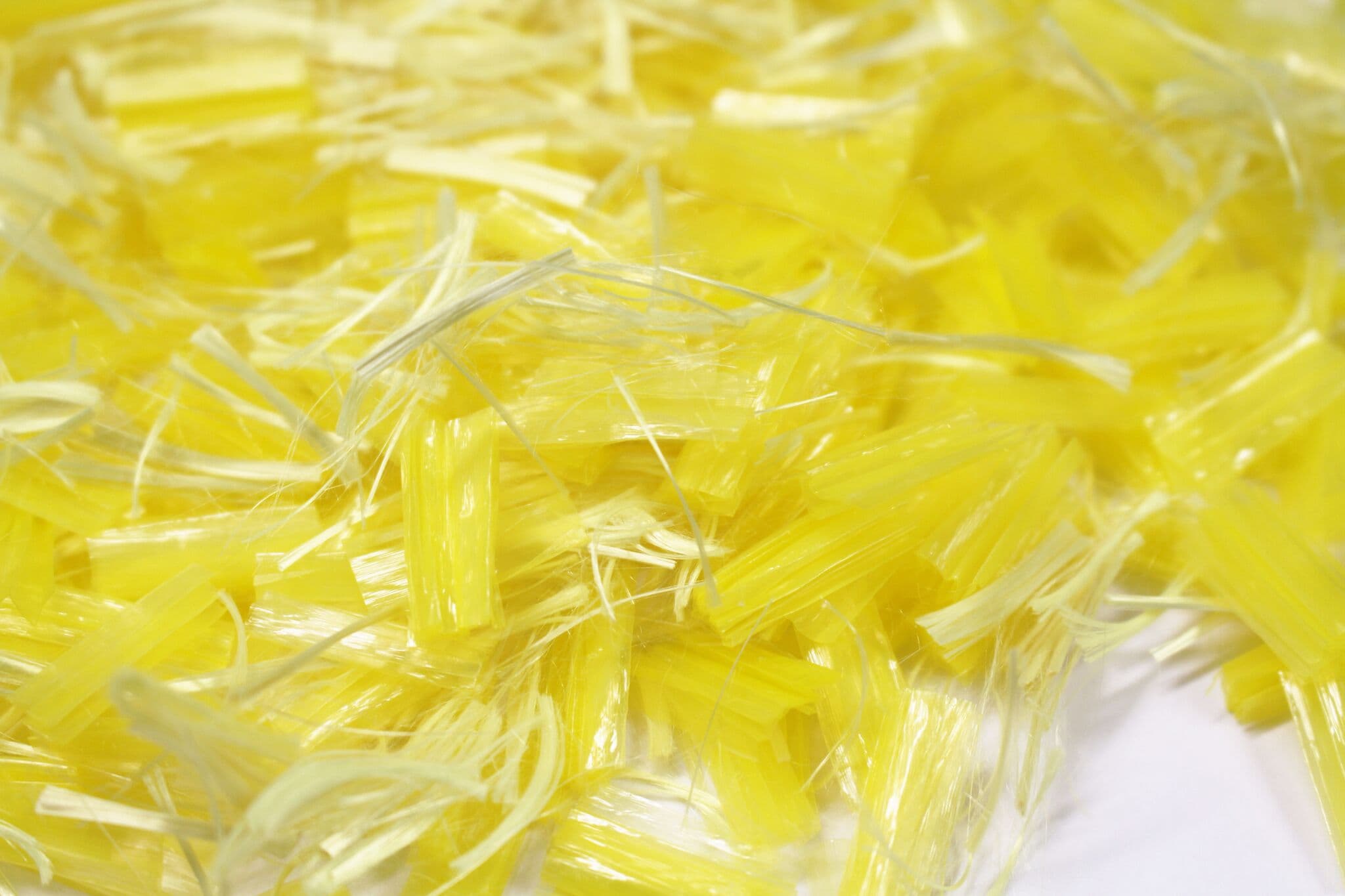
AsphaltX®
2000 filaments per aramid strand — 19 million fibres per tonne of asphalt. Lowest CO₂ footprint, European manufacturing, proven on the N337.
- TypeAramid (Twaron®) + polyolefin fibre blend
- Length± 19 mm
- Tensile strengthTwaron 3000 MPa · polyolefin 483 MPa
- Specific gravityTwaron 1.45 · polyolefin 0.91 g/cm³
Also read
- Road management on a tight budget: fibre reinforcement for municipalities
- Types of pavement and hard surfacing: bound (sealed) surfaces, block paving and unbound surfaces compared
- Asphalt maintenance: measures, costs per m² and extending service life