MKI and DuboCalc: calculating and lowering the environmental cost indicator

More and more civil engineering tenders are awarded on MKI. What the environmental cost indicator actually is, how DuboCalc calculates the notional discount and how to lower your score.
The environmental cost indicator (MKI) expresses the total environmental impact of a product or works in a single euro amount: the notional cost that would be needed to compensate for the environmental damage caused. In Dutch civil engineering tenders, the Rijkswaterstaat tool DuboCalc converts the MKI of a bid into a notional discount on the tender price — a lower MKI therefore directly increases your chance of winning the contract.
What does MKI mean?
MKI is the Dutch abbreviation for milieukostenindicator (environmental cost indicator): a standardised measure that summarises all relevant environmental effects of a product, construction material or complete works in a single amount in euros. That amount represents the societal cost that would have to be incurred to prevent or repair the environmental damage — hence the commonly used term "shadow price". The lower the MKI value, the lower the weighted environmental impact.
In Dutch construction, the MKI appears wherever environmental performance has to be measurable: in EPDs (Environmental Product Declarations) of construction products, in the National Environmental Database (NMD), in the MPG calculation for buildings and — most importantly for the civil engineering sector — as an award criterion in tenders from Rijkswaterstaat, provinces, water boards and large municipalities. This article focuses on that last route; within our pillar sustainability, standards and innovation you will also find the sister articles on MPG, EMVI and the CO₂ Performance Ladder.
From LCA to a single figure: how an MKI value comes about
An MKI value is always the end result of a life cycle assessment (LCA) according to the Dutch Environmental Performance Assessment Method for Construction Works. That LCA maps the emissions and resource consumption per life cycle stage — raw material extraction, production, transport, use, maintenance and end of life.
The results are classified into environmental impact categories. In the classic calculation set (set A1) there are eleven, including climate change, acidification, eutrophication, ozone depletion, human toxicity and resource depletion. Since the introduction of the European standard EN 15804+A2, the sector has been moving step by step to an extended set of nineteen categories. Each category is given a weighting factor in euros; in set A1, for instance, every kilogram of CO₂ equivalent counts for €0.05. The sum of all weighted categories is the MKI value.
Important to know when comparing figures: an MKI is always tied to a functional unit (for example 1 m³ of ready-mixed concrete or 1 tonne of asphalt) and to a scope. A cradle-to-gate value (up to the factory gate) is not comparable with a cradle-to-grave value covering the full service life including maintenance.
Indicative MKI values for concrete and asphalt
Absolute MKI values vary per mix, producer and data quality; the orders of magnitude below are indicative (2026 price level, set A1) and intended solely to give a feel for the proportions:
• Ready-mixed concrete C20/25 – C30/37, conventional — indicatively around €10 to €25 per m³, strongly dependent on the cement type (CEM I versus CEM III).
• Concrete with blast furnace cement and secondary raw materials — noticeably lower, often towards the bottom of that range.
• Reinforcing steel — a few euro cents to over ten cents per kg, depending on the scrap content; with hundreds of kilograms per project, steel weighs heavily on the MKI of a structure.
• Standard asphalt mixes (AC) — indicatively around €4 to €10 per tonne; open mixes such as porous asphalt (ZOAB) and mixes with polymer modified bitumen (PMB) sit higher than mixes with penetration grade bitumen and a high reclaimed asphalt content.
Rijkswaterstaat also applies ceiling values per mix type in asphalt contracts: bids with an MKI above the ceiling are excluded. The trend is for those ceilings to be tightened with every contract round.
How does DuboCalc calculate the notional discount?
DuboCalc is the Rijkswaterstaat calculation tool with which bidders compute the MKI of their complete design: all materials, quantities, transport distances and maintenance cycles over the life of the works. The tool draws on product cards in the National Environmental Database and on verified EPDs from suppliers.
In the tender it then works like this: the contracting authority sets a ceiling or reference value and attaches a valuation in euros to it. The further your submitted MKI is below that reference, the greater the notional discount deducted from the tender price. The contract is awarded on the evaluation price: tender price minus all notional discounts. A bid that is more expensive on paper can therefore still win — on large infrastructure works that computational advantage quickly runs into six figures.
The MKI rarely stands alone. It is usually one of the criteria within an EMVI or BPKV tender, alongside, for example, a level on the CO₂ Performance Ladder. Whoever scores on both tracks stacks award advantage.
Calculating an MKI: step-by-step
An MKI calculation for a bid or product proceeds in five steps:
• Step 1: define the scope and functional unit — which works or product, which service life, cradle-to-gate or cradle-to-grave.
• Step 2: inventory quantities and processes — bill of materials, transport distances, construction method and maintenance scenario.
• Step 3: link environmental data — preferably product-specific, verified EPDs (category 1 data from the NMD); if these are missing, calculations fall back on generic data with a 30% surcharge, which artificially inflates the MKI.
• Step 4: run the calculation according to the Assessment Method — in civil engineering usually directly in DuboCalc, for products via an LCA consultancy with recognised verification.
• Step 5: verify and submit the result — where the award is based on MKI, the contracting authority checks the calculation and the submitted value becomes contractual; overstating your sustainability and failing to deliver leads to penalties.
That 30% surcharge is the key argument for suppliers to have their EPDs in order as evidence: a product without its own environmental declaration calculates itself out of the market, however clean it actually is.
Is an MKI mandatory?
There is no legal MKI obligation for civil engineering works. In practice, however, the indicator has become unavoidable: Rijkswaterstaat applies DuboCalc as standard in large infrastructure contracts, and provinces, water boards and municipalities follow suit in their own tenders. Anyone bidding in civil engineering without MKI substantiation is simply not in the running for a growing share of tenders.
For buildings the situation differs: there, the legally required MPG (environmental performance of buildings) applies, which rests on the same LCA methodology but calculates per m² of floor area per year. How that calculation works and how fibre reinforcement feeds into it is covered in our article on reducing the MPG with fibre reinforcement.
How fibre reinforcement lowers your MKI score
For bidders, the MKI is above all a dial to turn. Fibre reinforcement is one of the bigger dials in both concrete and asphalt, because it acts on the heaviest items in the calculation: steel, bitumen and maintenance.
Concrete: replacing steel makes a direct difference
Traditional steel reinforcement is one of the largest MKI items in a concrete structure. By replacing reinforcement mesh with structural macro fibres, not only steel consumption falls, but also transport and labour hours. At the NDSM wharf in Amsterdam that switch delivered a 98% CO₂ reduction on the reinforcement; in a comparable redesign of tree planter foundations, a net 1,500 kg of reinforcing steel was saved — the full worked example of that CO₂ saving is in the knowledge centre.
Because the climate category feeds directly into euros via the shadow price, such a CO₂ reduction translates one-to-one into a lower MKI for the structure or floor. A fibre reinforcement with a low MKI value such as TwistR® is moreover dosed in kilograms per m³ where steel counts in tens of kilograms — the weight difference does most of the work. Note: structural work always requires a calculation by the structural engineer; fibres do not fully replace traditional reinforcement in every application.
Asphalt: lower production impact and a longer life
In asphalt, fibre reinforcement works on two fronts. First, production: the LCA within the European FIBRA project (A73 field trial) shows that the PMB reference mix has a more than 10% higher MKI at cradle-to-gate level than the aramid variant with standard penetration grade bitumen, partly due to the production temperature being around 15 to 20°C lower.
Second, service life: AsphaltX® extends the life of the road surface by around 30%, pushing maintenance and replacement cycles further out. In a cradle-to-grave calculation over the contract period — exactly what DuboCalc does — every avoided maintenance intervention pushes the MKI of the bid down further. The dosage of aramid fibres is modest: as a guide value around 0.05%, or some 500 grams per tonne of asphalt, depending on mix and application.
EPDs and evidence in DuboCalc
To count in DuboCalc you need verified environmental data: EPDs per product, included in or traceable to the National Environmental Database. Without that evidence, the tool calculates with less favourable generic data and the advantage of a sustainable product evaporates.
Dutch Fiber Trading supplies the accompanying CE and EPD documentation with every quotation, so that your estimator or specification writer can run the fibre variant through DuboCalc straight away. Are you pricing a specific contract and want to know what fibre reinforcement means for the MKI of your bid? Request a quotation with EPD documentation — and you have the environmental data and the pricing complete in one go.
Frequently asked questions
- What does MKI mean?
- MKI stands for milieukostenindicator, the Dutch environmental cost indicator: a single euro amount summarising all weighted environmental effects of a product or works, from CO₂ emissions to resource depletion. The amount represents the notional cost of compensating for the environmental damage, calculated via an LCA according to the Dutch Assessment Method. The lower the MKI value, the smaller the environmental impact — and in tenders, the greater the notional discount on your tender price.
- What is a good MKI value for concrete?
- There is no fixed standard; it depends on strength class, cement type and scope. Indicatively, conventional ready-mixed concrete sits around €10 to €25 per m³ (set A1, 2026 price level); mixes with blast furnace cement and secondary raw materials score lower. The biggest gain often lies not in the mix but in the reinforcement: replacing steel with macro fibres delivered a 98% CO₂ reduction on the reinforcement at the NDSM wharf.
- Is an MKI calculation mandatory?
- The MKI is not legally mandatory. In practice, however, Rijkswaterstaat and a growing number of provinces, water boards and municipalities do require an MKI calculation in DuboCalc as an award criterion, often with ceiling values above which a bid is excluded. For buildings, the legally required MPG calculation applies as well, based on the same LCA methodology — see our article on reducing the MPG with fibre reinforcement.
- What is the difference between MKI and MPG?
- Both stem from the same LCA methodology, but the MKI is an absolute value in euros per product or works (common in civil engineering), while the MPG expresses the environmental impact of a complete building per m² of gross floor area per year and is legally required for new construction. In short: the MKI steers infrastructure tenders, the MPG tests buildings against the Dutch building regulations.
- How does DuboCalc calculate the notional discount?
- You enter your complete design into DuboCalc — materials, quantities, transport and maintenance — and the tool calculates the MKI of the bid from it. The contracting authority compares that value with a reference or ceiling value and deducts a weighted amount from your tender price for every euro of avoided environmental cost. The contract is awarded on that evaluation price, usually within a broader EMVI assessment.
Share this article
Products mentioned
 Most chosen
TwistR® GREEN HYBRID
High-performance synthetic macro fibres made from 100% polypropylene. Transforms concrete into a stronger composite material.
- TypeHybrid: twisted monofilament + fibrillating network fibre
- Material100% virgin polypropylene
- Length48 mm
- Dosage2.0 – 6.0 kg/m³
Pallet price on request
AsphaltX®
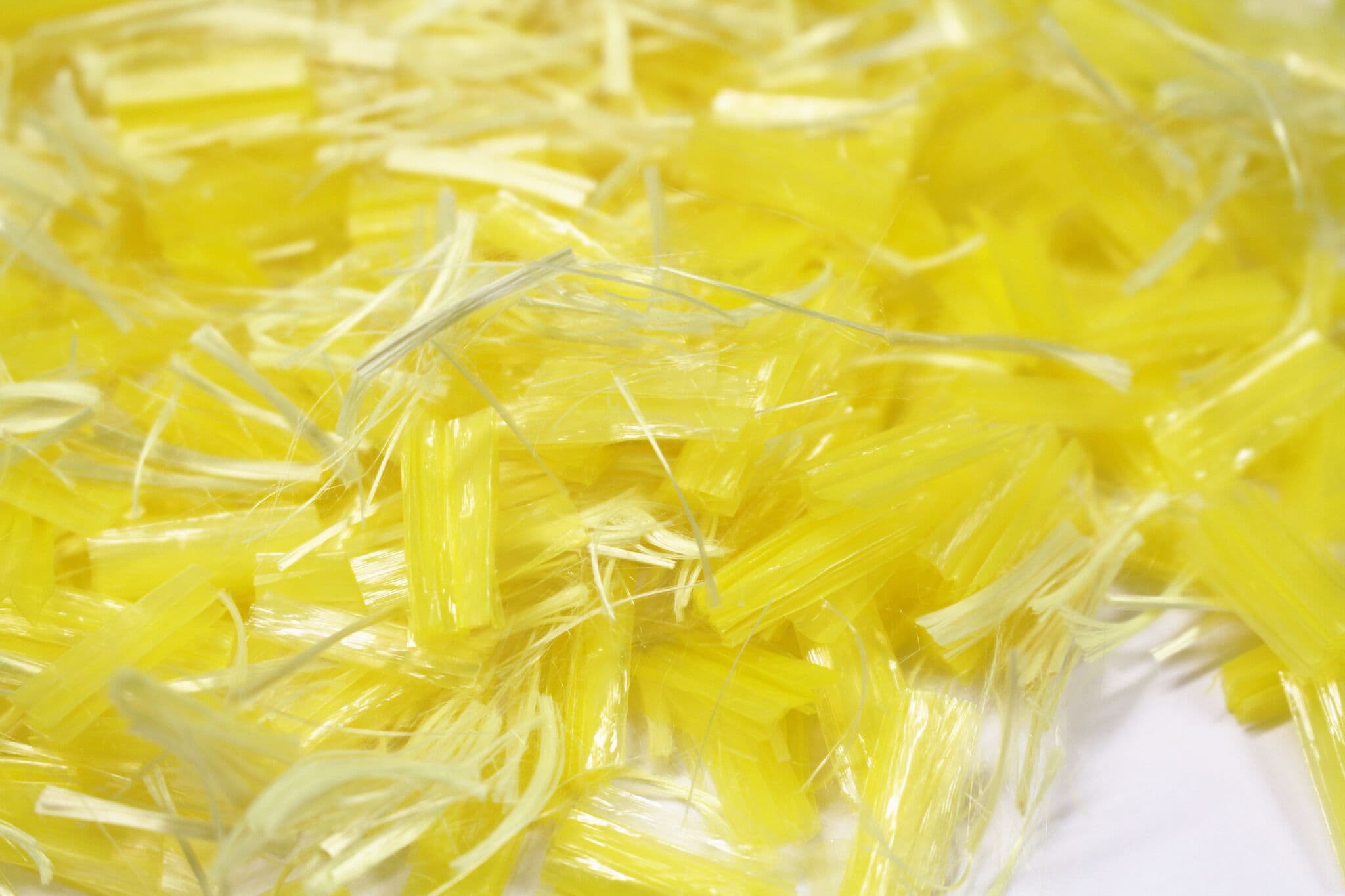
2000 filaments per aramid strand — 19 million fibres per tonne of asphalt. Lowest CO₂ footprint, European manufacturing, proven on the N337.
- TypeAramid (Twaron®) + polyolefin fibre blend
- Length± 19 mm
- Tensile strengthTwaron 3000 MPa · polyolefin 483 MPa
- Specific gravityTwaron 1.45 · polyolefin 0.91 g/cm³
Also read
- MPG calculation: lowering a building's environmental performance with fibre reinforcement
- CO₂ Performance Ladder: levels, certification and substantiation with fibres
- EMVI tendering: meaning, criteria and how to score on sustainability