Steel fibres or synthetic macro fibres? How to choose the right reinforcement

Both replace traditional tied rebar — but when do you choose steel and when synthetic? A comparison on dosage, residual strength, corrosion, CO₂ and cost.
Steel fibres deliver the highest residual strength per cubic metre at 25–50 kg/m³ and are the first choice for heavy point loads and structural work. Synthetic macro fibres reinforce at just 2–6 kg/m³, do not corrode and cut the CO₂ emissions of the reinforcement portion by up to 98%. It is not the material but the application — loading, environment, finish, budget — that determines the right choice.
What is a steel fibre?
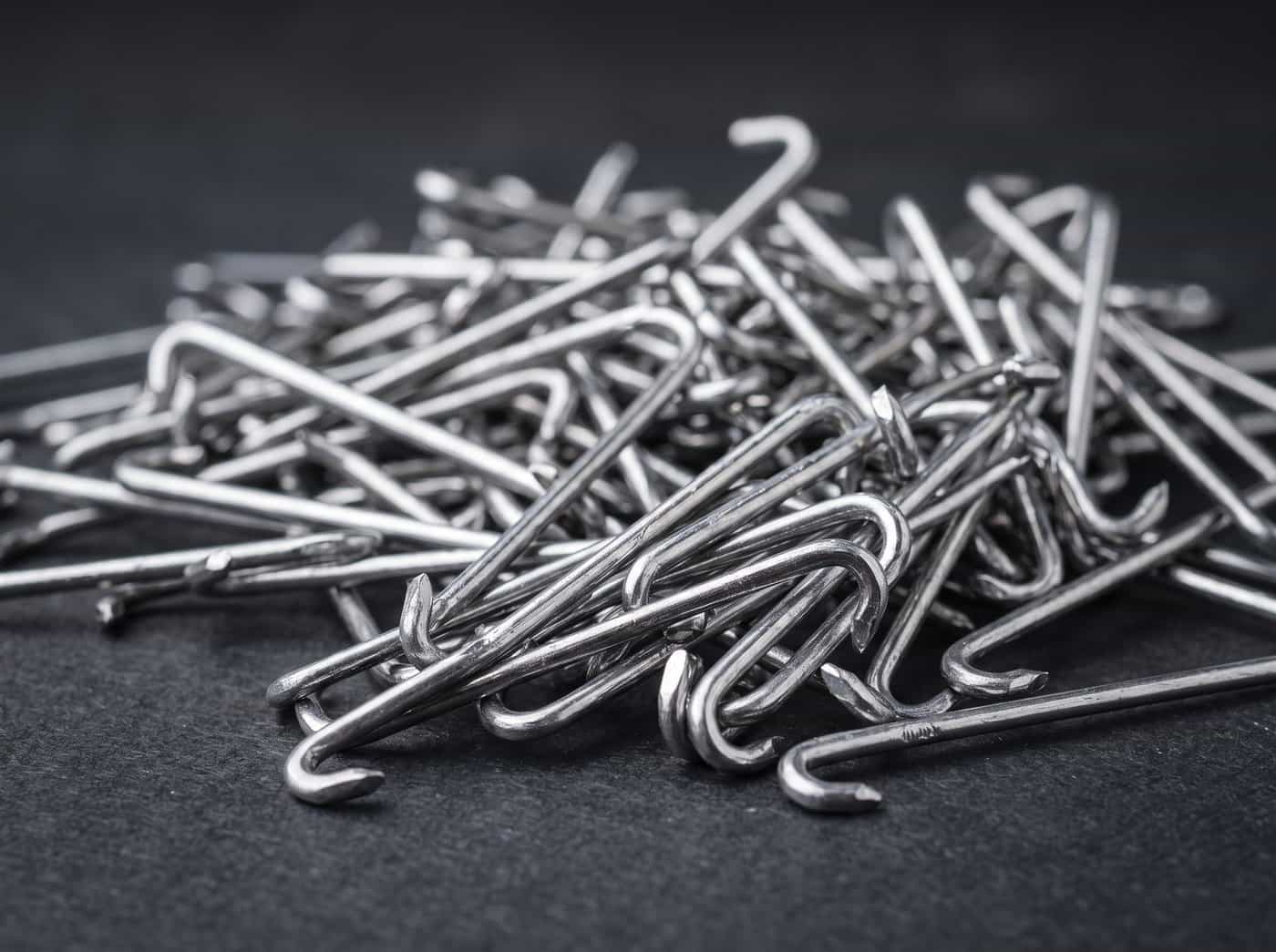
A steel fibre is a short piece of drawn steel wire — usually 35 to 60 mm long and 0.55 to 1.0 mm thick — that is mixed loose through the concrete and thus forms a three-dimensional reinforcing network. Most structural types are hooked-end steel fibres: the hooked ends anchor the fibre mechanically in the concrete matrix, so that it keeps transferring tensile force when cracking occurs instead of sliding out. High-tensile variants use steel wire with a tensile strength of well over 1,000 N/mm², allowing the fibre to actually exploit its anchorage.
Two key figures determine performance. The aspect ratio — length divided by diameter — governs the behaviour: a 35/0.55 fibre has an aspect ratio of around 64, a 60/0.75 fibre around 80. The higher the ratio, the more residual strength per kilogram, but also the more critical the mixing process. Dosage matters too: for structural applications it generally lies between 25 and 50 kg/m³; for lightly loaded floors less may suffice. Steel fibres are CE marked under EN 14889-1 and their residual strength is tested with the bending test of EN 14651.
What is a structural synthetic macro fibre?
A structural synthetic macro fibre is a polymer fibre (polypropylene or polyolefin) of comparable length that fulfils the same role: bridging cracks and delivering residual strength in the hardened concrete. They fall under EN 14889-2 and — like steel fibres — are classified into performance classes based on the measured residual strength, so that the structural engineer can include them in the calculation with proper substantiation. A structural macro fibre such as TwistR® anchors itself in the concrete matrix through its twisted structure and is dosed at just 2–6 kg/m³. Why crack bridging gives cracked concrete its load-bearing capacity is explained in how fibre reinforcement works in concrete.
Do not confuse macro fibres with PP micro fibres: those only control plastic shrinkage cracks in young concrete and deliver no structural residual strength. The full overview of fibre types can be found in our article on types of concrete fibres and in the pillar on fibre reinforced concrete.
Steel fibre vs synthetic macro fibre: seven differences
Both fibre types replace traditional tied rebar in floors, pavings and many precast applications. The trade-off comes down to seven points:
• Dosage — steel fibres 25–50 kg/m³ (sometimes less for lightly loaded floors); synthetic macro fibres 2–6 kg/m³.
• Residual strength — steel fibres achieve the highest residual strength and performance classes per m³ and remain the leader for heavy point loads and dynamic loading; synthetic macro fibres comfortably cover the common classes for floors and pavings.
• Corrosion — steel fibres can produce rust specks at the surface and are sensitive in chloride- or acid-exposed environments; synthetic does not corrode and is chemically resistant. Read how carbonation of concrete leads to corrosion of reinforcing steel and why fibres limit that risk.
• CO₂ — a synthetic macro fibre scores up to 98% lower on the reinforcement portion than traditional steel reinforcement; in MKI (environmental cost) and EMVI (best value) tender assessments that counts directly. Ask for a verified EPD for both fibre types; our guide to sustainability certification of fibre materials lists what to request.
• Price per m³ — the price per kilogram of steel is lower, but the tenfold dosage offsets that: at 25–30 kg/m³ of steel fibre the additional cost rises to around €45 per m³ (indicative, 2026 price levels). See the full calculation in what fibre reinforced concrete costs.
• Handling — 50 kg of steel per cubic metre requires controlled dosing and sufficient mixing time to prevent balling; synthetic fibres are light, do not prick and are more pleasant to work with on site.
• Finish and visibility — steel fibres can end up in the visible surface; synthetic fibres can briefly give a slightly hairy surface that wears away or is burnt off.
You determine the right quantity per project with the practical dosage guidelines.
Power floating and polishing steel fibre concrete
Steel fibre concrete can be finished monolithically without problems. During power floating, the rotor presses the fibres beneath the top layer, creating a closed surface; on polished floors a fibre may occasionally remain visible. For exposed finishes or floors with high demands on the top layer, flooring contractors therefore often choose a synthetic macro fibre, possibly combined with a micro fibre against plastic shrinkage. Always discuss the finishing requirement with the flooring contractor beforehand — that prevents disputes at handover.
Replacing Dramix® 3D, 4D or 5D?
Many specifications prescribe Dramix® steel fibres from Bekaert out of habit. Functionally equivalent alternatives do exist, however — assess them on aspect ratio, tensile strength and the demonstrated residual strength class according to EN 14651, not on brand name:
• Replacing Dramix® 3D — the MPZG HT+ 35/0.55, a high-tensile steel fibre with hooked ends and aspect ratio 35/0.55, for floors and general structural applications.
• Replacing Dramix® 4D — the MPWG HT+ 50/0.90 with double hooked ends, for more heavily loaded floors and foundations.
• Replacing Dramix® 5D — the MPWG HT+ 60/0.75, the heaviest fibre in our programme with aspect ratio 80, for tunnels, precast and heavy structural work.
All three are CE marked under EN 14889-1. Request the declaration of performance and have the structural engineer check the residual strength class against the specification requirement — then equivalence is demonstrable and the alternative is usually more keenly priced.
When do you choose steel fibres?
Steel fibres are the logical choice when maximum residual strength per cubic metre is decisive:
• Heavily loaded industrial floors with high point loads from racking or heavy internal transport.
• Foundations, basement floors and walls where the fibre (partly) replaces structural reinforcement.
• Tunnel segments, sprayed concrete and precast elements — applications where steel fibre concrete has been proving itself for decades. Which fibre suits which element is covered in fibre reinforcement in precast concrete elements.
This kind of structural work always requires a calculation by the structural engineer; fibres do not fully replace traditional reinforcement in every situation. What the dosage does to the price per m³ is covered in steel fibre concrete: price, dosage and applications.
When do you choose synthetic macro fibres?
Synthetic macro fibres are gaining ground in floors, cycle paths, yard pavings and white topping. The business case has been proven in practice: at the NDSM wharf in Amsterdam and the cycle path in Wijckel, TwistR® replaced the traditional reinforcing steel with cost reductions of up to 46% as the result. Three situations are decisive:
• Corrosion-prone or chemically exposed environments — in acid- or alkali-exposed agricultural floors and greenhouses, a polyolefin fibre such as the Wiking 4050 TR is in fact the only durable option.
• Sustainability requirements in tenders — a synthetic macro fibre with up to 98% lower CO₂ emissions on the reinforcement portion scores directly in MKI and EMVI assessments.
• Logistics and working conditions — 4 kg of fibre per cubic metre instead of 30 kg of steel saves transport, lifting and handling time.
When synthetic fibre concrete does and does not fit is worked out in synthetic fibre concrete: when is it the right choice.
And basalt fibre or steel fibre?
A third option is the basalt fibre, spun from volcanic rock. Basalt combines a high tensile strength with corrosion-free performance and heat resistance up to around 700°C — interesting where steel rusts and synthetic melts, such as in heat-exposed or maritime applications. One caveat: in the alkaline environment of concrete, basalt can degrade over time, so it is not fully alkali resistant. For mainstream floors and pavings the choice therefore usually remains between steel and synthetic; basalt is the specialist alternative for niche requirements.
How to make the choice
The trade-off can be made in four steps: determine the loading and the required residual strength class (structural engineer), weigh up the environment (corrosion, chemicals, exposure and finishing requirements), calculate both variants on price per m³ including labour and logistics, and check the sustainability requirements in the specification. Our product finder guides you to the right fibre type in a few questions, and with the savings calculator you can compare the cost of traditional reinforcement with fibre reinforcement for your own project in a minute. Torn between two fibres? Our technical advisers will calculate both variants for you without obligation.
Frequently asked questions
- What is steel fibre in concrete?
- A steel fibre is a short piece of drawn steel wire (usually 35–60 mm long) with hooked ends, mixed loose through fresh concrete. Together the fibres form a three-dimensional reinforcing network that bridges cracks and gives the concrete load-bearing capacity (residual strength) after cracking. Steel fibres are CE marked under EN 14889-1 and dosed at around 25–50 kg per m³ of concrete, depending on the application.
- What does the aspect ratio of a steel fibre mean?
- The aspect ratio is the length of the fibre divided by its diameter. A fibre 60 mm long and 0.75 mm thick therefore has an aspect ratio of 80. A higher ratio gives more residual strength per kilogram of fibre, but places higher demands on the mixing process to prevent balling. Type designations such as 35/0.55 or 50/0.90 refer to this length and diameter.
- Is there an alternative to Dramix® steel fibres?
- Yes. Assess alternatives on aspect ratio, tensile strength and the residual strength class according to EN 14651 rather than on brand name. The MPZG HT+ 35/0.55 is an equivalent alternative to Dramix® 3D, the MPWG HT+ 50/0.90 to 4D and the MPWG HT+ 60/0.75 to 5D — all CE marked under EN 14889-1, with a declaration of performance available on request.
- Can steel fibre concrete be polished or power floated?
- Yes, steel fibre concrete can be finished monolithically. During power floating the machine presses the fibres beneath the top layer, creating a closed surface. With polishing, a fibre may occasionally remain visible or produce a rust speck. For exposed floors with high demands on the top layer, a synthetic macro fibre is therefore often chosen, possibly supplemented with a micro fibre against plastic shrinkage cracks.
- Should I choose basalt fibre or steel fibre?
- Steel fibres deliver the highest residual strength per m³ and are the first choice for heavy structural work. Basalt fibres are corrosion-free and heat resistant up to around 700°C, but can degrade over time in the alkaline concrete environment. Therefore choose basalt only for specific requirements — heat, non-magnetic properties, aggressive environments — and steel when maximum structural performance counts.
- Do fibres fully replace traditional reinforcement?
- Not always. In ground-bearing floors, pavings, sprayed concrete and many precast applications, steel fibres or synthetic macro fibres can fully replace the reinforcement mesh. In heavily or dynamically loaded structures, (partial) bar reinforcement often remains necessary. The structural engineer determines this based on the design load and the demonstrated residual strength class; with the savings calculator you can make the cost comparison in advance.
Share this article
Products mentioned
MPZG HT 35/0.55
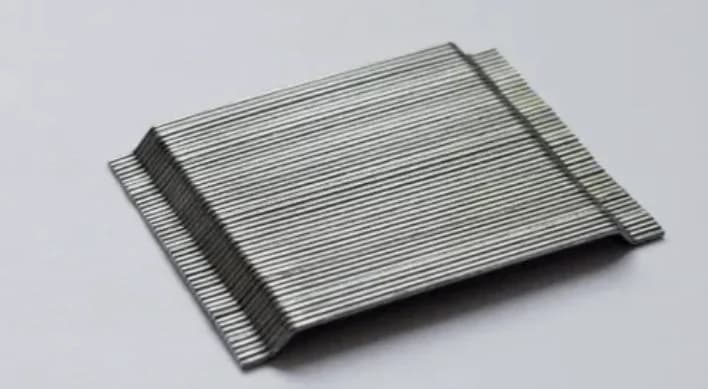
High-tensile hooked steel fibres with aspect ratio 35/0.55. Maximum anchorage and ductility for heavily loaded structures.
- TypeCold-drawn hooked steel fibre (glued)
- Dimensions35 mm / Ø 0.55 mm
- Tensile strength1345 N/mm² ± 7.5%
- Modulus of elasticity200,000 N/mm²
Pallet price on request
 Most chosen
TwistR® GREEN HYBRID
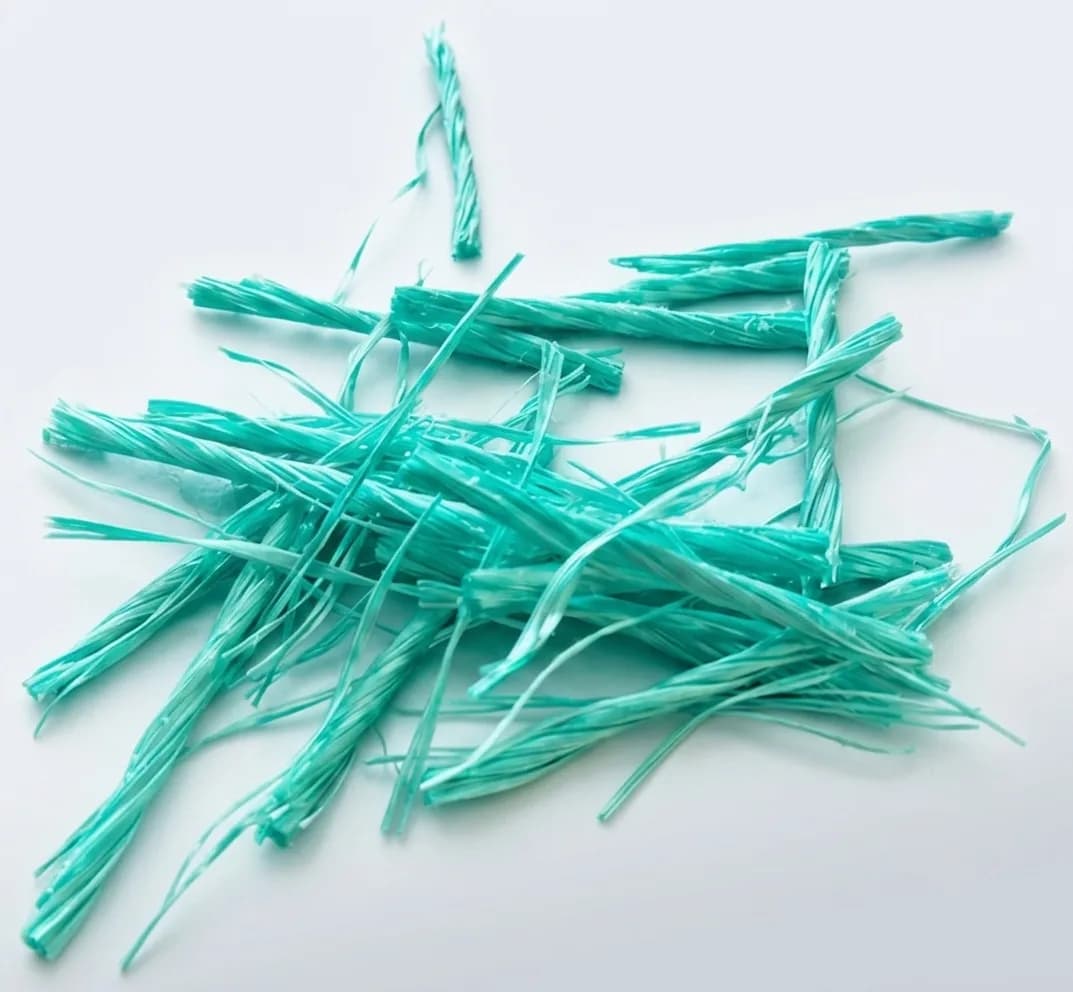
High-performance synthetic macro fibres made from 100% polypropylene. Transforms concrete into a stronger composite material.
- TypeHybrid: twisted monofilament + fibrillating network fibre
- Material100% virgin polypropylene
- Length48 mm
- Dosage2.0 – 6.0 kg/m³
Pallet price on request