Types of concrete fibres: steel, synthetic, glass and basalt compared

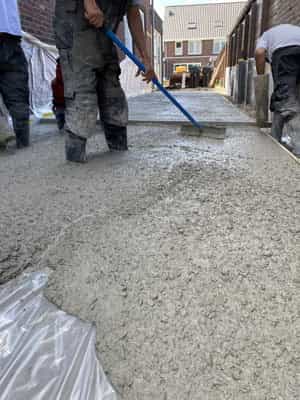
Steel, synthetic, glass or basalt — each fibre type has its own profile in tensile strength, dosage, corrosion and price. This overview compares all four and helps you choose.
Concrete fibres are short fibres of steel, synthetic material (polypropylene), glass or basalt that are distributed homogeneously through the concrete during mixing and bridge the tensile force after cracking. In the UK they are often listed as fibre admixtures for concrete, added at the concrete batching plant or in the truck mixer on site. Steel fibres are dosed indicatively at 25–50 kg/m³, synthetic macro fibres at 2–6 kg/m³ and micro fibres at 0.6–1.0 kg/m³ — each type has its own strength, corrosion and price profile.
What are concrete fibres and what do they do?
Fibre concrete — also called fibre reinforced concrete — is the collective term for concrete to which loose fibres have been added during mixing. Where traditional reinforcement resists tensile forces at a few planned positions, fibres distribute themselves as tens of thousands of small reinforcing elements throughout the entire concrete mass. As soon as a crack forms anywhere, the fibres crossing it bridge the fracture plane and the concrete continues to carry force: the so-called residual strength. In Europe that residual strength is measured with the bending test of EN 14651; the fibres themselves carry CE marking according to EN 14889-1 (steel fibres) or EN 14889-2 (polymer fibres). The mechanism in detail, from fibre anchorage to crack bridging in three stages, is explained in how fibre reinforcement works in concrete.
Across all materials there is a division that matters more than the material itself. Micro fibres (thin, almost always synthetic) work in the first hours after pouring and prevent plastic shrinkage cracks. Macro fibres (thicker and stiffer, of steel, synthetic material or basalt) work in the hardened concrete and deliver the structural residual strength. This article is the overview of the four material groups; the full series of in-depth articles can be found in the pillar on fibre reinforced concrete.
Steel fibres: maximum residual strength for heavily loaded structures
Steel fibre reinforced concrete (SFRC) is made by adding roughly 0.3 to 1 volume percent of steel fibres — in practice usually 25 to 50 kg per m³. Steel fibres are stiff and strong: high-tensile drawn steel fibres achieve tensile strengths of 1,345 to 2,100 N/mm², and thanks to hooked ends they anchor themselves mechanically in the concrete matrix. As a result they contribute substantially even at small crack widths and can fully or partially replace traditional reinforcement in many applications. SFRC structures also have stronger corners and edges, higher abrasion resistance and less spalling from impact, for example by forklift trucks.
The point of attention with steel is corrosion: fibres lying at the surface can produce small rust spots. Structurally this is rarely a problem — a loose fibre is not a continuous bar — but for exposed finishes it counts. Typical applications are industrial floors, assembly halls, foundation slabs and road renovations. A high-tensile steel fibre with hooked ends such as the MPZG HT+ 35/0.55 is the common starting point; what the dosage costs and delivers is covered in steel fibre concrete: price, dosage and applications.
Synthetic fibres: from micro fibre to structural macro fibre
Within synthetic fibres for concrete, polypropylene (PP) is by far the most widely used material. The family splits into two products with completely different tasks.
Polypropylene micro fibres
Polypropylene fibres in micro form are thin, usually 10 to 20 mm long, and are added at relatively low dosages: 0.5 to 1.8 kg per m³, in practice often 0.6–1.0 kg/m³. They form a fine-meshed network that holds the fresh concrete together at the moment it still has hardly any tensile strength, making them particularly effective against early (plastic) shrinkage cracks. The effect depends strongly on diameter, length, surface texture and shape: single monofilament or mesh-like fibrillated, the latter used for example in sand-cement screeds.
Synthetic macro fibres
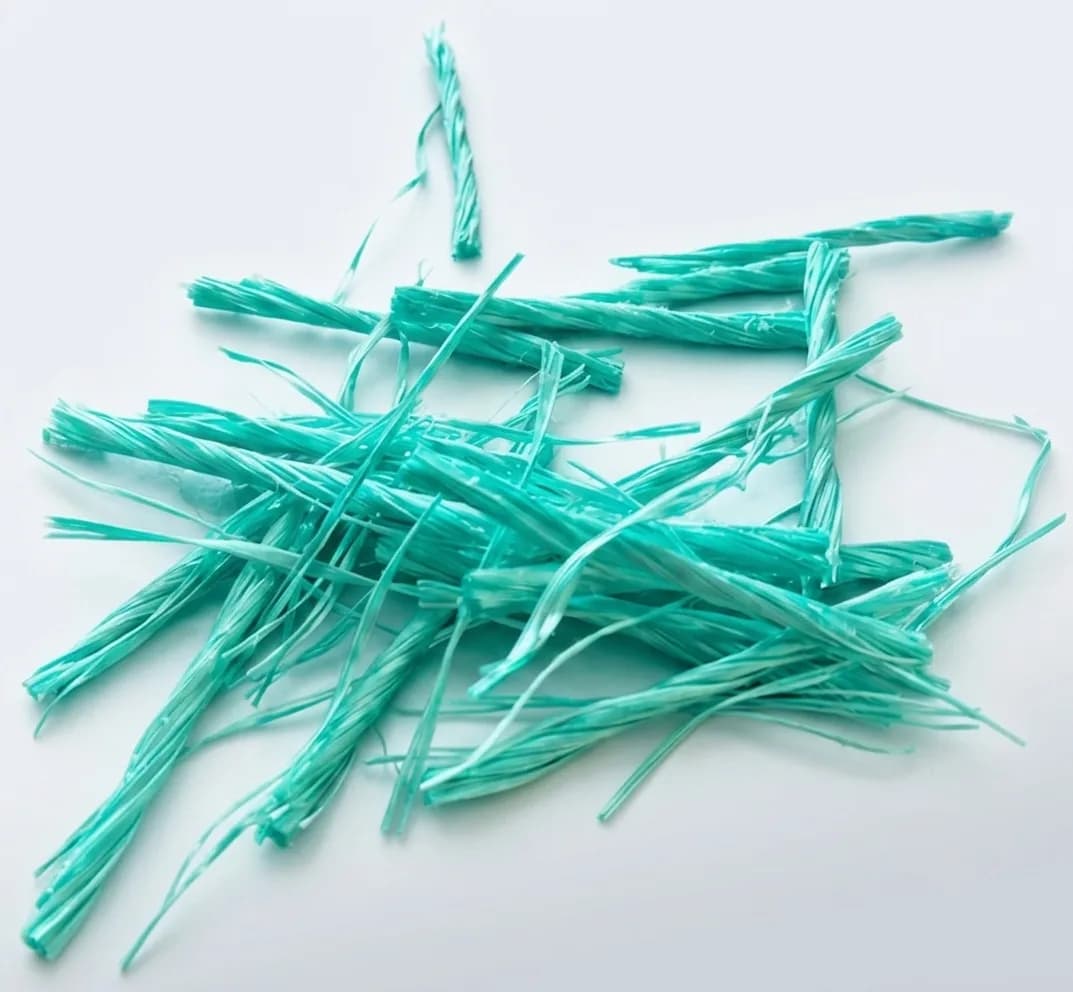
Synthetic macro fibres are thicker and stiffer and, like steel, deliver residual strength in the hardened concrete. Dosages generally lie between 2 and 6 kg per m³; the tensile strength of high-grade PP macro fibres is indicatively around 480–560 MPa. Synthetic material is fully corrosion-free and light (density ~0.91 g/cm³), which benefits transport and the environmental balance: in MKI (environmental cost indicator) comparisons, synthetic fibre scored 93% lower for a precast internal wall and 79% lower for a concrete staircase than traditional reinforcement. A structural synthetic macro fibre such as TwistR — a hybrid macro fibre with a twisted structure for extra anchorage — is used in floors, foundations and pavings. When synthetic is the logical choice is covered in synthetic fibre concrete: when is it the right choice?
Glass fibre reinforced concrete
Glass fibre reinforced concrete uses coated micro glass fibres that give the concrete a considerably higher splitting tensile strength than unreinforced concrete. Importantly, in the alkaline concrete matrix only alkali-resistant (AR) glass with a zirconia-containing coating holds up durably; standard E-glass degrades. Glass fibre is non-corrosive and interesting where high tensile strength is required in a thin element — think of precast façade panels and architectural concrete. Cast-in-place glass fibre concrete is still very much under development in the Netherlands and is currently used mainly in yard paving; for mainstream flooring and infrastructure projects, steel, synthetic and basalt fibres remain the broader choice.
Basalt fibre: mineral, light and heat resistant
The newest addition to the range: basalt fibre, extracted from molten volcanic rock. Basalt fibre combines a very high tensile strength (3,000–4,000 MPa) with a low density (~2.7 g/cm³, almost three times lighter than steel), heat resistance up to ~700°C and good recyclability. Basalt is non-corrosive; however — contrary to what is sometimes claimed — it is not fully alkali resistant, and the sizing/coating of the fibre determines its durability in the alkaline concrete matrix. So choose a fibre developed specifically for concrete.
For structural work there is a corrugated basalt fibre for structural applications: the 3D wave profile of the Basalt Wave provides the mechanical anchorage that straight mineral fibres lack. Applications include industrial floors, underwater concrete, sprayed concrete and tunnel structures — precisely the environments where corrosion-free performance and heat resistance make the difference.
Concrete fibres compared: the four types side by side
The key properties per fibre type at a glance (indicative, 2026 price levels, depending on product and project):
• Steel fibre — tensile strength 1,345–2,100 N/mm²; density 7.85 g/cm³; dosage 25–50 kg/m³; prone to surface corrosion; additional cost at 25–30 kg/m³ rising to around €45 per m³ of concrete; application: heavily loaded industrial floors, foundations, road renovations.
• Synthetic macro fibre (PP) — tensile strength ~480–560 MPa; density 0.91 g/cm³; dosage 2–6 kg/m³; fully corrosion-free; additional cost per m³ generally lower than steel for light to medium-duty applications; application: floors, pavings, foundations, agricultural work.
• PP micro fibre — works only against plastic shrinkage cracks (no structural residual strength); dosage 0.6–1.0 kg/m³; corrosion-free; additional cost a few euros per m³; application: screeds, ready-mixed concrete, surface quality.
• Glass fibre (AR) — high splitting tensile strength; density ~2.6 g/cm³; corrosion-free, provided it has an alkali-resistant coating; application: precast panels and yard paving (cast-in-place still under development).
• Basalt fibre — tensile strength 3,000–4,000 MPa; density ~2.7 g/cm³; heat resistant up to ~700°C; corrosion-free, durability dependent on coating; application: industrial floors, tunnels, sprayed concrete, underwater concrete.
The total fibre concrete price per m³, base concrete plus fibre surcharge, is set out per fibre type in our price overview.
When comparing, do not look only at the tensile strength of the fibre itself: performance in the concrete is determined by the combination of tensile strength, anchorage (hooked ends, wave or twisted profile), stiffness and dosage. A fibre with lower tensile strength but better anchorage can perform better in the EN 14651 test.
Hybrid fibre solutions: combining types
In practice, fibre types are also combined. A widely used combination is macro fibre plus micro fibre: the macro fibre (steel or synthetic) delivers the residual strength in the hardened concrete, while the micro fibre covers the plastic shrinkage phase in the first hours. Steel fibres together with synthetic fibres also occur in heavy, dynamically loaded structures: the strength of steel for mechanical loading, complemented by the shrinkage crack control of synthetic fibre. In addition, there are hybrid macro fibres in which one product combines several working principles. With hybrid solutions, calculate the dosage per component separately — the practical dosage guidelines for concrete fibres give the ranges per fibre type.
Which fibre type suits your project?
There is no "best" concrete fibre in general terms — the right choice follows from loading, environment and budget. As a rule of thumb:
• Heavy and dynamic loading (high point loads, forklift trucks, warehouse racking) — steel fibre.
• Corrosion-prone or chemically exposed environment (agricultural, basements, coastal) — synthetic macro fibre or basalt fibre.
• Shrinkage crack control in the fresh phase only — PP micro fibre, possibly alongside a macro fibre.
• Heat, tunnels or underwater work — basalt fibre.
• Thin precast elements with high tensile strength requirements — AR glass fibre.
We work out the trade-off between the two biggest candidates separately in steel fibres versus synthetic macro fibres — that article compares the two on performance, price and environmental cost and does not repeat this overview. If you are weighing up suppliers or specifications, also read what to look for when choosing a fibre reinforcement supplier.
An important caveat: fibres do not always fully replace traditional reinforcement. Structural work requires a calculation by the structural engineer, who determines on the basis of the EN 14651 residual strength classes which part of the reinforcement can be omitted. Want a quick steer? The product finder translates your application into a fibre type in a few steps, and the full range of concrete fibres shows specifications and datasheets per product.
Frequently asked questions
- What are concrete fibres?
- Concrete fibres are short fibres of steel, synthetic material (polypropylene), glass or basalt that are distributed through the concrete during mixing. After cracking they bridge the crack and the concrete continues to carry force (residual strength). Micro fibres prevent early-age shrinkage cracks; macro fibres deliver structural strength and can fully or partially replace traditional reinforcement. Fibres carry CE marking according to EN 14889.
- Should I choose basalt fibre or steel fibre?
- Steel fibre is the standard for heavy mechanical and dynamic loading: high stiffness, proven design rules and tensile strengths up to 2,100 N/mm². Basalt fibre (3,000–4,000 MPa, ~2.7 g/cm³) wins where corrosion-free performance, low weight or heat resistance up to ~700°C weigh heavily, such as tunnels, sprayed concrete and underwater concrete. A corrugated basalt fibre additionally anchors itself mechanically in the matrix.
- Do concrete fibres fully replace traditional reinforcement?
- Not always. In ground-bearing floors, foundation slabs and many pavings, macro fibres can fully replace the reinforcement mesh. In structural elements with high or concentrated tensile forces, (partial) bar reinforcement remains necessary. The structural engineer determines this with a calculation based on the residual strength classes from the EN 14651 bending test — so always ask for fibre specifications with tested performance values.
- How many concrete fibres go into a m³ of concrete?
- Indicatively: steel fibres 25–50 kg/m³, synthetic macro fibres 2–6 kg/m³ and PP micro fibres 0.6–1.0 kg/m³ according to the product datasheet. For structural work, the exact dosage follows from the required residual strength, the fibre specification and the workability of the mix; see the practical dosage guidelines per fibre type and application.
- What is the difference between micro fibres and macro fibres?
- Micro fibres are thin, light and work in the fresh concrete: they prevent plastic shrinkage cracks in the first hours after pouring, but deliver no structural strength. Macro fibres are thicker and stiffer and work in the hardened concrete: they bridge cracks under load and deliver residual strength. For many projects, the combination of both — or a hybrid macro fibre — is the complete solution.
Share this article
Products mentioned
 Most chosen
TwistR® GREEN HYBRID
High-performance synthetic macro fibres made from 100% polypropylene. Transforms concrete into a stronger composite material.
- TypeHybrid: twisted monofilament + fibrillating network fibre
- Material100% virgin polypropylene
- Length48 mm
- Dosage2.0 – 6.0 kg/m³
Pallet price on request
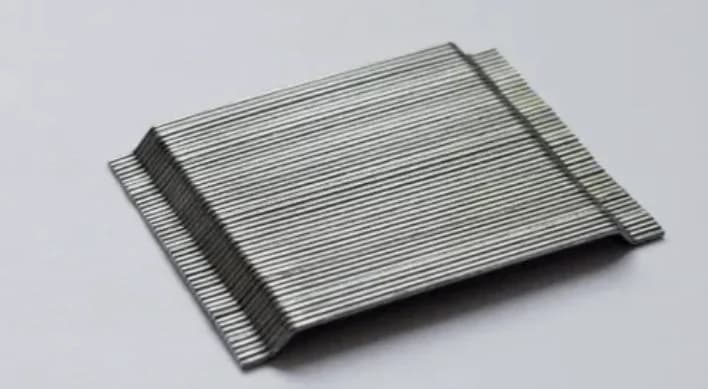
MPZG HT 35/0.55
High-tensile hooked steel fibres with aspect ratio 35/0.55. Maximum anchorage and ductility for heavily loaded structures.
- TypeCold-drawn hooked steel fibre (glued)
- Dimensions35 mm / Ø 0.55 mm
- Tensile strength1345 N/mm² ± 7.5%
- Modulus of elasticity200,000 N/mm²
Pallet price on request
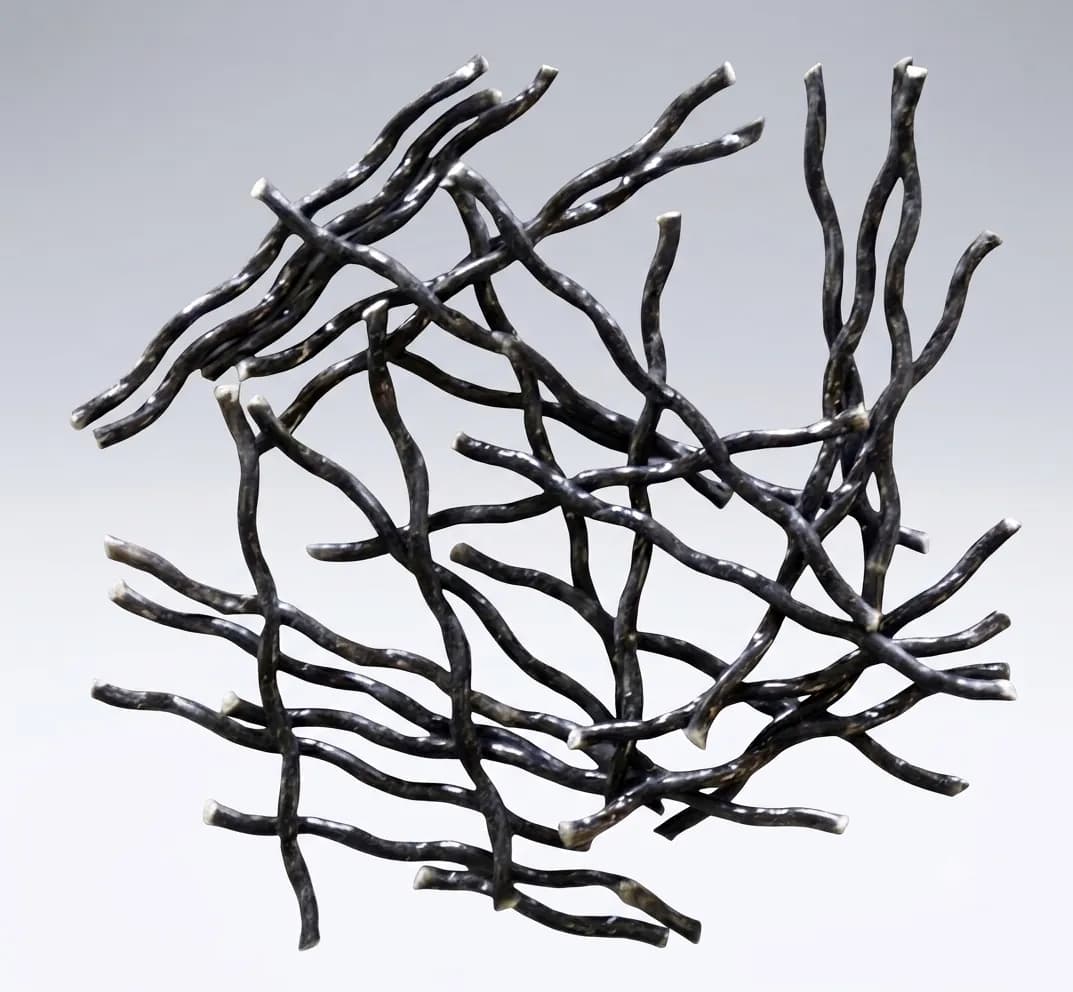
Basalt Wave
Wave-profile basalt fibre for excellent bonding in the concrete matrix. High temperature resistance for demanding constructive applications.
- TypeBasalt macro fibre (wave-profile 3D)
- Length50 mm
- DiameterØ 1.2 mm
- Strand tex2000 tex