Concrete repair: fixing cracks and damage in a concrete floor

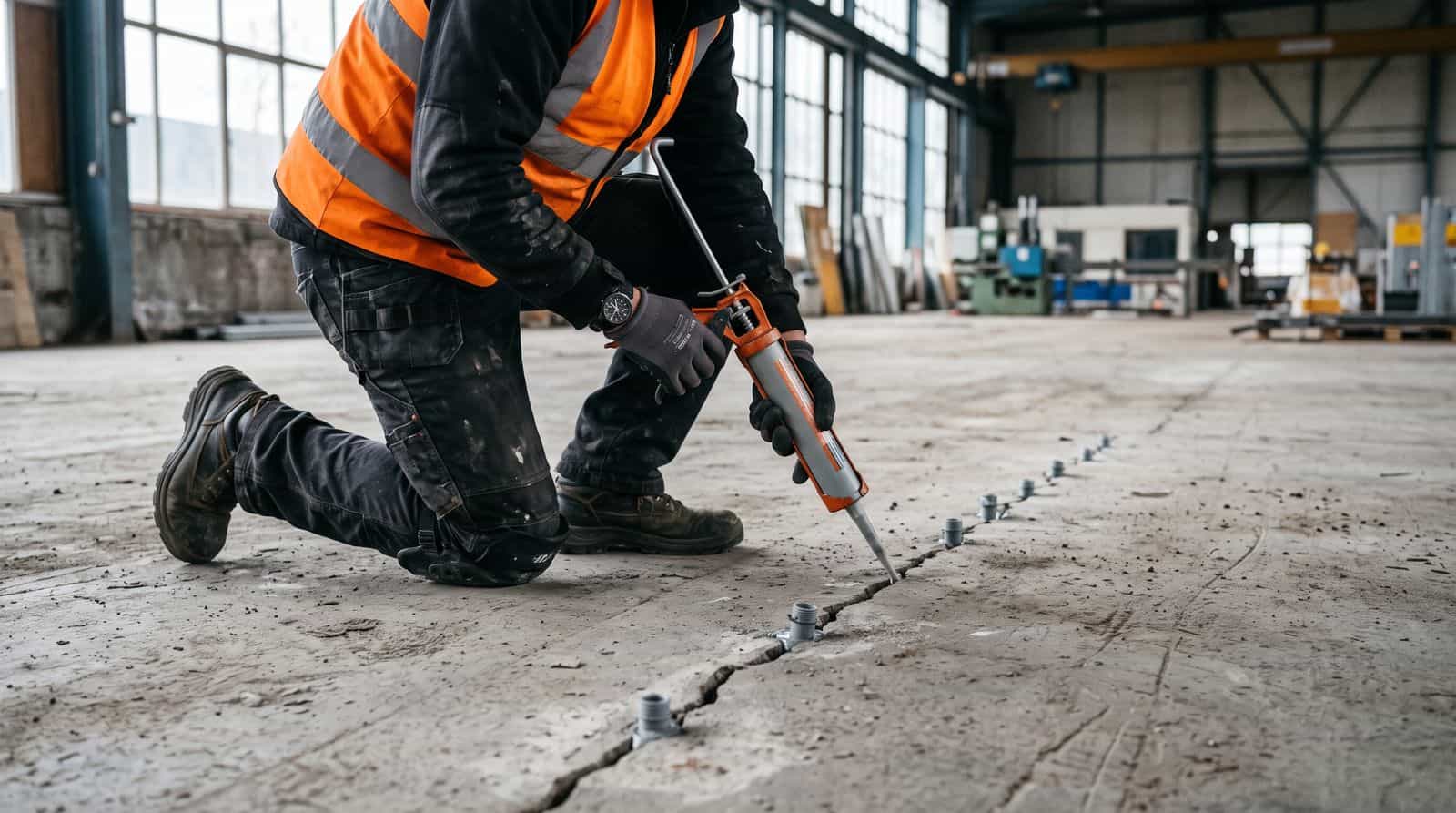
Not every crack in a concrete floor calls for the same approach. How to recognise the crack type, which repair method belongs to it, what repair costs indicatively — and how fibres prevent the next damage.
Concrete repair starts with diagnosing the crack type. Fine, non-moving cracks up to around 0.3 mm are injected with epoxy or PU resin, larger damage is repaired with repair mortar to EN 1504, and a worn floor gets a fibre reinforced overlay. Allow an indicative €50 to €500 per m², depending on method and damage pattern.
Diagnosis first: which type of crack is in your concrete floor?
Anyone who fills a crack straight away without knowing the cause often ends up repairing twice. Cracks in a concrete floor fall broadly into four categories, each with its own cause and its own repair approach.
Shrinkage cracks
By far the most common damage. Plastic shrinkage cracks form in the first 24 hours after pouring, when the surface dries out faster than the bleed water can replenish it; they are 0.1 to a few millimetres wide and often run diagonally or in an irregular pattern. Drying shrinkage follows in the weeks to months after that — hardening concrete typically shrinks 0.4–0.6 mm per metre — and concentrates at weak spots or oversized joint bays. How both mechanisms work and how to prevent them is covered in preventing shrinkage cracks in concrete. Key point for the repairer: shrinkage cracks are non-moving — they no longer move under load and can therefore be injected successfully.
Settlement cracks
If the subgrade settles unevenly — a poorly compacted foundation, a pipe trench, washed-out sand — the floor follows and cracks. Settlement cracks are often wider on one side, run through the full floor thickness and are regularly accompanied by a height difference between the crack edges. Crucial: as long as the settlement continues, the crack is live. First stabilise the subgrade (for example by injecting the foundation), then repair the crack — otherwise the repair will simply crack open again right next to it.
Structural cracks
Cracks caused by overloading — a heavier forklift or racking than the floor was designed for, a point load in an unexpected place — can be recognised by their location: at the load point, often in a regular pattern or perpendicular to the span direction. Here, crack repair alone is not enough: a structural engineer must first assess whether the floor can carry the load at all. Neither fibres nor mortar replace that calculation.
Concrete spalling: a different story
If you see rust-brown stains, cracks running parallel to the reinforcement or delaminating slabs, then the cause is not shrinkage or settlement but corrosion of the reinforcing steel — rust occupies up to six times the volume of the original steel and bursts the cover apart. That damage pattern requires a fundamentally different approach (removing deteriorated concrete to behind the reinforcement, de-rusting the steel, reinstating to EN 1504), which we cover separately in concrete spalling: causes, recognising and repairing it.
Are cracks in a concrete floor harmful?
Not every crack is a problem. The rule of thumb per situation:
• Fine shrinkage crack (up to ~0.2 mm) in a dry indoor floor — usually harmless; mainly aesthetic. Monitoring is sufficient.
• Crack in a floor exposed to moisture, chloride or frost — harmful: the crack is a motorway for water and de-icing salts to the reinforcement, with corrosion of the reinforcing steel as the result. Repair.
• Crack in a liquid-tight floor (agricultural, wash bay, environmental permit) — every through crack counts as a leak. Repair and demonstrate.
• Crack along edges under forklift traffic — the edges crumble at an accelerated rate under wheel loading; small damage grows. Repair before the break-up begins.
• Live crack (settlement, overloading) or height difference between the edges — always have the cause assessed first.
For those who want it more precise: the crack width is the assessment criterion the standard also uses. Eurocode 2 (NEN-EN 1992-1-1) limits the design value of the crack width to 0.2 to 0.4 mm, depending on the exposure class — the more aggressive the environment (moisture, chlorides), the stricter the requirement. If you measure more than about 0.3 mm with a crack width gauge or loupe, or the crack is demonstrably growing, assessment and repair are advisable.
Repairing cracks in a concrete floor: three methods
Once the cause is known and removed, the damage pattern determines the method. In practice, virtually every concrete floor repair comes down to injecting, cutting-and-filling, or overlaying.
1. Injecting with epoxy or PU resin
For fine, non-moving cracks (indicatively 0.1–3 mm), injection is the standard. Via drilled or surface-mounted packers, the resin is forced into the crack under pressure until it is completely filled. The choice of resin follows the situation: epoxy resin bonds the crack faces with structural strength restoration — the floor becomes one whole again — and suits dry, stable cracks. PU resin remains elastic and foams up on contact with water, so it also seals leaking or slightly damp cracks; it does not restore strength. Injection is the least invasive: no demolition work, and the floor largely stays in use. Drawback: the repaired crack remains visible as a dark line, which is a nuisance in a power-floated exposed floor.
2. Cutting out and filling with repair mortar
Wider cracks, crumbled joint edges, holes and damaged surfaces are mechanically cut or milled out to sound concrete, dedusted, given a bonding primer and filled with a repair mortar. For structural repair, the European standard EN 1504-3 prescribes mortars of class R3 or R4; for non-structural cosmetic work, R1/R2 suffices. An important detail: good repair mortars are themselves often polymer-modified and fibre reinforced — micro fibres in the mortar limit the shrinkage of the repair, precisely the mechanism through which the original damage arose. If you mix your own mortar for larger repair work, you can include micro fibres in repair mortars to let the new layer harden crack-free.
3. Overlaying: a new (fibre reinforced) layer
If the damage is not local but spread across the entire surface — a craquelure of cracks, a worn-out top layer, countless repair patches — then repairing crack by crack is mopping with the tap running. Overlaying is then the logical route: the existing floor is milled or blasted for bonding, and a new structural topping of (fibre) concrete is laid over it. At limited layer thicknesses, traditional mesh reinforcement is difficult to position with sufficient cover; a fibre reinforced overlay of a worn floor with structural macro fibres (dosage indicatively 2–6 kg/m³, depending on layer thickness and loading) does not have that problem, because the reinforcement is distributed homogeneously through the entire — thin — volume. The same technique also exists on top of worn asphalt: white topping with fibre concrete. With any overlay, watch two points: the bond with the substrate and the residual load-bearing capacity of the existing structure — both determine whether the new layer can do its job.
What does repairing a concrete floor cost?
The costs of concrete repair vary widely with extent, accessibility and whether the repair needs to be structural. Indicative, 2026 price level, depending on the project:
• Crack injection (epoxy/PU) — tens of euros per linear metre of crack, including packers and finishing.
• Small, non-structural mortar repair (localised patches, easily accessible) — €50 to €150 per m² of repair area.
• Structural repair to EN 1504-3 (class R3/R4, including preparation) — €150 to €500 per m².
• Overlaying with a new fibre concrete layer — strongly dependent on layer thickness and area; per square metre often lower than large-scale localised repair, precisely because the work happens in one continuous operation.
• Diagnosis beforehand (crack width measurement, core drilling, cover measurement) — a few hundred euros, and almost always recouped because you do not repair too much or the wrong thing.
For comparison: prevention is a fraction of this. A micro fibre dosage against shrinkage cracks costs an indicative few euros per cubic metre of concrete — on a 20 cm thick floor, less than one euro per square metre.
Repair or renovate the concrete floor?
Sometimes continuing to repair no longer makes sense. Three signals that renovating a concrete floor (overlaying or replacing) is wiser than yet more localised repair:
• Widespread damage — more than roughly a quarter of the surface shows cracks, delamination or wear; the sum of localised repairs then approaches the price of a new layer, with a patchwork as the result.
• Recurring damage — earlier repairs crack again, because the underlying cause (oversized joint bays, missing shrinkage reinforcement, weak subgrade) was never removed.
• Changed use — the floor must carry heavier loads, become liquid-tight or flatter than the original ever could; then a new, correctly dimensioned layer is the only route that also meets the requirements.
With complete replacement, the same applies as with overlaying: this is the moment to make the new floor better than the old one — with the right joint layout, curing and fibre reinforcement from day one.
Crack-free repairs: include fibres in the new layer
The bitter lesson of many repaired floors: the repair itself is also young concrete, and therefore cracks for exactly the same reasons as the original. Anyone who repairs or overlays a floor without controlling the shrinkage lays the foundation for the next round of repairs. Crack-free repair with fibre reinforcement tackles that at source, on three levels.
• Repair mortar and screed — 0.6–1.0 kg/m³ of PP micro fibres (Promicro for poured concrete and exposed work, Profib for sand-cement and semi-dry screed) absorbs the tensile stresses in the plastic phase, so the new layer hardens crack-free.
• Overlay and new floor — structural macro fibres such as TwistR (100% polypropylene, non-corrosive) reinforce the full layer thickness without fixing work; in moisture-laden floors, they also rule out the corrosion failure path of a thin reinforcement mesh.
• Combination — micro fibre against the plastic shrinkage of the first 24 hours, macro fibre or mesh for the months after; for structural work, the dimensioning belongs with the structural engineer.
More background on fibre types, dosages and standards (EN 14889) can be found in our knowledge centre on fibre reinforced concrete.
From damage pattern to repair advice
Unsure which crack type you are looking at, or which fibre suits your repair mortar or overlay? Send a few photos and the dimensions with a quotation request — our specialists advise free of charge on method, fibre choice and dosage, and calculate the required quantities for you straight away.
Frequently asked questions
- Are cracks in a concrete floor harmful?
- That depends on crack width and environment. Fine shrinkage cracks up to around 0.2 mm in a dry indoor floor are usually only aesthetic. Under moisture, chloride or liquid loading, however, cracks form a route to the reinforcement (corrosion risk) or a leak in liquid-tight floors, and along crack edges the surface crumbles at an accelerated rate under forklift traffic. Always have live cracks from settlement or overloading assessed first.
- How do you repair cracks in a concrete floor?
- Fine, non-moving cracks are injected with epoxy resin (strength-restoring) or PU resin (elastic, also with moisture present). Wider cracks and damaged patches are cut out to sound concrete and filled with repair mortar to EN 1504-3. With damage spread across the entire surface, overlaying with a new fibre reinforced concrete layer is usually more sensible than repairing crack by crack.
- What does repairing a concrete floor cost?
- Indicative, 2026 price level: crack injection costs tens of euros per linear metre, small non-structural mortar repair €50–150 per m² and structural repair to EN 1504 €150–500 per m². A diagnosis beforehand (a few hundred euros) prevents you repairing too much or the wrong thing. Prevention is far cheaper: micro fibres against shrinkage cracks cost the equivalent of less than one euro per square metre of floor.
- What crack width in concrete is acceptable?
- Eurocode 2 (NEN-EN 1992-1-1) limits the design value of the crack width to 0.2 to 0.4 mm, depending on the exposure class: the wetter or more aggressive the environment, the stricter the requirement. Practical rule of thumb for floors: up to around 0.2 mm in dry indoor applications is acceptable; if you measure more than about 0.3 mm, the crack is growing, or there is moisture or chloride exposure, have the floor assessed.
- Can you repair shrinkage cracks in concrete yourself?
- Fine shrinkage cracks in a non-structural floor can be filled yourself with a pourable repair resin or mortar; for pressure injection and structural repair, bring in a specialist. Bear in mind that the repair remains visible. Prevention is cheaper: 0.6–1.0 kg/m³ of PP micro fibres in the fresh concrete prevents plastic shrinkage cracks, see also our article on preventing shrinkage cracks.
- When should you replace a concrete floor instead of repairing it?
- Renovating or replacing beats localised repair when more than roughly a quarter of the surface shows damage, when earlier repairs keep cracking again because the cause was never removed, or when the use changes (heavier loading, liquid-tightness). An overlay with fibre concrete is then often the middle road: one continuous operation, no mesh reinforcement in the thin layer and immediate shrinkage control from day one.
Products mentioned
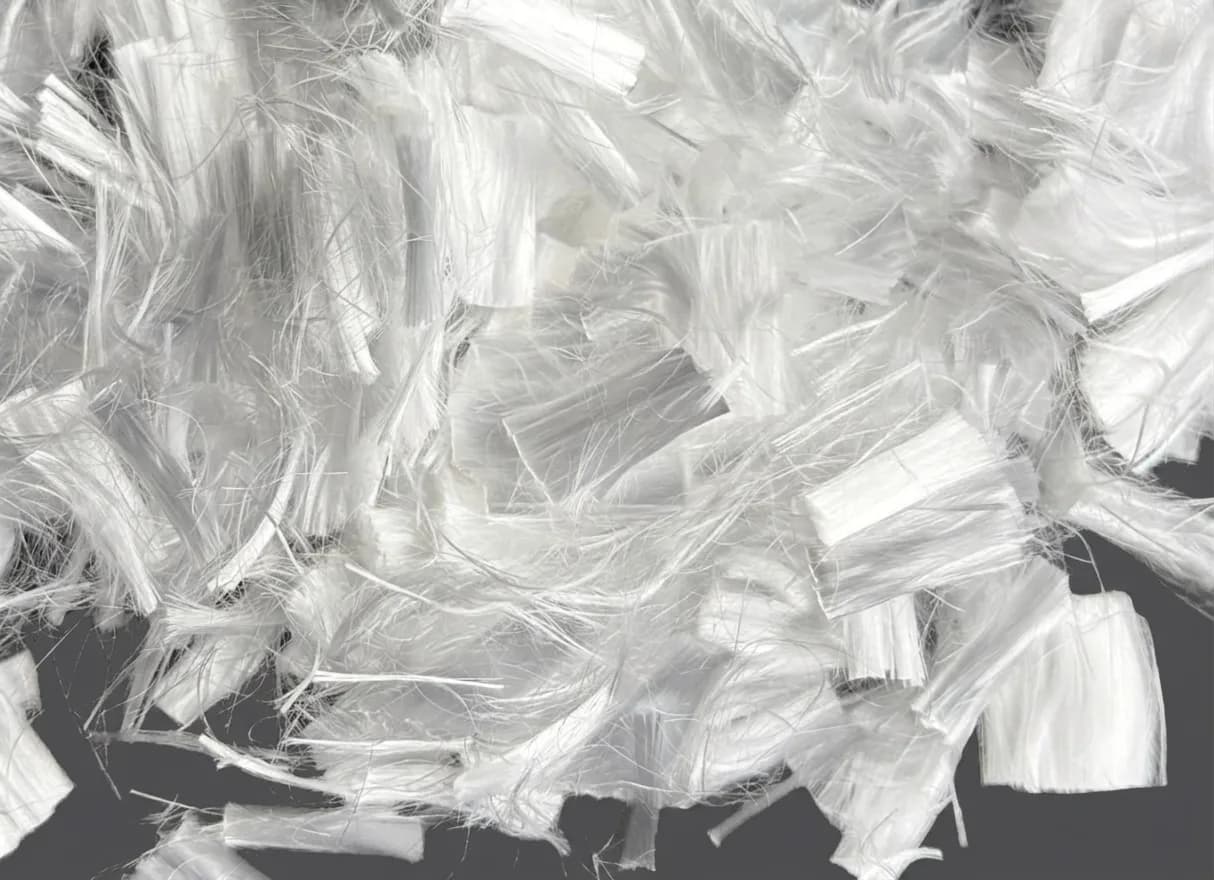
Promicro
Synthetic PP monofilament micro fibre against plastic shrinkage cracks. Homogeneous dispersion and better surface quality at a low dosage.
- TypePolypropylene monofilament (round cross-section)
- Length12 mm
- Equivalent diameter32 µm
- Linear density6.5 dpf
Pallet price on request
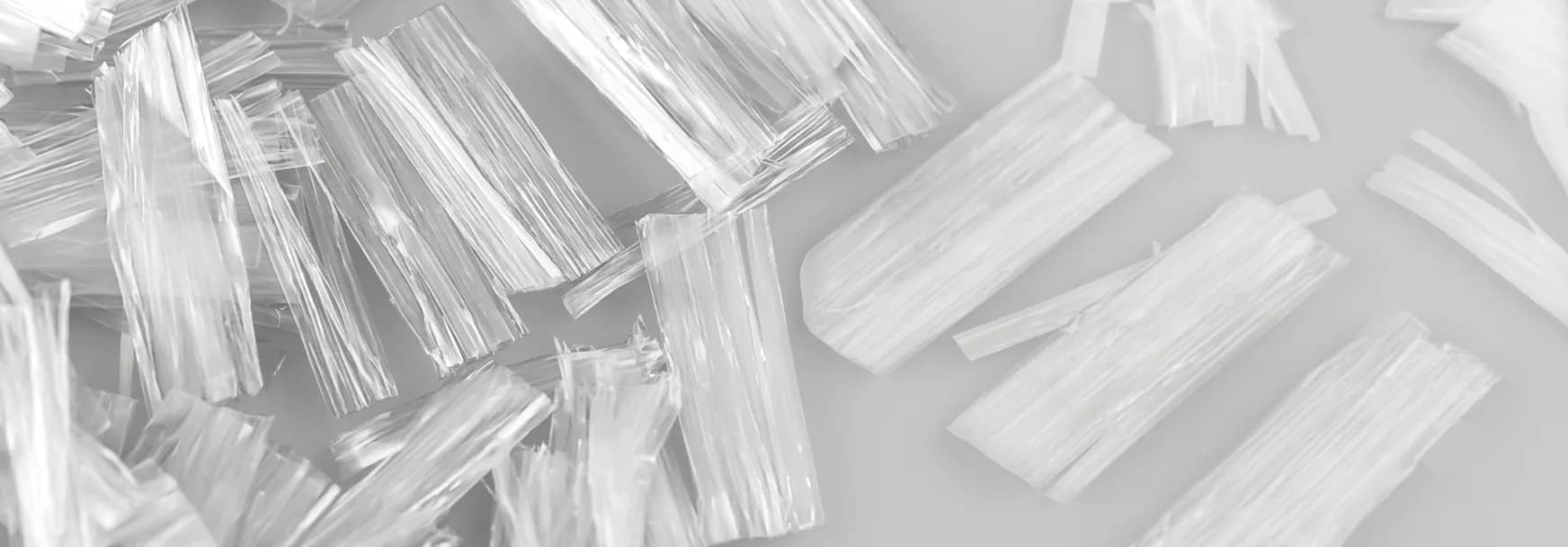
Profib
Fibrillated PP micro fibre for plastic shrinkage crack control, strong in sand-cement screeds. Disperses homogeneously through the concrete.
- TypePolypropylene (fibrillated tape)
- Length6 and 12 mm
- Number of fibres per kg100,000
- Tensile strength370 MPa
Pallet price on request
 Most chosen
TwistR® GREEN HYBRID
High-performance synthetic macro fibres made from 100% polypropylene. Transforms concrete into a stronger composite material.
- TypeHybrid: twisted monofilament + fibrillating network fibre
- Material100% virgin polypropylene
- Length48 mm
- Dosage2.0 – 6.0 kg/m³
Pallet price on request