Carbon fibre reinforcement, GFRP and basalt rebar: FRP compared

What is carbon fibre reinforcement, how do you strengthen existing concrete with CFRP plate bonding, and when do GFRP or basalt rebar make sense? With a comparison of steel, FRP bars and loose fibres in the mix.
Carbon fibre reinforcement is reinforcement made of carbon fibres in a resin matrix: CFRP, a fibre reinforced polymer. It comes in two forms: as a bar or grid cast into new concrete, and as a plate (laminate) or fabric bonded onto existing concrete to strengthen it, known as plate bonding or externally bonded FRP. Carbon fibre reinforcement does not corrode and is very strong, but it has no yield point: it behaves linear-elastically up to failure and therefore needs its own design rules and product certification.
The same principle exists with glass fibre (GFRP rebar) and basalt (BFRP or basalt rebar). And it is something different from loose fibres in the concrete mix, as in fibre reinforced concrete. This article sets those three worlds side by side: FRP bars in new concrete, bonded strengthening of existing concrete and fibres that come out of the mixer, each compared with traditional steel reinforcement.
What is carbon fibre reinforcement? FRP, fibre reinforced polymer and fibre reinforced concrete
FRP stands for fibre reinforced polymer (fiber reinforced polymer in US spelling), also called fibre reinforced plastic. The material consists of continuous fibres embedded in a resin, usually epoxy or vinyl ester. Bars and plates are often pultruded: fibre bundles are pulled through a resin bath and a heated die, after which the resin cures. The letter in front of FRP gives the fibre: CFRP for carbon, GFRP for glass, BFRP for basalt and AFRP for aramid fibre.
In construction, FRP is used as bars (with a sand-coated, ribbed or helically wrapped surface for bond), as grids and textiles, as flat plates or laminates, and as fabrics wrapped around a member. The word fibre causes confusion here. In fibre reinforced concrete, short loose fibres are dispersed through the whole concrete during mixing; you can compare those in the overview of types of concrete fibres. In FRP, by contrast, the fibres run continuously and aligned in the resin, and together they form a bar or plate placed in a fixed position in or on the concrete.
| Application | Form | Where is it? | When | Standards and approval |
|---|---|---|---|---|
| FRP rebar and grids in new concrete (carbon, glass, basalt) | Bars, grids, bends and links made in the factory | Placed in the formwork to the drawings, like steel rebar | Corrosive exposure, non-conductive or non-magnetic zones, zones that will be cut through later | Product certification; design: informative Annex R of the new Eurocode 2 (EN 1992-1-1:2023), ACI 440 (North America), CSA S806 (Canada); GFRP bars: IS 18256 (India), BRL 0513 (Netherlands) |
| Bonded strengthening of existing concrete (plate bonding) | CFRP plates, fabrics, near-surface mounted strips | On or just below the surface of an existing beam, slab or column | Higher loads, openings cut later, missing reinforcement, damage | fib Bulletin 14; UK: Concrete Society TR55 and TR57; Netherlands: CUR Recommendation 91; always designed by a structural engineer |
| Loose fibres in the mix (fibre reinforced concrete) | Short fibres of steel, polymer, basalt or glass | Dispersed through the whole concrete volume, from the mixer | Floors, pavements, precast, shrinkage control, hybrid with steel | EN 14889-1 (steel), EN 14889-2 (polymer); basalt and glass fibres product-specific; residual strength to EN 14651 |
FRP rebar as reinforcement: carbon, glass fibre and basalt bars
FRP rebar is placed in the formwork to the drawings, just like steel rebar, and tied into cages or mats. It replaces the steel, not the fixing work. The main reason to choose it is corrosion: steel reinforcement starts to rust once chlorides from de-icing salt or seawater reach it (exposure classes XD and XS), which leads to cracking, spalling and eventually serious concrete damage. How that mechanism works is explained in corrosion of reinforcing steel.
FRP does not rust and is non-magnetic; glass and basalt bars are also non-conductive. FRP rebar is therefore used in concrete with heavy chloride exposure, in soft-eye zones that a tunnel boring machine will later cut through, near sensitive electrical or magnetic equipment (for example MRI rooms) and in members where little cover is available.
GFRP rebar: glass fibre reinforcement in concrete
GFRP rebar is the most widely used FRP bar. The bars do not rust, do not conduct and weigh roughly a quarter of an equivalent steel bar, which makes handling lighter. The trade-off is a much lower stiffness: product data sheets give a modulus of elasticity of roughly 40 to 60 GPa for pultruded GFRP bars, against 200 GPa for steel rebar. With the same cross-section, a member reinforced with glass fibre bars therefore deflects more and cracks open wider.
Material specifications for GFRP bars differ per market. In North America, ASTM D7957 specifies solid round GFRP bars; in India, IS 18256:2023 does the same for solid round GFRP bars for concrete reinforcement. In the Netherlands, the Kiwa assessment guideline BRL 0513 for glass fibre bars used as reinforcement in concrete is the basis for a KOMO product certificate, with supplementary provisions to Eurocode 2 because the normal design rules for steel do not simply apply.
Note the difference with glass fibre reinforced concrete (GRC or GFRC): that uses short, alkali-resistant (AR) glass fibres in the mix, for example in thin cladding panels. That is fibre reinforced concrete, not bar reinforcement.
Carbon fibre rebar and grids (CFRP)
Carbon fibre rebar is the stiffest and strongest of the FRP options, and also the most expensive. Unlike glass and basalt, carbon conducts electricity, so CFRP is ruled out where a non-conductive zone is required. In new construction, carbon appears less often as a single bar and more often as a grid or textile in thin, slender members (see carbon reinforced concrete below). Its best-known use, however, is the bonded CFRP plate used to strengthen existing concrete: plate bonding.
Basalt rebar (BFRP bars)
Basalt rebar consists of bars or grids of continuous basalt fibre in a resin. Published test results for BFRP bars are around 1,100 to 1,350 MPa tensile strength and a modulus of elasticity of roughly 45 to 50 GPa, against 200 GPa for steel; values differ per manufacturer. As with glass fibre, deflection and crack width therefore often govern the design. The resistance of basalt to the highly alkaline environment in concrete is a point of attention that has to be demonstrated per product. Basalt rebar is still a young product compared with GFRP and is used mainly in research and pilot projects.
Basalt rebar is something different from basalt fibres in the mix. A basalt bar sits in a fixed position in the cross-section; a basalt fibre works dispersed through the whole concrete. Further down you can read why the macro fibre Basalt Wave is therefore not basalt rebar.
Designing with FRP rebar: no yield point, separate design rules and certification
FRP behaves linear-elastically up to failure. There is no yield point and therefore no ductile, warning deformation as with steel rebar. Designers often size the section so that concrete crushing governs rather than bar rupture. Because glass and basalt bars are less stiff, deflection and crack width usually govern rather than strength.
Cover also changes its role: it is no longer needed as corrosion protection, but it is still needed for bond between bar and concrete and for fire resistance. In a fire, the resin softens at relatively low temperatures; that is the weak point of every type of FRP reinforcement. Bends and links come from the factory, because cured resin cannot be bent.
Separate design rules apply. The new generation of Eurocode 2 (EN 1992-1-1:2023) contains an informative Annex R for non-prestressed FRP reinforcement. In North America, ACI 440.1R is the established design guide for concrete reinforced with FRP bars, and ACI 440.11 is the building code for GFRP-reinforced concrete; in Canada, CSA S806 covers building structures with FRP. Product certification or a technical approval for the chosen bar is always needed as well. An FRP bar is therefore never a one-for-one swap for a steel bar of grade B500: the structural engineer redesigns the reinforcement.
CFRP plate bonding: strengthening existing concrete with carbon fibre
Plate bonding, also called externally bonded reinforcement or externally bonded FRP, is reinforcement bonded to an existing structure after the event. In the past these were mainly steel plates; today they are usually CFRP plates or carbon fibre fabrics bonded with epoxy adhesive to the tension face of a beam, slab soffit or column. Carbon is light, does not corrode and is easy to install even in tight spaces. In Europe, strengthening with fibre composites has been used increasingly since the 1990s.
Typical reasons for strengthening concrete with carbon fibre are a change of use with higher loads, insufficient flexural or shear capacity, missing or deteriorated reinforcement that has to be supplemented, an opening cut after construction, damage from vehicle impact or fire, fatigue and seismic upgrading. Plate bonding comes in four variants:
• CFRP plates (laminates): flat CFRP strips on the tension face, mainly for extra flexural capacity.
• Carbon fibre wrapping: carbon fibre fabric saturated with resin on site and wrapped around beams or columns, for shear and for confining columns.
• Near-surface mounted (NSM) reinforcement: strips or bars bonded into a groove cut into the cover, where they are better protected.
• Prestressed CFRP plates: the plate is bonded and anchored under prestress, so the strengthening works immediately, even without further deformation of the structure.
The main failure mechanism is debonding: the plate comes away before it reaches its tensile strength. The substrate is therefore decisive. After surface preparation (grit blasting or grinding), the concrete is checked with a pull-off test. Data sheets commonly ask for a mean of about 2.0 and a minimum of 1.5 N/mm², but the data sheet of the chosen system governs. The concrete is usually at least 28 days old. The adhesive has to be protected against permanent sunlight and moisture, and because epoxy loses strength at high temperature, the engineer also checks the fire situation.
The international basis for design is fib Bulletin 14, Externally bonded FRP reinforcement for RC structures (2001). In the UK, Concrete Society Technical Report 55 (third edition 2012) gives design guidance for strengthening concrete structures with fibre composite materials, to be read with TR57 on acceptance, inspection and monitoring. In the Netherlands, CUR Recommendation 91 sets the rules for externally bonded carbon fibre reinforcement; it is based on fib Bulletin 14 and limited to the aspects that have been researched sufficiently. Data sheets require the plates to be installed by an applicator trained or approved by the system supplier, with the strengthening designed by a specialist structural engineer.
One thing needs saying plainly: loose fibres cannot strengthen an existing structure. Fibres only work in the concrete they are mixed into. A beam or slab that has to carry more load needs a strengthening design.
| Property | Indicative value |
|---|---|
| Width | 50 to 120 mm |
| Thickness | 1.2 to 1.4 mm |
| Tensile strength of the laminate | mean approx. 2,200 to 2,400 N/mm² |
| Modulus of elasticity | approx. 170 kN/mm² (170 GPa) |
| Elongation at break | approx. 1.2 to 1.4% |
| Adhesive | Epoxy |
| Pull-off strength of prepared concrete | typically mean 2.0 N/mm², minimum 1.5 N/mm² (per system data sheet) |
| Age of concrete | usually at least 28 days |
Concrete strengthening techniques: how to strengthen existing concrete
Concrete strengthening does not start with a technique but with an assessment. A structural engineer establishes what the structure can carry now and what it will have to carry, based on investigation of the position and size of the reinforcement, the concrete quality and any damage. Where there is concrete spalling from reinforcement corrosion, repairing the cause comes first: adhesive on deteriorated concrete is pointless. Only then is a technique chosen from the table below.
With an overlay or a thickened section, a new layer of concrete is cast onto the existing structure. Fibres in that new layer limit shrinkage and cracking and can replace the mesh in a non-structural overlay; see overlaying with a fibre reinforced topping. Whether a topping contributes structurally is for the engineer to decide: that depends on the bond with the substrate and on any shear connectors or dowels.
| Technique | How | Typical for | Watch out for |
|---|---|---|---|
| Bonded CFRP plates (plate bonding) | Plates bonded with epoxy to the tension face | Extra flexural capacity of beams and slabs | Debonding, pull-off strength of the substrate, fire and UV |
| Carbon fibre wrapping (CFRP fabric) | Fabric saturated with resin on site and wrapped around the member | Shear, confinement of columns | Rounded corners, protection of the adhesive |
| Near-surface mounted (NSM) bars or strips | Bonded into grooves cut into the cover | Flexure where the surface is exposed or vulnerable | Sufficient cover, position of existing reinforcement |
| Steel plate bonding | Bonded and/or bolted to the surface | Classic external strengthening | Weight, corrosion protection of the steel |
| Overlay or section enlargement (jacketing) | New layer or encasement of (fibre reinforced) concrete | Slabs, columns, extra stiffness | Bond, extra self-weight, height |
| External post-tensioning | Tendons outside the section, anchored into the structure | Long spans, bridges, reducing deflection | Anchorages and deviators, maintenance |
| Extra support or beam | Reducing the span with a column, wall or beam | Local overloading, temporary situations | Space, foundation of the new support |
Carbon reinforced concrete and textile reinforced concrete: building thin without corrosion
Carbon reinforced concrete is concrete reinforced with carbon fibre instead of steel, usually as a grid or textile of coated carbon fibre yarns (textile reinforced concrete, TRC) and sometimes as bars. Because carbon does not rust, the cover no longer has to protect against corrosion and members can become much more slender: thin cladding panels, shells and strengthening layers of a few centimetres on existing concrete. According to the German InformationsZentrum Beton, the tensile strength of carbon reinforcement is up to six times that of steel rebar, at a quarter of the density.
There are drawbacks too. Producing carbon fibre is energy-intensive, fire resistance becomes the governing design issue, recycling is still under development, and bars or grids have to be shaped before the matrix cures. Development is concentrated in Germany, at TU Dresden and RWTH Aachen among others, and in January 2024 the German Committee for Structural Concrete (DAfStb) published a guideline for concrete members with non-metallic reinforcement. Elsewhere, carbon reinforced concrete is still a niche application.
Steel, FRP rebar and loose fibres compared
The table sets steel rebar, the three types of FRP and loose fibres in the mix side by side. The stiffness values are indicative and come from published values and product data sheets; for a design, the values in the certificate of the chosen product always apply.
The big difference is in the placement row. Steel and FRP bars have to be placed and tied in the position shown on the drawings. Loose fibres come out of the mixer and work throughout the whole volume: they replace the mesh in many floors and pavements, but not designed main reinforcement in a beam or column.
| Property | Steel rebar (B500) | GFRP bar | BFRP bar | CFRP (bar or plate) | Loose fibres in the mix |
|---|---|---|---|---|---|
| Form | Bars, mesh | Bars, grids | Bars, grids | Bars, grids, plates, fabrics | Short fibres of steel, polymer, basalt or glass |
| Corrosion | Rusts with carbonation and chlorides | Does not rust | Does not rust | Does not rust | Polymer and basalt do not rust; steel fibres can at the surface |
| Behaviour | Yield point, ductile | Linear-elastic to failure | Linear-elastic to failure | Linear-elastic to failure | Residual strength after cracking (EN 14651) |
| Stiffness (modulus of elasticity) | 200 GPa | approx. 40-60 GPa | approx. 45-50 GPa | Standard-modulus plate approx. 170 GPa | Not comparable with a bar |
| Bending on site | Yes | No, factory bends | No, factory bends | No, factory bends | Not applicable |
| Placement | Fixing and placing | Placing and tying | Placing and tying | Placing, or bonding to existing concrete | From the mixer, no fixing |
| Standards and approval | Eurocode 2 | Informative Annex R of the new Eurocode 2; ACI 440; ASTM D7957 / IS 18256; NL: BRL 0513 | Product-specific assessment | Bonded strengthening: fib Bulletin 14, TR55 (UK), CUR 91 (NL) | EN 14889-1 (steel), EN 14889-2 (polymer); basalt and glass fibres product-specific; residual strength to EN 14651 |
| Typical use | All structures | TBM soft-eyes, chloride exposure, non-conductive zones | Still mainly research and pilot projects | Strengthening existing concrete, thin members | Floors, pavements, precast, shrinkage control |
Corrosion-free reinforcement in new concrete: when FRP, when fibres?
If you are considering FRP because steel corrodes, it pays to ask a different question first: which part of the reinforcement can come out of the mixer corrosion-free? For a lot of new construction, that is a bigger share than expected:
• Floors, pavements, yards, greenhouse floors and cycle paths: synthetic macro fibres often replace the mesh here and do not rust, for example TwistR (48 mm polypropylene macro fibre, 2.0 to 6.0 kg/m³) or Wiking 4050 TR (polyolefin, EN 14889-2 class II). A practical example with Wiking 4050 TR is the greenhouse floor without steel reinforcement.
• Precast, edge beams (hybrid), sprayed concrete and structural floors: the basalt macro fibre Basalt Wave.
• Shrinkage control in mortar and thin layers: the chopped basalt fibre Basalt Chopped (4 mm, 0.6 to 1.0 kg/m³).
• Heavily loaded structural members (beams, columns, main reinforcement): steel or FRP bars remain necessary here. Often fewer bars will do in hybrid reinforcement, where fibres take over crack control.
For concrete in a chloride environment (XD or XS: de-icing salt or seawater), read how fibres help prevent corrosion of reinforcing steel. To choose between fibre types, see the comparison of steel fibres or synthetic macro fibres.
Basalt Wave is not basalt rebar
Basalt Wave is made of basalt filaments in an epoxy matrix, the same material principle as a BFRP bar. Yet it is not basalt rebar: it is a macro fibre 50 mm long and 1.2 mm in diameter with a 3D wave profile, dosed into the mix and working dispersed through the concrete, like other macro fibres. Basalt Wave does not replace designed main reinforcement in a beam or column. In edge beams it is used in a hybrid design, together with bar reinforcement, and always on the basis of a fibre reinforced concrete design.
More on its use in members can be found under fibres in precast concrete elements. For project advice on fibres in your element or floor, you can request a quotation or advice.
Frequently asked questions
- What is carbon fibre reinforcement?
- Carbon fibre reinforcement (CFRP) is reinforcement made of carbon fibres in a resin matrix. It is cast into new concrete as a bar or grid, or bonded onto existing concrete as a plate or fabric to strengthen it. It does not corrode and is very strong, but it has no yield point and needs its own design rules and product certification.
- What is CFRP plate bonding?
- Plate bonding is externally bonded reinforcement used to strengthen existing concrete: usually CFRP plates or carbon fibre fabrics, in the past also steel plates. Design guidance includes fib Bulletin 14 and, in the UK, Concrete Society TR55; in the Netherlands, CUR Recommendation 91 applies. A structural engineer designs the strengthening and an applicator trained by the system supplier installs it.
- What is the difference between carbon fibre and glass fibre rebar?
- Carbon fibre rebar (CFRP) is much stiffer and stronger, but also more expensive, and it conducts electricity. GFRP rebar is cheaper and non-conductive, but far less stiff: roughly 40 to 60 GPa against 200 GPa for steel. GFRP bars have their own material specifications, such as ASTM D7957 in North America and IS 18256 in India.
- Can you strengthen existing concrete with carbon fibre?
- Yes, with bonded CFRP plates, carbon fibre wrapping or near-surface mounted strips, always after assessment and design by a structural engineer. After preparation, the concrete must have sufficient pull-off strength to the system data sheet (typically a mean of 2.0 and a minimum of 1.5 N/mm²), and the adhesive must be protected against sunlight, moisture and fire.
- Does basalt rebar rust?
- No, basalt rebar (BFRP) does not rust. Points of attention are its resistance to the alkaline environment in concrete, its lower stiffness (roughly 45 to 50 GPa against 200 GPa for steel) and brittle failure without a yield point. A basalt bar is something different from basalt fibres in the mix.
- Can GFRP or carbon fibre bars be bent on site?
- No. The resin in an FRP bar has cured, so bends and links are made in the factory. Bars can be cut to length with a saw or disc cutter; shearing them like steel rebar is not possible.
- Is fibre reinforced polymer the same as fibre reinforced concrete?
- No. Fibre reinforced polymer (FRP) consists of continuous fibres in a resin, formed into a bar, grid or plate. Fibre reinforced concrete is concrete with short, loose fibres in the mix, such as steel and polymer fibres to EN 14889-1 and -2. The differences per fibre type are covered in types of concrete fibres.
- Can concrete fibres replace carbon fibre reinforcement?
- Partly. In floors, pavements and much precast work, macro fibres such as TwistR can replace the reinforcement mesh, and they do not rust. For designed main reinforcement in beams and columns, or for strengthening an existing structure, fibres cannot do that. Hybrid reinforcement, with fibres and fewer bars, is often the middle way.
Share this article
Products mentioned
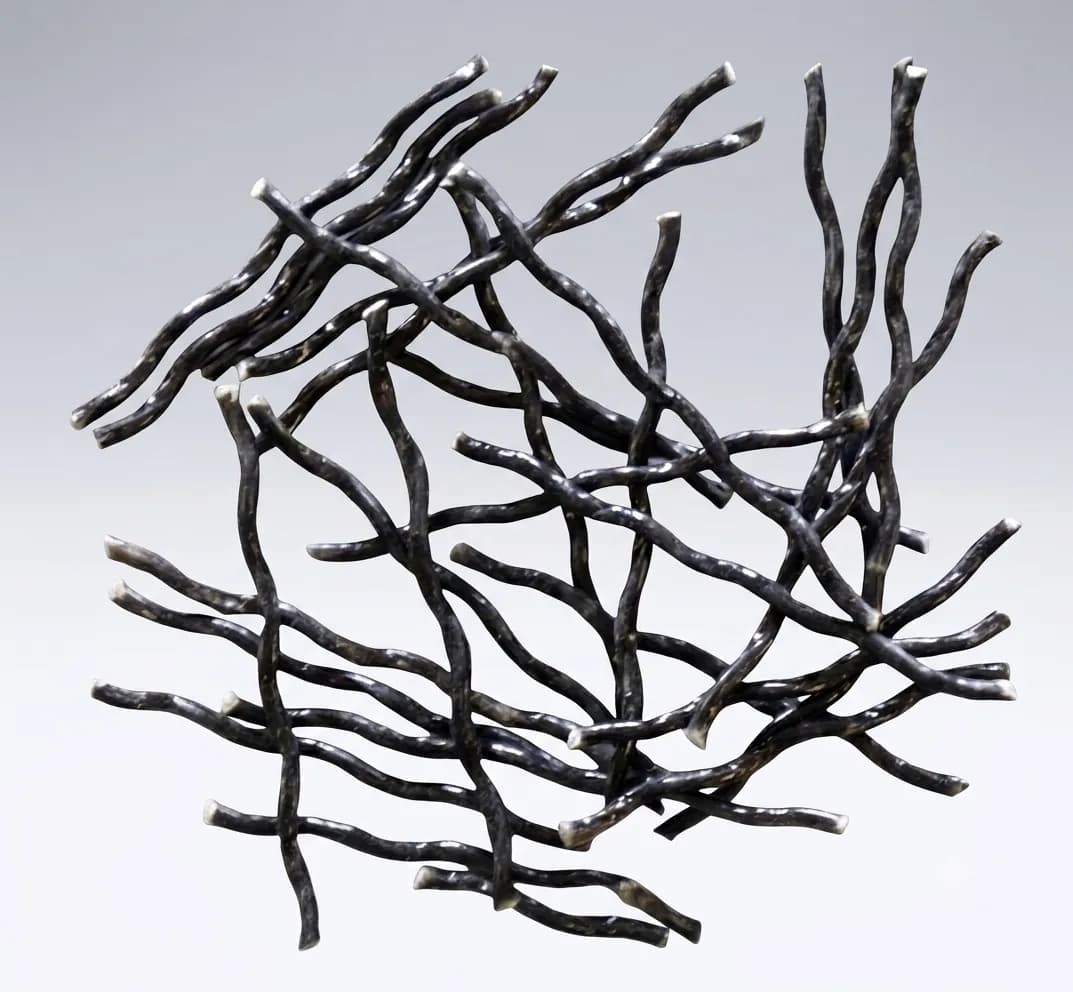
Basalt Wave
Wave-profile basalt fibre for excellent bonding in the concrete matrix. High temperature resistance for demanding constructive applications.
- TypeBasalt macro fibre (wave-profile 3D)
- Length50 mm
- DiameterØ 1.2 mm
- Strand tex2000 tex
 Most chosen
TwistR® GREEN HYBRID
High-performance synthetic macro fibres made from 100% polypropylene. Transforms concrete into a stronger composite material.
- TypeHybrid: twisted monofilament + fibrillating network fibre
- Material100% virgin polypropylene
- Length48 mm
- Dosage2.0 – 6.0 kg/m³
Pallet price on request
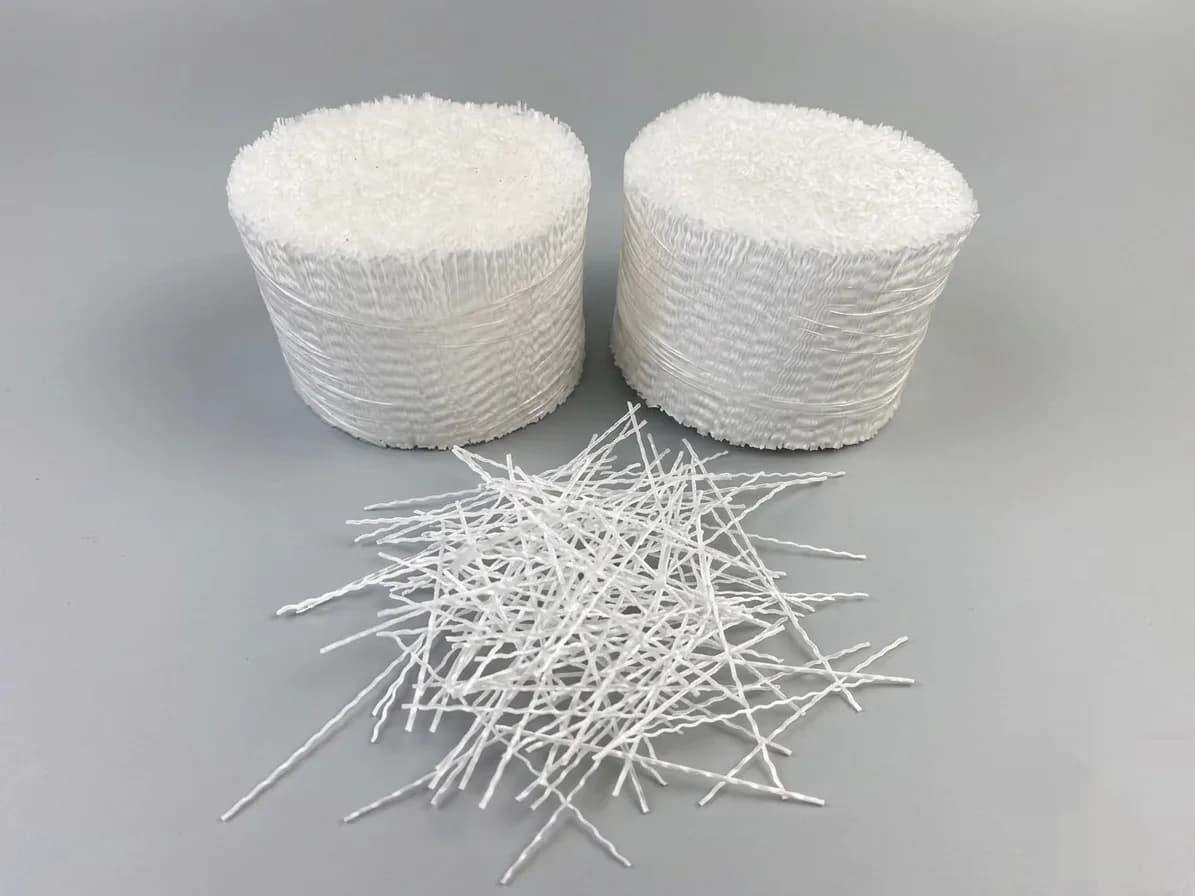
Wiking 4050 TR
High-performance polyolefin macro fibre, ideally suited to rough floors — a strong and cost-effective alternative to steel reinforcement.
- TypePolyolefin macro fibre (monofilament)
- Length48 mm
- Diameter700 µm
- Tensile strength557 MPa
Pallet price on request
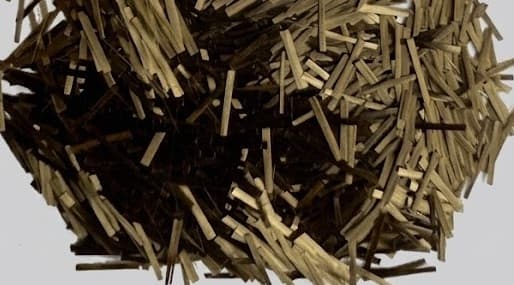
Basalt Chopped
Basalt Chopped: chopped basalt fibre strands for concrete and mortar. 4 mm cut length, 12 µm filaments, 0.6 to 1.0 kg/m³. Price per kg on request.
- TypeChopped basalt fibre (chopped strands)
- Strand tex300 tex
- Filament diameter12 µm
- Length4 mm (other cut lengths on request)