The future of fibre reinforcement: 5 trends to watch

Fibre reinforcement of concrete and asphalt is proven technology, but it is not standing still. Five developments — from basalt fibre to automatic dosing — set the direction the sector is heading.
Sustainable road surfacing combines a longer service life with fewer primary raw materials and lower emissions. Fibre reinforcement of concrete and asphalt plays a leading role: the European FIBRA research shows a service life extension of asphalt layers of up to 200%. Five trends set the direction: basalt as a fourth main fibre category, bio-based binders, automatic dosing, a firmer standards basis and the growing maintenance challenge.
Why sustainability sets the road-building agenda
Sustainability in road building is no longer an optional ambition, but a tendering reality. Rijkswaterstaat aims to build, manage and maintain fully climate-neutrally and circularly by 2030, using 50% fewer primary raw materials — and provinces, municipalities and water boards are adopting that system through MKI scores, the CO₂ Performance Ladder and EMVI award criteria. Anyone designing a road pavement or concrete structure today is judged on environmental performance across the entire service life. For road pavements, our article on sustainable asphalt with fibres shows how the mix and emission-free paving together lower that environmental score.
Innovation in road building is therefore moving along two tracks at once: new materials (bio-based binders, alternative fibres) and smarter use of existing resources (service life extension, fewer labour hours, preserving the recycling chain). Fibre reinforcement touches both tracks, which explains why the technology surfaces in virtually every sustainability discussion in the sector. The normative and policy background is compiled in our overview of sustainability, standards and innovation.
The five trends below are not future music: each already has concrete products, trial sections or publications behind it. They describe the direction in which fibre reinforcement is moving — from niche application to standard tool for sustainable road surfacing and concrete construction.
Trend 1: basalt as the fourth main fibre category
Alongside steel, synthetic and glass, basalt fibre is gaining ground as the fourth main category of reinforcement fibre. The figures explain why: a tensile strength of 3,000-4,000 MPa (comparable with or higher than steel fibre), a density of only around 2.7 g/cm³ — roughly a third of steel — and heat resistance up to around 700 °C. Basalt fibre is, moreover, made from natural volcanic rock that is melted and drawn without chemical additives, without the energy-intensive chain of steel production.
Basalt fibre in concrete is therefore particularly interesting where freedom from corrosion, weight and temperature resistance come together: precast elements, floors in agricultural environments with aggressive exposure classes, and applications where magnetic neutrality is a requirement. One caveat belongs here: in the alkaline environment of concrete, basalt can degrade over time, so the fibre is not fully alkali-resistant — product development therefore focuses on protective coatings and clever geometry.
That geometry is also the second development within this trend: where classic basalt fibres are straight rods, shapes are appearing that anchor themselves mechanically. Basalt Wave is such a structural basalt fibre with a 3D wave profile, where the undulating profile provides the anchorage in the concrete matrix. How basalt compares with steel, synthetic and glass fibre is covered in our overview of all types of concrete fibres.
Trend 2: combination with bio-based binders
Where fibre reinforcement improves the mechanical performance of concrete and asphalt, bio-based development targets the binder itself. In asphalt, lignin — a residual stream from the paper and pulp industry — is the leading candidate to replace part of the fossil bitumen, with a potential emissions reduction of 30-60% for the asphalt sector. In concrete, parallel developments are under way with recycled cement and plant-based additives such as elephant grass.
For fibre reinforcement, this is not a competing route but a complementary one: the binder determines the environmental footprint of the mix, the fibres determine its mechanical service life. The sector's expectation is therefore that both sustainability routes will increasingly come together within a single mix — a lignin-containing asphalt mix can be fibre reinforced just as well as a conventional one, and a circular concrete mix can at the same time contain fibre reinforcement instead of steel.
Important for the recycling chain: fibre reinforcement with aramid works with standard penetration-grade bitumen instead of polymer modified bitumen (PMB), so the asphalt remains fully recyclable and can be combined with a high proportion of reclaimed asphalt (RAP). The dosage is, moreover, minimal — indicatively around 0.05%, or roughly 500 grams of fibres per tonne of asphalt, depending on mix and application. How that circular logic works in detail is set out in our article on circular construction with fibre reinforced concrete and asphalt.
Trend 3: automation of dosing
Many fibres are still added manually today, for example via pre-packed, soluble bags at the inspection hatch of the mixer. That works reliably, but slows production compared with fully automated processes — certainly at steel fibre dosages of 25-50 kg/m³, where tens of kilograms have to be weighed and added per load.
As fibre reinforced mixes scale up from occasional order to standard range, investing in automatic dosing installations for concrete plants becomes ever more attractive: a dosing unit weighs the fibres and blows or conveys them directly into the mixer, with registration per batch. That raises not only production speed, but also consistency and traceability — precisely the aspects quality assurance and certification steer on. What that integration means for a plant, from order specification to quality control, is covered in our article on dosing fibres at the concrete plant.
On the product side, the sector is moving with it: automatically dosed macro fibres such as TwistR are, at 2-6 kg/m³, light enough to be processed without heavy weighing installations, and distribute themselves homogeneously through the mortar during mixing. Fibre reinforcement is thus shifting from a manual extra step to an integrated process step.
Trend 4: a firmer normative basis
For a long time, the absence of broadly supported design rules was the biggest brake on structural application of fibre concrete. That is changing. With fib Bulletin 105 (end of 2022), there is now an international state-of-the-art report compiling the design knowledge for fibre reinforced concrete: residual strength determination to EN 14651, design methods for both the serviceability and the ultimate limit state, and the link with Model Code 2020, Eurocode 2 and CUR Recommendation 111. What that document covers exactly is explained in our piece on fib Bulletin 105 as the international standard.
On the asphalt side, the ongoing development of the PCR Asfalt guidelines — with the PCR Asfalt 2026 as the most recent version — provides an increasingly uniform way to calculate and compare the environmental performance of (fibre reinforced) mixes. Together with existing frameworks such as EN 14889 for concrete fibres and BRL 9320 for asphalt additives, a normative foundation is emerging that lowers the threshold for including fibre reinforcement in structural and tendered applications.
For practice this means: structural engineers can substantiate design decisions with a recognised reference document, and clients can objectively compare the environmental performance of mixes. Both were barely possible ten years ago. One principle stands throughout: fibres do not fully replace traditional reinforcement in every application — structural work always requires a calculation by the structural engineer.
Trend 5: a growing role in the asset maintenance challenge
The Netherlands faces what Rijkswaterstaat itself calls the biggest maintenance challenge ever: many bridges, tunnels, locks, roads and quay walls from the 1950s-70s are due for replacement or renovation at the same time, while budgets and skilled workers are scarce. The EIB confirms the structural backlog, and incidents such as the crumbling concrete at the Lankhorst interchange (A28) show what deferral means. The cabinet now prioritises asset preservation over new construction.
Fibre reinforcement connects to this on three points. Service life: the FIBRA research shows a claimed extension of road surface life of at least 50%, rising to 200% for the asphalt layer itself, depending on fibre type and application. Labour: fibres are added during mixing, whereas traditional reinforcement requires a separate, labour-intensive work stage — sparing scarce skilled workers. Failure mechanism: synthetic and basalt fibres do not corrode, removing the risk that lies at the core of much of today's concrete damage. The full analysis is in our article on the biggest maintenance challenge and the role of fibre reinforcement.
For the asphalt side of that challenge, the technology is already operationally proven: aramid fibre AsphaltX has been applied on the provincial road N337 without modifying existing production or paving equipment — rapidly deployable, exactly what a challenge under time pressure demands.
How the five trends reinforce each other
The five developments do not stand apart. New fibre types such as basalt and combinations with bio-based binders broaden the technical palette. Automation lowers the threshold for large-scale, consistent application. The firmer normative basis gives structural engineers and clients the confidence to apply fibre reinforcement structurally and in tenders. And the maintenance challenge supplies the demand: a decades-long stream of projects in which service life per euro is the decisive measure.
Together they point to a sector moving from niche application to mainstream: fibre reinforcement as a standard option in the package of sustainable measures for road surfacing and concrete construction, alongside — and increasingly in combination with — reuse, bio-based materials and low-emission plant.
What does this mean for your next project?
Anyone preparing a floor, pavement or civil structure now does not have to wait for the future: each of the five trends already has applicable products and frameworks today. Explore the range of concrete fibres for steel, synthetic and basalt fibres per application, or use the selection guide to arrive at the appropriate fibre type and indicative dosage in a few steps. For project-specific advice — including standards substantiation and MKI argumentation for your tender — our specialists are happy to think along.
Frequently asked questions
- What is sustainable road surfacing?
- Sustainable road surfacing is a pavement that demands as few primary raw materials, energy and maintenance as possible across its entire service life. In practice that means: longer service life, reuse of materials (such as reclaimed asphalt) and lower emissions during production and paving. Fibre reinforcement contributes with a claimed service life extension of asphalt layers of up to 200% and preservation of the existing recycling chain, as explained in our article on circular construction.
- Is basalt fibre a full alternative to steel fibre in concrete?
- In many non-structural and lightly structural applications, yes: basalt fibre combines a tensile strength of 3,000-4,000 MPa with a low density (around 2.7 g/cm³), freedom from corrosion and heat resistance up to around 700 °C. Basalt is not fully alkali-resistant, however; coatings and anchorage geometry such as the 3D wave profile of Basalt Wave address that. For structural work, a structural engineer always assesses whether fibres can take over from steel.
- What is lignin asphalt?
- Lignin asphalt is asphalt in which lignin — a bio-based residual stream from the paper and pulp industry — replaces part of the fossil bitumen. A potential emissions reduction of 30-60% is cited for the asphalt sector. Lignin asphalt and fibre reinforcement are complementary: the binder lowers the mix's footprint, the fibres extend its mechanical service life, and both can be combined in one mix.
- How does fibre reinforcement extend the service life of concrete?
- Fibres bridge cracks as soon as they form and keep them finely distributed, so moisture and chlorides penetrate less easily. Because synthetic and basalt fibres also do not corrode, the damage mechanism of rusting reinforcing steel pushing concrete apart from within disappears. The result is less crack growth, less repair work and a longer service life for floors and pavements — one of the reasons fibre reinforcement is central to the maintenance challenge.
- What does the future of fibre reinforced concrete look like?
- The direction is clear: more fibre types (with basalt as the fourth main category alongside steel, synthetic and glass), automatic dosing at the concrete plant and an ever firmer standards basis via fib Bulletin 105, EN 14651 and CUR 111. Fibre concrete is thereby shifting from non-structural applications to a broadly deployable alternative, with the asset maintenance challenge and circular tendering requirements as the main drivers of demand.
Share this article
Products mentioned
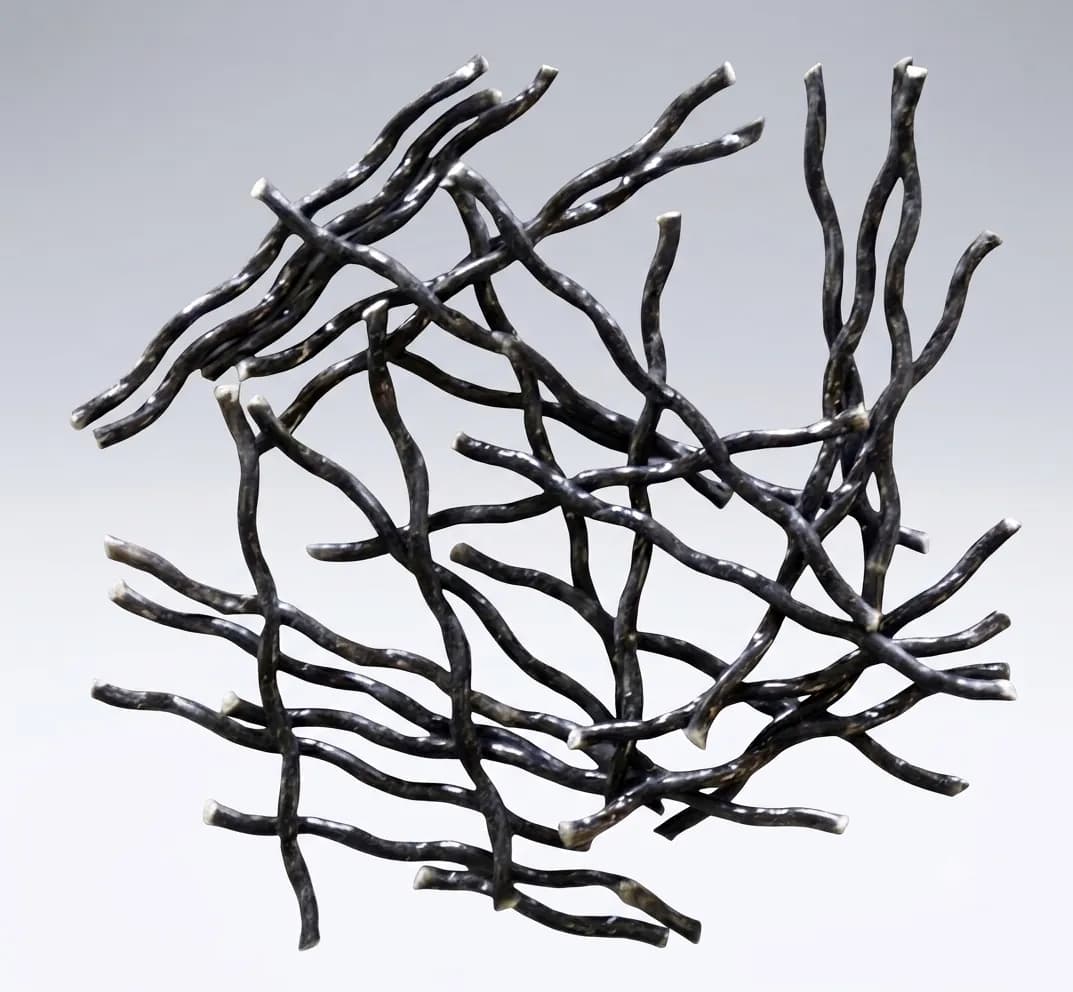
Basalt Wave
Wave-profile basalt fibre for excellent bonding in the concrete matrix. High temperature resistance for demanding constructive applications.
- TypeBasalt macro fibre (wave-profile 3D)
- Length50 mm
- DiameterØ 1.2 mm
- Strand tex2000 tex
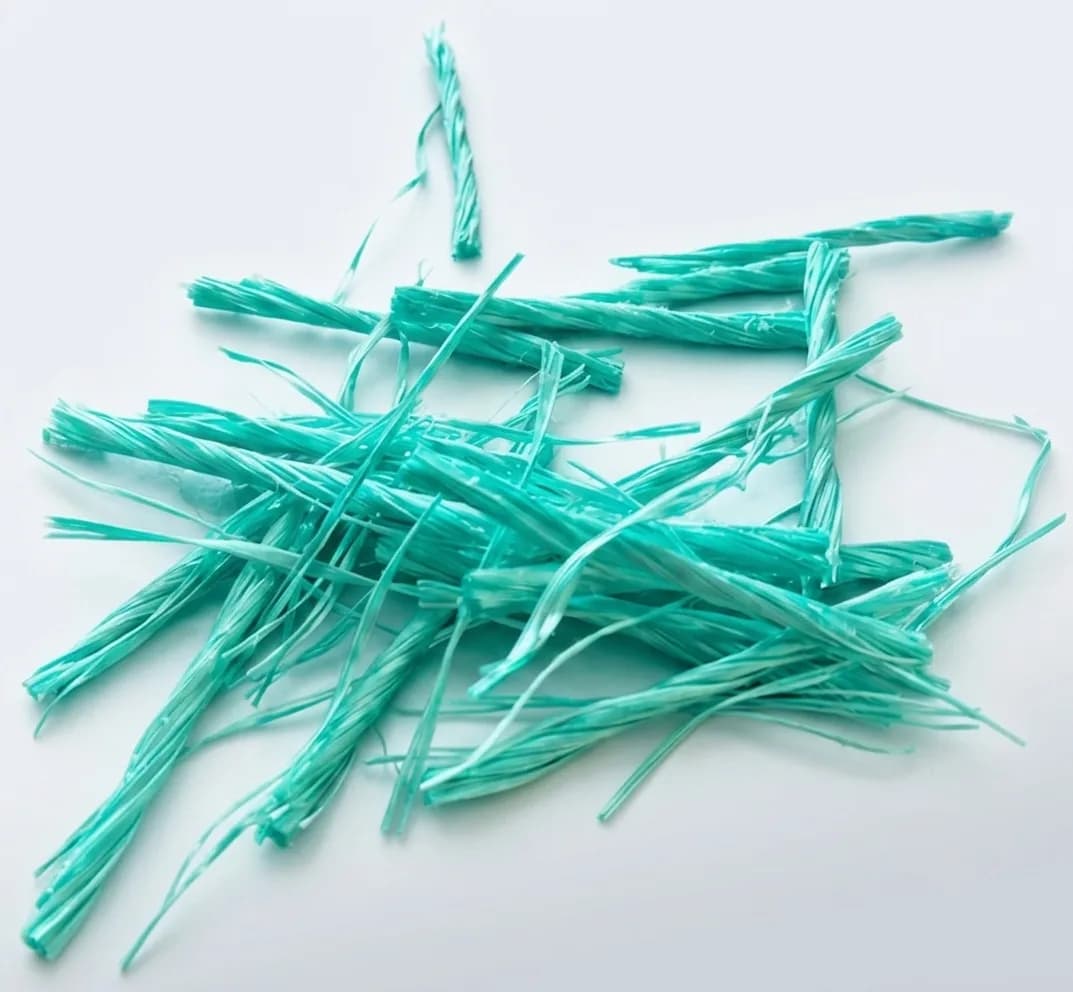 Most chosen
TwistR® GREEN HYBRID
High-performance synthetic macro fibres made from 100% polypropylene. Transforms concrete into a stronger composite material.
- TypeHybrid: twisted monofilament + fibrillating network fibre
- Material100% virgin polypropylene
- Length48 mm
- Dosage2.0 – 6.0 kg/m³
Pallet price on request
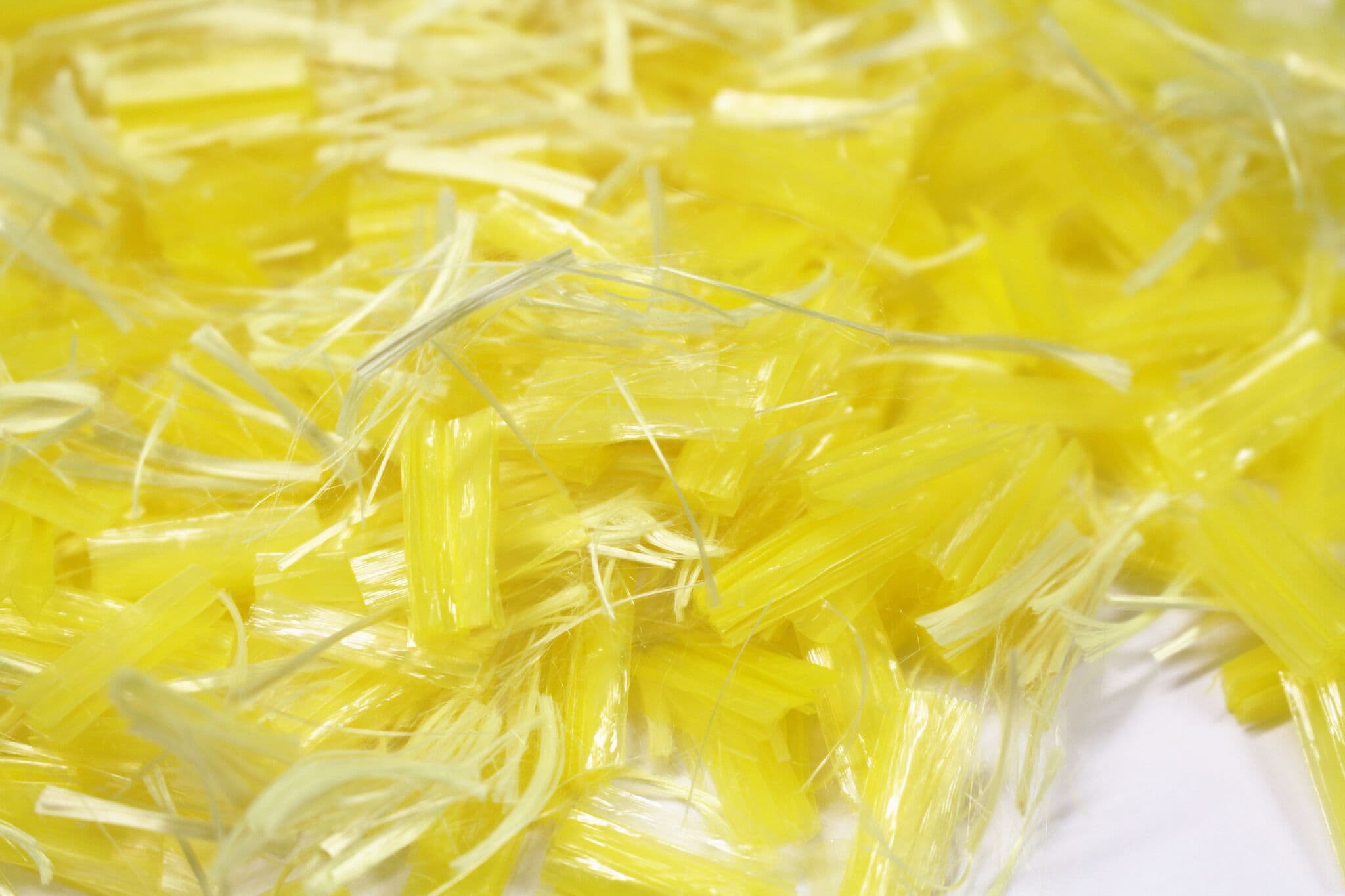
AsphaltX®
2000 filaments per aramid strand — 19 million fibres per tonne of asphalt. Lowest CO₂ footprint, European manufacturing, proven on the N337.
- TypeAramid (Twaron®) + polyolefin fibre blend
- Length± 19 mm
- Tensile strengthTwaron 3000 MPa · polyolefin 483 MPa
- Specific gravityTwaron 1.45 · polyolefin 0.91 g/cm³
Also read
- Types of concrete fibres: steel, synthetic, glass and basalt compared
- Circular construction with fibre reinforced concrete and asphalt (and the RWS 2030 targets)
- Adding fibres to concrete at the batching plant: ordering, dosing and mixing