Circular construction with fibre reinforced concrete and asphalt (and the RWS 2030 targets)

Rijkswaterstaat aims to work climate-neutrally and circularly by 2030, using 50% fewer primary raw materials. How fibre reinforcement of concrete and asphalt contributes to both tracks at once.
Circular construction means: fewer primary raw materials, maximum reuse and no waste. Fibre reinforcement of concrete and asphalt contributes to that in three ways: longer service life (up to 200% for asphalt layers according to the FIBRA research), less steel and less polymer modified bitumen, and — the heart of circular asphalt — preservation of the existing recycling chain. Fibre reinforcement thus ties in directly with the objective of Rijkswaterstaat, the Dutch national infrastructure agency: working climate-neutrally and circularly by 2030, using 50% fewer primary raw materials.
What is circular construction?
Circular construction revolves around three principles: minimising the use of primary (new) raw materials, maximising the reuse of materials, and preventing waste. For road and concrete construction this is no longer an abstract ambition, but a procurement reality: contracting authorities increasingly factor circularity in via MKI scores, the CO₂ Performance Ladder and award criteria in EMVI tenders.
Circular asphalt, in that context, is asphalt that is fully redeployed at the end of its life — as reclaimed asphalt pavement (RAP) in new mixes — and that demands as few new raw materials and maintenance cycles as possible during its life. The same principle applies to concrete: less primary material per functional unit, and the longest possible service life without replacement.
Rijkswaterstaat pursues that task along two routes: life extension with value retention of the existing asset base, and the development of new climate-neutral and circular materials. A clear example of the first route is white topping concrete over existing asphalt: the old asphalt stays in the construction as the foundation, and on the cycle paths along the N344 around 2,500 tonnes of asphalt remained in place. Fibre reinforcement of asphalt and concrete touches both routes at once — which makes it one of the most readily deployable circular measures for road authorities and contractors.
Climate-neutral and circular by 2030: the Rijkswaterstaat policy framework
Rijkswaterstaat has a clear ambition: by 2030, to build, manage and maintain in a fully climate-neutral and circular way, using 50% fewer primary raw materials. Within the Climate-Neutral and Circular programme, the organisation works along four tracks: technology, governance, contracting and financing. For the construction site and construction logistics of build, management and maintenance projects, the aim is 100% CO₂ reduction and 80% NOx reduction, partly through the switch from fossil to non-fossil powered plant.
That objective does not land at Rijkswaterstaat alone. Provinces, municipalities and water boards are adopting the approach in their own tenders, and the timing is no coincidence: the Netherlands faces the largest maintenance task in the history of its road network. Much of the infrastructure from the 1960s and 1970s is due for replacement or renovation at the same time. Every choice made now determines the raw material demand and CO₂ emissions of the coming decades.
How fibre reinforcement scores within that policy framework on standards, certification and environmental performance is set out more broadly in our overview of sustainability, standards and innovation.
Circular asphalt: how fibres keep the recycling chain intact
Asphalt is already one of the most recycled construction materials in the Netherlands: milled asphalt goes back into new mixes via the asphalt plant. The question is therefore not whether asphalt can be circular, but which reinforcement choices keep that chain intact — and which disrupt it.
Penetration grade bitumen instead of PMB
Traditionally, asphalt is reinforced with polymer modified bitumen (PMB) or with reinforcement grids. PMB, however, is harder to recycle than standard penetration grade bitumen, and reinforcement grids require a separate operation with extra material and machine deployment. Aramid fibres added to standard penetration grade bitumen offer an alternative: the asphalt becomes stronger, remains readily recyclable and no separate layer or operation is needed. The dosage is minimal too — indicatively some 0.05%, or around 500 grams of fibre per tonne of asphalt, depending on mix and application.
There is a gain in energy consumption as well. Fibre reinforced mixes with penetration grade bitumen can be produced at a lower temperature than mixes with PMB — some 20°C lower in field trials on the A73. A lower production temperature means less energy consumption at the asphalt plant and lower emissions of substances harmful to workers' health during laying. Our aramid fibre AsphaltX enables fully recyclable fibre reinforced asphalt, without any modification to existing production or paving equipment.
Reuse: fibres and reclaimed asphalt (RAP) go together
Fibre reinforced asphalt can be combined with a high proportion of reclaimed asphalt pavement (RAP) in the mix, without this limiting the effect of the fibres. For projects with circular procurement requirements, that is an important fact: the fibres strengthen the mix while the reuse percentage stays up to standard. Sustainable road pavement therefore does not have to be a choice between strength and reuse.
Life extension: fewer replacement cycles
Every asphalt layer that lasts longer needs to be milled off and replaced less often — and thus directly demands fewer primary raw materials over the life of a road. The European FIBRA research (carried out with, among others, Rijkswaterstaat and BAM) showed that manufacturers of commercial fibres claim a road surface life extension of at least 50%, with an extension of the life of the asphalt layer itself of up to 200%, depending on fibre type and application.
Less maintenance also means less milling, less transport of new material and less traffic disruption — factors that each feed into the CO₂ emissions of asphalt over the entire use phase. The measurement results from the Dutch trial section can be found in the A73 case study with the FIBRA results; it was also demonstrated there that fibre reinforced asphalt with penetration grade bitumen is fully compatible with the regular recycling routes of asphalt plants.
Circular concrete: less steel, more ways to combine
In concrete, the circular gain of fibre reinforcement runs mainly through material savings. Steel is certainly recyclable, but producing it — ore extraction, smelting, transport — is relatively resource- and energy-intensive. Every kilo of steel reinforcement replaced by fibre reinforcement reduces the demand for new or recycled steel for that project. In a field project involving foundations for tree and planter boxes, that delivered a net saving of 1,500 kg of reinforcing steel; the full worked example with the 98% CO₂ saving is in a separate article. TwistR is one such macro fibre with which up to 98% CO₂ reduction on the reinforcement has been achieved in practice.
Important to state honestly: fibres do not fully replace traditional reinforcement in every application. Structural work always requires a calculation by the structural engineer, who determines whether and where fibre reinforcement can take over from the steel.
Fibre reinforcement also dovetails well with other circular developments in concrete, such as recycled cement, plant-based aggregates (for example elephant grass) and circular concrete products with a low MPG contribution. A concrete mix can contain circular raw materials and fibre reinforcement instead of steel at the same time. Anyone wishing to take the raw materials side even further can look at Basalt Wave, a fibre made from natural volcanic rock that is produced without energy-intensive steel production.
Combining circular measures: the overview
For contracting authorities that want to take circularity seriously, combining several measures is more effective than betting on a single solution. The main building blocks side by side:
• Fibre reinforcement in asphalt — better recyclability than PMB, longer life, lower production temperature.
• Fibre reinforcement in concrete — less (steel) reinforcement and thus fewer primary raw materials per project.
• High RAP percentage — reuse of existing reclaimed asphalt, combinable with fibres.
• Bio-based binders — less dependence on fossil raw materials.
• Circular aggregates in concrete — less cement use and fewer primary raw materials.
• Zero-emission plant — lower emissions during construction and maintenance.
That last combination has already been made in practice: on a temporary haul road, a base and binder course with aramid fibre reinforcement was laid entirely emission-free — a concrete step towards the RWS ambition for climate-neutral construction logistics. Longer service life (less future plant needed) and zero-emission laying (less emission now) reinforce each other.
What does this mean for your project?
For municipalities, provinces, water boards and contractors working towards the 2030 targets, fibre reinforcement is one of the most readily available instruments:
• No waiting for new technology — fibre reinforcement can be deployed today with existing production and processing equipment, in both asphalt and concrete.
• Measurable CO₂ gain — via material savings (less steel, less PMB) and via lower production temperatures; readily quantifiable per project.
• Fits existing frameworks — results can be substantiated within the CO₂ Performance Ladder and the new PCR Asphalt 2026 for environmental performance calculations.
• Future-proof — circularity requirements in tenders are getting stricter, not looser; which developments are coming is covered in the five trends in fibre reinforcement.
Fibre reinforcement is thus not a stand-alone circular measure, but one that reinforces virtually every other measure: it keeps the asphalt recycling chain intact, lowers the demand for steel in concrete and stretches the maintenance cycle.
From ambition to specification
The step from circular ambition to a concrete specification starts with figures: how many primary raw materials and how much CO₂ does fibre reinforcement save in your project, and how do you put that forward in the tender? Dutch Fiber Trading will run those figures with you free of charge — from dosage and mix selection to the substantiation for the CO₂ Performance Ladder. Request a quotation or project calculation and within a few days you will know where your circular gain lies.
Sources
• Rijkswaterstaat, "Klimaatneutraal en Circulair" (rwsinnoveert.nl)
• CEDR FIBRA project, Deliverable 6.2, 2021
Frequently asked questions
- What is circular asphalt?
- Circular asphalt is asphalt that is reused to the maximum and demands minimal new raw materials: a high proportion of reclaimed asphalt (RAP) in the mix, a binder that does not disrupt the recycling chain and the longest possible service life. Fibre reinforcement with aramid fibres in penetration grade bitumen fits in with this, because the mix remains fully recyclable — unlike with polymer modified bitumen (PMB).
- What does the RWS 'climate-neutral and circular 2030' target involve?
- Rijkswaterstaat aims to build, manage and maintain in a fully climate-neutral and circular way by 2030, using 50% fewer primary raw materials. The programme runs along four tracks (technology, governance, contracting and financing) and targets 100% CO₂ reduction and 80% NOx reduction for the construction site and construction logistics, partly via non-fossil powered plant.
- Is fibre reinforced asphalt recyclable?
- Yes. Fibre reinforced asphalt based on standard penetration grade bitumen goes into the existing recycling routes of asphalt plants, without any modification to production or paving equipment — demonstrated in practice on the A73. It is therefore more recyclable than asphalt with polymer modified bitumen (PMB), which complicates the recycling chain. Combining it with a high RAP percentage also remains possible.
- By how much do fibres extend the life of asphalt?
- The European FIBRA research, carried out with among others Rijkswaterstaat and BAM, showed that manufacturers of commercial fibres claim a road surface life extension of at least 50%, with an extension of the life of the asphalt layer itself of up to 200% — depending on fibre type and application. The Dutch measurement results are in the A73 case study.
- How much CO₂ does fibre reinforcement save in concrete?
- It varies per project, but the saving can be substantial: in a foundation project for tree and planter boxes, fibre reinforcement replaced a net 1,500 kg of reinforcing steel, good for a 98% CO₂ reduction compared with the steel solution. See the full worked example with the CO₂ calculation. For structural work, the structural engineer determines how much steel can actually be replaced.
Share this article
Products mentioned
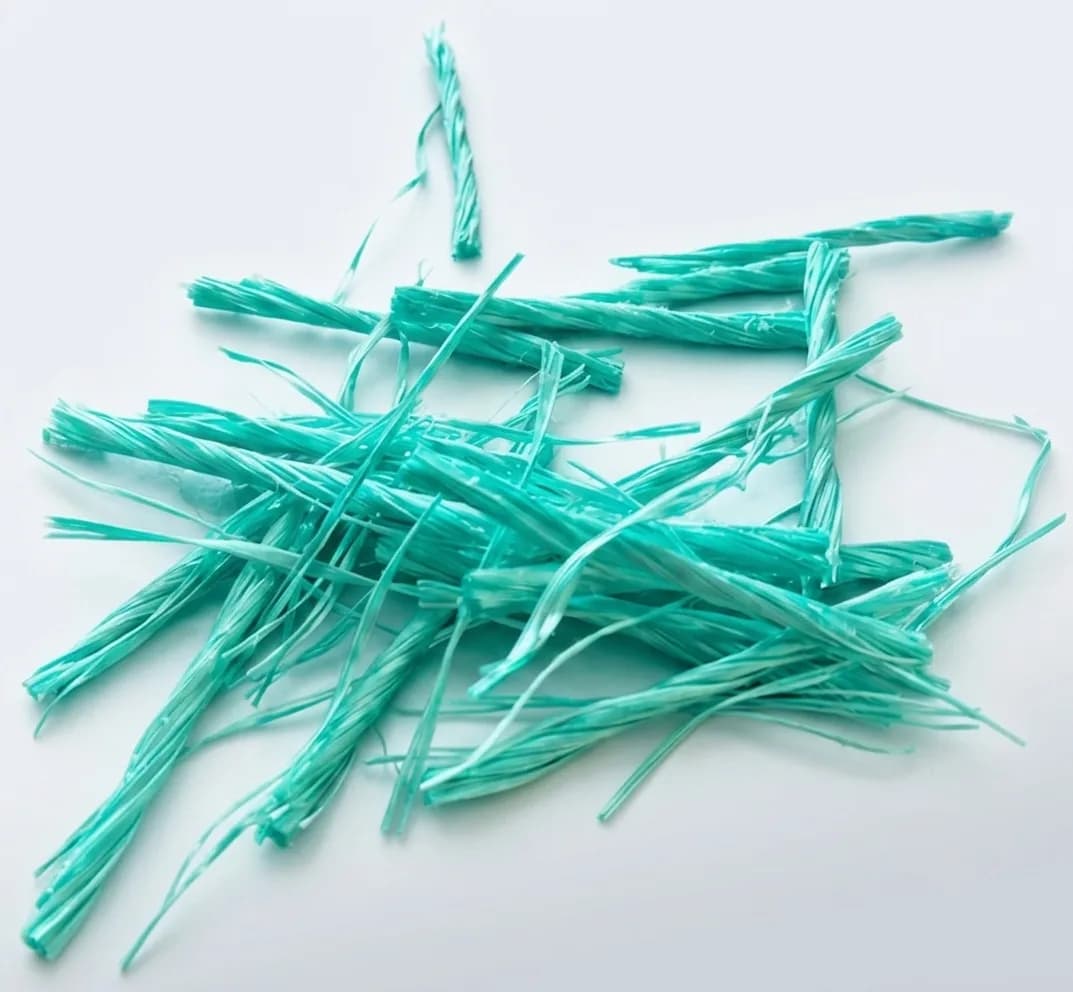 Most chosen
TwistR® GREEN HYBRID
High-performance synthetic macro fibres made from 100% polypropylene. Transforms concrete into a stronger composite material.
- TypeHybrid: twisted monofilament + fibrillating network fibre
- Material100% virgin polypropylene
- Length48 mm
- Dosage2.0 – 6.0 kg/m³
Pallet price on request
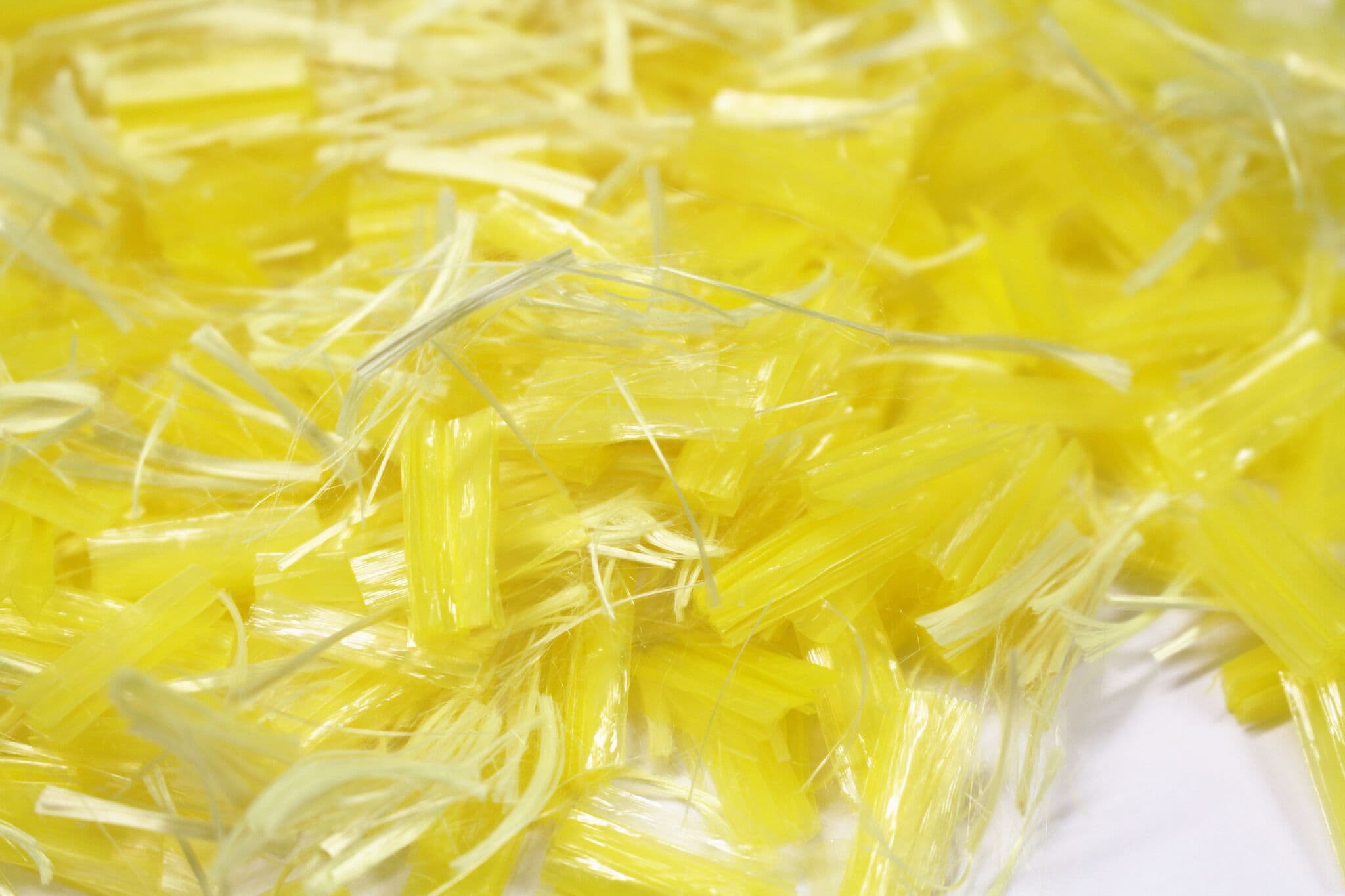
AsphaltX®
2000 filaments per aramid strand — 19 million fibres per tonne of asphalt. Lowest CO₂ footprint, European manufacturing, proven on the N337.
- TypeAramid (Twaron®) + polyolefin fibre blend
- Length± 19 mm
- Tensile strengthTwaron 3000 MPa · polyolefin 483 MPa
- Specific gravityTwaron 1.45 · polyolefin 0.91 g/cm³